An official website of the United States government
Here’s how you know
Official websites use .gov
A .gov website belongs to an official government organization in the United States.
Secure .gov websites use HTTPS
A lock (
) or https:// means you’ve safely connected to the .gov website. Share sensitive information only on official, secure websites.

The National Cybersecurity Center of Excellence (NCCoE) is seeking collaborators to provide products and technical expertise to create a model, standards-based
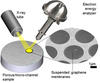
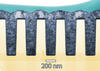
Microscopes don't exactly lie, but their limitations affect the truths they can tell. For example, when operated in their most typical high-energy modes
Nerve agents are among the world's most feared chemical weapons, but scientists at the National Institute of Standards and Technology (NIST) have demonstrated a
The National Institute of Standards and Technology (NIST) has released an update to a document that helps computer administrators maintain the security of
Yoshi Ohno, a group leader in PML's Sensor Science Division, was recently honored by the Department of Energy as the first recipient of the SSL Visionary Award
When the semiconductor industry received the eagerly awaited annual update of the International Technology Roadmap for Semiconductors (ITRS) [1] at the end of
NIST rocks! That's what a group of Dickinson College earth science students and their professor thought after visiting the Gaithersburg, Md., campus of the
Computers were once "just" tools to improve worker productivity, now information systems are recognized as an essential component of a successful organization
The National Institute of Standards and Technology (NIST) is accepting applications from members of the forensic science, criminal justice and academic research
Potentially valuable drugs slowed down by sticky molecules may get another shot at success. Joint research by the National Institute of Standards and Technology
A new, free, online course offered by the UL Firefighter Safety Research Institute (FSRI) highlights the tactical application of nearly two decades of research
The first open source web application for managing the mobile app vetting process is available for free from the National Institute of Standards and Technology
Following a public comment period and review, the National Institute of Standards and Technology (NIST) has removed a cryptographic algorithm from its draft
The primary guiding document for creating the next-generation "smart" energy grid is getting its first major update in two years. The National Institute of
In a truly scintillating set of experiments, scientists at NIST and the University of Maryland have demonstrated that a process called excimer* scintillation
Researchers from the NIST Center for Nanoscale Science and Technology (CNST) have observed electromagnetically induced transparency at room temperature and
JILA researchers have engineered a short, flexible, reusable probe for the atomic force microscope (AFM) that enables state-of-the-art precision and stability
PML researchers have developed a novel method of fabricating graphene-based microdevices that may hasten the arrival of a new generation of standards for
NIST-F2 Atomic Clock News Briefing: Opening Statement by Tom O'Brian, Chief, Time and Frequency Division Opening Statement by Steve Jefferts, NIST Project
Researchers at the National Institute of Standards and Technology (NIST) have added yet another innovation—miniature valves—to their ever-growing collection of
The National Institute of Standards and Technology (NIST) has released the final report on its technical investigation into the impacts of the May 22, 2011
In an article appearing in the March 28th issue of Physical Review Letters, researchers from Northwestern University working with researchers from the NIST
Very soon, the International System of Units (SI) may be revised to define the unit of mass in terms of a fixed value of the Planck constant, h. That move would
Researchers at the National Institute of Standards and Technology (NIST) have rejuvenated a technique for finding planets near distant stars.* New measurements