U.S. flag

An official website of the United States government

Official websites use .gov
A .gov website belongs to an official government organization in the United States.

Secure .gov websites use HTTPS
A lock ( ) or https:// means you’ve safely connected to the .gov website. Share sensitive information only on official, secure websites.

Modeling and computational material science

News and Updates

Blog Posts

Brain-Inspired Computing Can Help Us Create Faster, More Energy-Efficient Devices — If We Win the Race
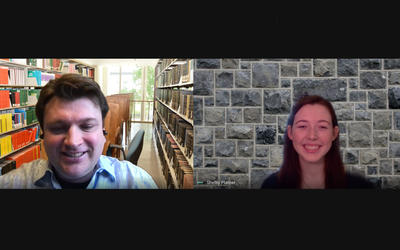
Internships in the Time of COVID: A Q&A With Shelby Platner and NIST's Zach Trautt
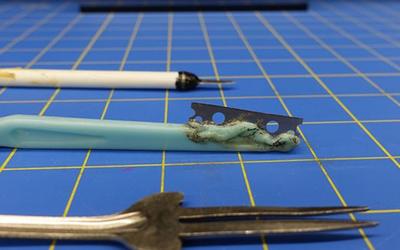
Women’s Body Armor: Staying Ahead of the Curves

Events

Synergy Conference

Tue, Sep 1 - Thu, Sep 3 2026
NIST will be hosting the annual Synergy IRASTRO meeting in 2026 - a collaboration between the Faint Photonics Group at

Projects and Programs

Advanced Materials Design: Electronic and Functional Applications

Ongoing
Accelerating Materials Discovery using Machine Learning and AI Using machine learning and AI techniques along with high-throughput DFT calculations materials with specific properties are identified to accelerate the the discovery process for a variety of applications. Some of the specific materials...

Advanced Carbon Standards and Technologies

Ongoing
Carbon is an important resource for economic growth and everyday life. As energy demands continue to increase, advanced technologies to efficiently use carbon resources including carbon waste streams are needed. Tapping carbon waste streams can be achieved using a suite of technologies to separate...

Advanced Materials Design: Structural Applications

Ongoing
Designing New High Temperature Co Superalloys In collaboration with the NIST CHiMaD center, an ICME approach in being used to develop new Co superalloys that are strengthened using an ordered FCC (L1 2) phase (similar to the related Ni-based superalloys). The design goals for these alloys include...

Publications

Defect states in the electronic structure of Ga2O3 transparent conductive oxides

Author(s)
Elizaveta Pyatenko, Constantin Wansorra, Ralph Steininger, John Vinson, Wolfram Witte, Dimitrios Hariskos, Michael Powalla, Clemens Heske, Lothar Weinhardt, Dirk Hauschild
Defect states are crucial in many electronic devices. Oxygen vacancies, for example, are common in transparent conductive oxides and can both be beneficial (e.g...

Erratum: "Anisotropic coarse-grain Monte Carlo simulations of lysozyme, lactoferrin, and NISTmAb by precomputing atomistic models" [J. Chem. Phys., 161, 094113 (2024)]

Author(s)
Harold Hatch, Christina Bergonzo, Marco Blanco, Guangcui N. Yuan, Sergei Grudinin, Mikael Lund, Joseph E. Curtis, Alexander Grishaev, Yun Liu, Vincent Shen
The authors initiate a correction to Hatch et al. [J. Chem. Phys., 161, 094113 (2024)]. If the particles are of the same type, particle swap symmetry was...

Software

OCEAN

OCEAN is a versatile package for calculating both optical/UV and core-edge spectroscopy. It is a first-principles code based on both ground-state density

NANOP

This software package implements functions to simulate spherical, ellipsoid and cubic polyatomic nanoparticles with arbitrary crystal structures and to

Tools and Instruments

NCAL: Thermal Imaging Systems

Thermal imaging systems are available in the NIST Center for Automotive Lightweighting. These cameras can be used to measure adiabatic heating during mechanical

NCAL: Uniaxial Test Machines

A variety of uniaxial test machines are available in the NIST Center for Automotive Lightweighting. These include servo-hydraulic and screw-driven test frames
Was this page helpful?