U.S. flag

An official website of the United States government

Official websites use .gov
A .gov website belongs to an official government organization in the United States.

Secure .gov websites use HTTPS
A lock ( ) or https:// means you’ve safely connected to the .gov website. Share sensitive information only on official, secure websites.

Projects/Programs

Topic Area
Displaying 176 - 200 of 1667

Building Digitization and Semantic Interoperability

Ongoing
Objective To develop the framework and tools for building and grid digitization and semantic interoperability, and to create standardized machine-readable semantic models that represent building systems information to advance AI-enabled analytics, automation, and control. Technical Idea NIST will...

Building Fire Safety Evaluation

Ongoing
This project aims to reduce residential fire deaths and injuries by advancing detection systems, researching smoke measurements, and evaluating new technologies' impact on safety. It develops datasets and models to assess building fire hazards, informing better codes, standards, and public awareness efforts.

Building Integration with Smart Grid

Completed
Objective - To develop the measurement science for industry standards that will enable interconnection of home and building automation and control systems with a future "smart" utility grid, provide consumers with energy usage information, and support industry efforts to develop the needed standards...

Building Joint Sealant Service Life Prediction

Ongoing
The primary building sealant problem is that no method exists to provide high quality data for elucidating the relative importance of the k = 4 major weathering factors: X1: temperature, X2: humidity, X3: ultra-violet radiation, and X4: mechanical loading(and interactions) on the change in pre...

Building Measurement Confidence for Cell Characterization

Ongoing
NIST collaborates with key stakeholders in industry, other government agencies, and academia to develop measurement assurance strategies and advanced measurement capabilities for cell characterization. Data and concepts developed through workshops and laboratory programs inform the development of...

Building System Economics

Ongoing
Objective To develop and deploy transparent, open source standards-based data and tools that quantify the life-cycle performance of building technologies and systems through parallel activities focused on developing, releasing, and expanding capabilities and adoption of: (1) the Economic Evaluation...

AI for Building Systems Innovation (AIBSI) Program

Ongoing
Objective To develop and deploy advances in measurement science that will improve building operations to ensure cyber-secure facilities, system reliability, occupant comfort/safety and lower operating costs through AI-enabled building systems. What is the problem? Buildings are complex systems of...

Building Trust in Forensic Science: Footwear Analysis

Ongoing
Starting in 2015, SED staff members began reviewing published literature on the recommended practice for forensic examiners to provide likelihood ratios (LRs) as a weight of evidence to summarize their findings in reports or testimony. While several stated motivations for providing likelihood ratios...

Building-Level Seismic Performance Assessment

Ongoing
Objective The objective of this project is to better understand the seismic performance of buildings designed in areas of medium-to-high seismicity and to identify and evaluate ways to enhance the seismic performance of buildings through advances in design approaches, including conventional and low...

Calculation of optical constants and dielectric response

Ongoing
By optical properties, we mean those of the following sort: the index of refraction n and the index of absorption k, from which one can calculate the dielectric function, loss function, absorption coefficient, reflectance, and so forth from standard formulas. All of these quantities, it should be...

Calibration of Force Transducers

Ongoing
The calibration report describes the relationship between the applied force and the measured deformation, either in electrical or mechanical units. A transducer can be calibrated using (1) a readout device furnished by the customer, in which case the transducer and the readout device are calibrated...

Calibration of Mass Standards

Ongoing
Redefinition of the Kilogram and Consensus Value of the Kilogram The unit of mass was redefined in May 2019 as part of a general revision to the International System of Units (SI). See SI Redefinition. The kilogram is now defined by the Planck constant. The International Prototype Kilogram (IPK) no...

Calibration Services: High-Dose Dosimetry

Ongoing
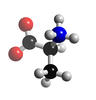
NIST developed the alanine dosimetry system in the early 1990's to replace radiochromic dye film dosimeters. Later in the decade the alanine system was firmly established as a transfer service for high-dose radiation dosimetry and an integral part of the internal calibration scheme supporting these...

Calibration Services: Low-Energy Photon Brachytherapy Sources

Ongoing
Since 1999, over 1,500 seeds of more than 40 different designs from 18 manufacturers have been calibrated using the WAFAC. On-site characterization at seed manufacturing plants for quality control, as well as at therapy clinics for treatment planning, relies on well-ionization chamber measurements...

Calibration Services: New Calibration Facility for X-Ray Air Kerma

Ongoing
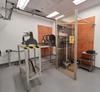
The NIST x-ray calibration facility is composed of a suite of rooms that includes the 11 m by 7 m calibration range, a dedicated equipment room, connected by custom shielding ports for communication with the x-ray tubes in the radiation area, an operator control center with a viewing window and...

Calibration of Space Weather Observational Instruments at NIST

Ongoing
Space-weather events are naturally occurring phenomena caused by activity on the Sun that affect us here on Earth. Solar storms can impact technology we rely on daily, like e.g. the Global Positioning System (GPS), communication satellites, and electric power grids. Various phenomena that originate...

Calibrations: Californium Neutron Irradiation Facility

Ongoing
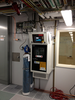
A high-activity Cf-252 source (~10 10 neutrons/s as of May 2024) is housed in a large (approximately 15 m x 10 m x 10 m high) room with concrete walls, floor, and ceiling (see photograph) at a depth of 10 meters-water-equivalent. In addition, there are two monoenergetic neutron generators for 2.5...
Was this page helpful?