An official website of the United States government
Here’s how you know
Official websites use .gov
A .gov website belongs to an official government organization in the United States.
Secure .gov websites use HTTPS
A lock (
) or https:// means you’ve safely connected to the .gov website. Share sensitive information only on official, secure websites.

DESCRIPTION: The Automated Surface Observing Systems (ASOS) meteorological station at Milford, Utah is pictured below (original image from http://www.wrcc.dri.edu/images/Station_pics/Utah/milford_ut_asos.jpg). The instrument that measures wind speed is the red and white striped pole. Since the...
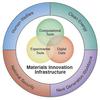
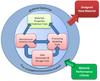
This project develops a database that includes tools, measurement data, material properties, and validation data to enable quantitative prediction of material flammability behavior, such as ignition, steady burning, and fire growth.
Objective
To develop, utilize, and analyze methods of characterizing the precursor materials in additive manufacturing in both virgin and recycled states with the goal of advancing measurement science to benefit the AM community. The components of principal interest will include the rheological...
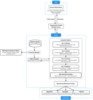
The NIST Materials Data Curation System (MDCS) provides a means for capturing, sharing, and transforming materials data into a structured format that is XML based amenable to transformation to other formats. The data are organized using user-selected templates encoded in XML Schema. These templates...
In support of NIST's MGI goals, the NIST materials data repository provides a concrete mechanism for the interchange and re-use of research data on materials systems.
The NIST repository is principally a file repository, accepting data in any format. To mitigate the opacity of binary data, and to...
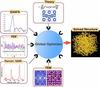
Microstructure evolution can be simulated using the CALPHAD approach and phase based models using thermodynamics software and models. The simulated microstructure is then evaluated by constitutive models and PyMKS. The optimization algorithms use the performance of the alloy to direct the search...
To develop the need data infrastructure and informatics tools, NIST is focusing on three areas: data curation, data infrastructure, and data access.
Data curation efforts include efforts to develop a phase-based materials ontology to ensure that the data is represented in a semantically...
Objective To improve building codes, standards, and engineering practice by developing and deploying advances in measurement science that enhance the robustness, resilience, and durability of materials and structures against natural and manmade hazards. Technical Idea The Materials and Structures...
Injury risks can be reduced by ensuring that protective equipment is well suited for the operational environment. Often, achievement of this goal relies on research to understand the operational environment, the underlying physics that govern the response of materials and equipment, and the...
Hydrogen is known to have a deleterious effect on steels and other metals, but steels are the most cost-effective and commonly used materials for pipelines and pressure vessels. We are collaborating with the code bodies (ASME B31.12 and ISO 11114-4), DOT, and DOE, to enable the implementation of...
From smart wearables, implants and ingestible electronics to remote physiological monitoring, the Internet-of-Things (IoT) technology has numerous applications in healthcare. IoT-Health has the potential to create a pervasive environment for monitoring patient health and safety as well as improving...
Mathematics plays an important role in the science of metrology. Mathematical models are needed to understand how to design effective measurement systems, and to analyze the results they produce. Mathematical techniques are used to develop and analyze idealized models of physical phenomena to be...
Light microscopy is unparalleled as a quantitative technique for studying cell biology, but assuring that the results of measurements and analyses are accurate, repeatable and sharable is challenging. Here we provide information on reference materials, protocols and approaches for evaluating the...
A very exciting development in the diagnosis and therapeutic monitoring of cancer is the discovery that blood and urine contain nucleic acids derived from cancer cells that can be used to as biomarkers. DNA, RNA, and microRNA derived from tumor cells can be measured with high sensitivity techniques...
The Structured Software Assurance (SSA) task is investigating a methodology known as "structured assurance case models," which have been used extensively in assuring safety-critical systems and applications, for their potential application in assuring other software system qualities, such as...
Functional materials enable applications in the computer, data storage, wireless communication, and energy sectors. The properties of many of these systems are critically dependent on deviations of local atomic arrangements from the global average of the crystal. No single measurement technique can...
The hydrogen storage project targets metrologies that assess kinetics and energetics of hydrogen charging and discharging in combinatorial structures as well as the degradation mechanisms that limit life of use. New capabilities are being developed and several existing measurement capabilities are...
A foundational activity that crosscuts our research goals is the development of a variety of standards and test materials to support the effective operation of trace explosive and narcotic detection devices. Trace sampling issues are addressed through fundamental studies on the adhesion and...
Objective To develop and deploy measurement science that will enable rapid design-to-product transformation through advances in: material characterization; in-process sensing, monitoring, and model-based optimal control; performance qualification of materials, machines, processes and parts; and end...
This program addresses measurements and standards necessary to develop and deploy advances in measurement science that will enable rapid design-to-product transformation; material characterization; in-process process sensing, monitoring, and model-based optimal control; performance qualification of...
Objective: To develop and deliver the measurement science identified by industry for assuring the performance of Industrial-by-Product (IBP) low-carbon footprint concretes with up to 50% by mass of the cement replaced by IBPs by 2015.
What is the new technical idea? The industry average cement...
Objective - To develop the measurement science needed to enable greater industry use of innovative concretes, such as 3D printing, more durable and limestone replacement concretes.
What is the new technical idea? Manufacturing of cement and production/placement of concrete requires significant...
Objective Develop measurement science for evaluating AI-based decision-making systems in automated vehicles. Technical Idea This project produces measurement methods, reference baselines, test tools, and scenario datasets that solve the measurement gap described above. Current evaluation methods...
Objective To develop and deploy advances in measurement science to support the design and operation of high-performance building systems capable of better supporting resiliency, grid-reliability/stability, and affordability while maintaining a healthy, safe indoor environment. What is the problem...