

Official websites use .gov
A .gov website belongs to an official government organization in the United States.

Secure .gov websites use HTTPS
A lock (
) or https:// means you’ve safely connected to the .gov website. Share sensitive information only on official, secure websites.


Measurement Science for Building Systems Program
Summary
Buildings account for 37% of the United States’ energy use, which is more than the transportation or industrial sectors [1]. Over 80% of a building's life cycle energy use is associated with operating the building, rather than the materials and energy used for construction [2]. The economic impact of buildings’ indoor environment, however, goes beyond energy costs, as studies report that employees’ annual salaries exceed building operation and rental costs by a factor of 100 and that improving the indoor environment of workplaces could result in productivity increases of $37B to $208B annually [3]. To minimize the costs associated with building system operation, to support technical innovation and job growth in the building and HVAC&R industries, and to provide workplaces and residences with indoor air quality that improves productivity and well-being, NIST will develop and deploy measurement science to support the design and operation of high-performance building systems while maintaining a healthy and safe indoor environment. The research program will develop measurement science that (1) reduces building heating and cooling costs, (2) quantifies the performance of heating and cooling equipment, (3) supports whole-building metrics that encompass energy and water use, indoor air quality (IAQ), economics, and safety, (4) enables on-site energy production and conversion, and (5) meets new challenges that face the building industry, such as airborne infectious disease and smoke from Wildfire Urban Interface (WUI) fires. The results of these measurement science improvements will be conveyed for their consideration in the formation of industry consensus standards and best practices that support the building industry.
Description
Objective
To develop and deploy advances in measurement science to support the design and operation of high-performance building systems capable of better supporting resiliency, grid-reliability/stability, and affordability while maintaining a healthy, safe indoor environment.
What is the problem?
Buildings and their occupants are vulnerable to strains in the electric grid, extreme weather events, and infectious diseases and other airborne contaminants. The electrical grid is likely to be challenged in the near future due to increasing commercial activity, particularly in data centers, and disruptions caused by weather events. The building stock represents a unique opportunity for reducing grid strain and is available in a time frame much shorter than other options, such as building new power plants. Increasing the efficiency of buildings reduces their electricity demand, freeing up energy for other uses, and facilitates shifting loads to parts of the day where the grid can more easily accommodate them. Moreover, these same efficiency measures can increase “passive survivability”, where the building remains at comfortable temperatures for some time after grid disruptions caused by weather events such as wildfires, high winds, floods, and more. These weather events also have the potential to create unhealthy indoor environments (e.g., smoke, mold), so it is essential to understand how building ventilation and air cleaning systems can maintain healthy indoor air in the face of such threats. Indoor air quality (IAQ) systems are also necessary for daily use to support occupant health, productivity, and protection from infectious diseases. Improvements in building science and measurement techniques will lead to both better solutions and industry consensus standards based on the best available information for controlling such threats.
Several factors make the development of measurement science for building systems challenging. First, the size of buildings makes assessment in laboratory settings difficult, and the long timescales (oftentimes a year or longer) over which performance needs to be quantified necessitate long-term testing along with complex approaches to simulate performance. In addition, buildings encompass many different components that are seldom designed and installed in a coordinated manner, and the overall building performance is highly dependent on the interactions between those components. The tremendous variability in buildings, with over 100 million dwelling units and 6 million commercial/institutional buildings in the U.S., creates a difficult task in developing solutions that are robust across such a wide range of buildings. Finally, building performance cannot be defined by a single metric, but requires consideration and optimization of the interaction between energy and water costs, IAQ, productivity, thermal comfort, lighting, acoustics, and other factors.
The program supports the measurement science needs identified by the building industry, specifically in its efforts to integrate building performance metrics, product and material life cycle assessment, and IAQ. The work carried out in this program aligns with the EL mission by promoting U.S. innovation and industrial competitiveness in the building sector by anticipating and meeting the measurement science and standards needs. The research aims to deliver healthy and safe building environments by utilizing EL’s core competencies in building and energy systems, measurement and metrics, technical support of industry-consensus standards and guidelines, and delivery of quality products. To achieve the program goals, we will coordinate with industry, academia, and standards development organizations.
What is the new technical idea?
The new technical idea is to use the knowledge and tools developed in the projects to help attain the national goals of increased resiliency, passive survivability, grid stability, affordability, and healthy indoor conditions. These goals provide a framework for studying and applying the technologies effectively within individual projects.
What is the research plan?
The program activities employ NIST’s technical experts, specialized test facilities, software, and standards-related tools. The projects are categorized according to whether they address (1) Integrated Whole-Building Performance or (2) Component Level Performance.
Integrated Whole-Building Performance
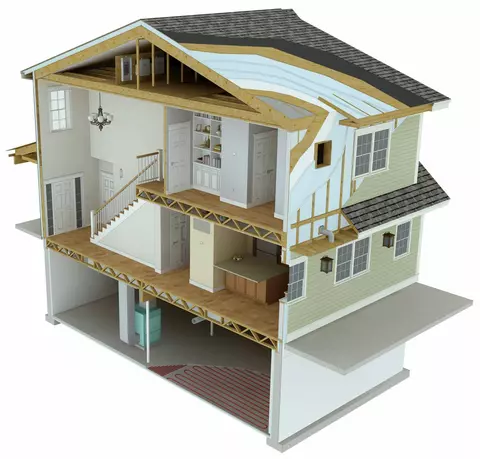
To increase the resiliency, passive survivability, and grid-stabilizing abilities of buildings, the average and peak energy demands of a building can be reduced or shifted in time. More efficient buildings can remain habitable to more challenging outdoor temperatures or with intermittent power from the grid. Such efficiency measures, however, can adversely affect other building properties such as indoor air quality, reliability, and operating and initial costs. Hence, it is essential to study and evaluate potential technologies in integrated test beds capable of simultaneously investigating the system interactions that affect their performance. NIST has several unique tools for studying whole-building performance, including the Residential Test Facility (RTF) and the Indoor Air Quality Manufactured House (IAQMH). These are full-scale, highly instrumented and characterized test homes that enable the precise quantification of the performance of heating, ventilating, and air-conditioning (HVAC) subsystems, the building, and their interactions in actual weather conditions over varying time periods. The effect on thermal comfort, air distribution, and indoor air chemistry can also be determined. Recent studies have focused on the dynamic (i.e., hourly, daily, and seasonal) performance of heating, ventilating, air-conditioning, and refrigeration (HVAC&R) equipment, indoor chemistry, and interzonal airflow, as well as diagnostic metrics that can help manage risks associated with airborne disease transmission, wildfire smoke, and other potential future hazards. Experimental test databases and predictive building modeling tools have been developed for both test beds and subsequently disseminated to the building industry and the research community. The modeling tools are particularly useful for extending the results to other climate zones, equipment types, operation schedules, and hardware configurations, thus increasing the utility of the results and providing input to industry consensus standards.
The program also employs unique large-scale controlled-temperature and humidity chambers, which can be used to test building systems under time-varying weather conditions to simulate seasonal performance. Recent work includes testing military environmental control units, ground-source heat pumps with integrated water heating and next-generation working fluids, and seasonal performance of air-source heat pumps in a wide range of climate zones. Future work includes evaluating standards that better characterize the real-world seasonal heating/cooling performance of HVAC equipment, while not being overly burdensome for manufacturers.
Building ventilation and indoor air quality are intimately coupled to the safety, comfort, and performance of a building and its occupants. NIST has developed a suite of simulation tools for describing ventilation and airborne pathogen transport in buildings and is working to disseminate and incorporate these tools into a wide range of building simulation models. This effort supports the development of industry-consensus standards and guidelines for IAQ and ventilation, ultimately improving occupant health while reducing energy consumption and operating costs.
Building stakeholders need practical information that aids long-term capital investment decisions related to building designs and technologies. This program, therefore, also includes the development and dissemination of software tools for the economic evaluation of building systems and whole buildings. These rely on detailed engineering models of the dynamic operational performance of building systems, accounting for the integrated nature of these systems and their impacts on occupants, coupled with ASTM standards-based economic analysis algorithms.
Integrated Whole-Building Performance projects:
- Heating, Ventilating, Air Conditioning, and Water Heating Performance in Residential Applications
- Tractable Seasonal Heating/Cooling Performance Standards for the HVAC Industry
- Ventilation and Indoor Air Quality in High-Performance Buildings
- Indoor Contaminants
- Building System Economics
Component Level Performance
Projects testing components and materials in smaller-scale laboratory facilities include those addressing photovoltaics and power electronics, refrigerant flammability, insulation thermal conductivity, and premise plumbing systems.
Photovoltaic systems are becoming an important share of existing grid-supplied electricity and can be used to provide resiliency, passive survivability, and grid stability. They are also used for powering new Internet of Things (IoT) devices and satellites. NIST has developed the most accurate systems available for measuring their performance and provides industry with an SI-traceable PV calibration service and standard reference instrument. NIST also pioneered a non-destructive detection method for characterizing defects in PV cells. This same method is also being applied to semiconductors used in power electronics (e.g., microinverters, traction motors, and data center and cloud computation servers), and is ultimately expected to be applied to a wide range of high-power semiconductor materials (e.g. silicon carbide and gallium nitride) currently under development by industry.
The U.S. HVAC&R industry has developed the next generation of refrigerant working fluids, which achieve good system capacity and efficiency, but are also mildly flammable. NIST has developed unique test methods for characterizing and predicting their flammability and formation of undesirable combustion by-products. These methods are of great interest to the U.S. Department of Defense, since they have a greater need to control refrigerant flammability in live-fire environments.
Insulation is a key component for reducing building heating and cooling electrical demand. NIST is the critical supplier of input to standards for insulation thermal conductivity measurements, standard reference materials (SRMs), and calibration services for industry. Newer insulation technologies are being developed that incorporate phase-change materials, that can store large amounts of thermal energy. These materials enable load shifting to reduce grid stress, as they can be charged during times of low demand and discharged during times of peak demand. Furthermore, these materials enhance the building's passive survivability, as internal temperatures can be maintained for longer periods with minimal or no external electrical input. NIST is developing new methods for characterizing and quantifying the performance of these new materials in practical applications.
Recently, two indoor air challenges have become increasingly important: indoor pathogen transmission and wildfire smoke infiltration. Fundamental research is needed to ensure that buildings can operate safely and economically in the face of these challenges. NIST utilizes world-class instrumentation to study the interactions of organic and inorganic compounds with surfaces and indoor air. This work is complemented by tests in the RTF, IAQMH, and other laboratory and field testing. All these efforts provide input data for industry consensus standards on air quality system best practices, enabling the U.S. to effectively prepare for and respond to these threats.
Premise (i.e., within-building) plumbing systems provide an essential building service, but their design and operation need modernization as existing plumbing guidelines have lagged new performance requirements and product development. Current design standards are based on technical data developed in the 1940s (or earlier), which assumed higher water flow rates and the use of pipe materials and designs that newer alternatives have largely replaced. Also, reducing water flows in modern buildings presents challenges to maintaining good chemical and microbial water quality. For example, lower flow rates increase residence times in plumbing systems, reducing the effectiveness of disinfectant chemicals and, thus, enhancing the potential for growth of opportunistic premise plumbing pathogens (OPPPs), such as Legionella. This project aims to provide a deeper understanding of the connection between water use, water heating energy, and water quality in support of safe water heating and plumbing systems in buildings. The project is working with national and international industry consensus standards to incorporate the research results into best practices and standards.
Component Level Performance projects:
- Electrical performance measurements of photovoltaics and wide band gap semiconductors for power electronics
- Flammability Metrics for Next Generation Refrigerants
- Assessment of High-Temperature and Innovative Insulation Thermal Performance
- Premise Plumbing Systems for High-Performance Buildings
References
[3] Fisk, William J. "How IEQ affects health, productivity." ASHRAE journal 44.5 (2002).
Major Accomplishments
Some recent accomplishments for the Measurement Science for Buildings Systems Program include:
- Online version of the Building for Environmental and Economic Sustainability software for selecting cost-effective, environmentally-preferable building products. Available at http://www.nist.gov/el/economics/BEESSoftware.cfm
- Published online Natural Ventilation Suitability Tool to help building designers identify opportunities for using natural or hybrid ventilation to reduce energy cost in buildings. Available at http://www.bfrl.nist.gov/IAQanalysis/software/CSTdesc.htm
- Published online software, LoopDA, for building designers to size openings for natural ventilation. Available at http://www.bfrl.nist.gov/IAQanalysis/software/LOOPDAdesc.htm
- Developed online software tool, EVAP-COND/ISHED, that simulates and optimizes the performance of finned-tube heat exchangers. Available at http://www.nist.gov/el/building_environment/evapcond_software.cfm
- Constructed new test facilities, including: product emissions testing chamber, photovoltaic spectral response laboratory, mini-breadboard heat pump, chiller evaluation rig
- Worked with leading architects and engineers to develop R&D plan for sustainability tool as documented in report: "Industry Needs Workshop: Metrics and Tools for Sustainable Buildings: Summary Report" Available at http://www.nist.gov/manuscript-publication-search.cfm?pub_id=907857