U.S. flag

An official website of the United States government

Official websites use .gov
A .gov website belongs to an official government organization in the United States.

Secure .gov websites use HTTPS
A lock ( ) or https:// means you’ve safely connected to the .gov website. Share sensitive information only on official, secure websites.

Projects/Programs

Displaying 76 - 85 of 85

Synthetic Biology

Ongoing
New measurement methods and tools are required for biology to emerge fully as an enabling, practical platform for engineering. The Cellular Engineering Group works to provide a foundation of measurement assurance to support the control and rational design of biological function. Through state of the...

Teaching Liquid State Theory to an Artificial Neural Network (ANN)

Ongoing
Scientific questions: Can an ANN allow us to predict the structure of fluids that are impossible to predict numerically via liquid-state theory? Can we learn something about liquid-state theory itself by the nature of the trained ANN? What features do the hidden layers capture?...

Temporal Computing

Ongoing
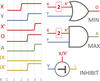
In standard integrated circuits, information that is coded as ones and zeros is implemented by voltages on wires being high or low. The circuits consume energy during transitions between these voltages. Binary numbers have a voltage per bit so there are a lot of transitions each time a number...

Training and optimization of hardware neural networks

Ongoing
The goal of this project is to develop a general method that can train many different types of neural networks, and to demonstrate and evaluate their performance on new emerging hardware. We aim to develop and demonstrate training on diverse hardware platforms, and in the presence of realistic noise...

Trustworthy Intelligent Networks

Ongoing
Our current research efforts include: The application of AI/ML techniques to detect abuse of the Domain Name System (DNS). The development of measurement techniques to characterize the robustness of AI/ML approaches to botnet detection. The application of AI/ML techniques to detect anomalies in the...

AI User Trust

Ongoing
The Visualization and Usability Group’s AI User Trust project provided foundational work for our new AI User Trust Measurement research, and continues to inform our larger Human-Centered AI program. Please read more about our current work on those pages. The information that follows is maintained...

Using AI to Determine Structure-Property Relations in Materials

Ongoing
The Material Measurement Lab at NIST employs artificial intelligence for the prediction and discovery of materials characteristics. Our applications of artificial intelligence (AI) accelerate materials research as well as help the community learn about AI's capabilities and gain confidence in...

Validating A.I. Pipelines for Analysis of Live Cell Image Data

Ongoing
We are exploring methods for very high-speed cell image data collection, which is enabling the repeated sampling of thousands of cells every 2 minutes. Rapid sampling allow us to observe dynamic processes in cells (such as cell division) on a relevant time scale. Such rates of sampling allows us to...

Wireless Coexistence

Ongoing
What is Wireless Coexistence? Wireless coexistence is the capability of multiple wireless devices and services in the same geographical area to access the same RF spectrum band simultaneously without causing harmful interference to each other. In other words, can they all operate successfully and...
Was this page helpful?