U.S. flag

An official website of the United States government

Official websites use .gov
A .gov website belongs to an official government organization in the United States.

Secure .gov websites use HTTPS
A lock ( ) or https:// means you’ve safely connected to the .gov website. Share sensitive information only on official, secure websites.

Projects/Programs

Displaying 151 - 175 of 194

Plasma Process Metrology

Ongoing
Intended Impact The model for rf bias effects that we have developed should make it easier for industry to select optimal operating frequencies and may stimulate the adoption of new methods for RF biasing, such as multiple-frequency bias and non-sinusoidal bias. NIST studies of electrical endpoint...

Portable Optical Lattice Clock

Ongoing
Exploiting their very high precision, atomic clocks today are used extensively in demanding timekeeping applications. These include a variety of navigation, communication, and remote sensing and imaging applications. The very best atomic clocks today, optical clocks, are among the most precise...

Precision Measurement Grants Program

Ongoing
If funding is available, one new grant in the amount of $50,000 per year will be awarded for the initial period of October 1 through September 30 of the following year. The award may be continued for up to two additional years; however, future or continued funding will be at the discretion of NIST...

Precision Spectroscopy and Quantum Control of Trapped Molecular Ions

Ongoing
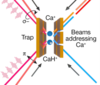
Spectroscopy and Quantum Control of Molecular Ions Molecules exhibit vibration and rotation of their nuclei, degrees of freedom not present in atoms, and less stringent selection rules for transitions. This creates experimental challenges and great opportunities for exploring new physics. In this...

Pressure/Vacuum Calibrations

Ongoing
Piston Gauge (29010C - 29040S) This service provides calibrated secondary standard piston gauges, calibrated electronic pressure instruments, and special tests of customer supplied piston gauges. Measurements of pressure are available for submitted calibration items for the range from 10 kPa to 280...

Quantum Bioimaging

Ongoing
Our efforts in BBD are focused on using the quantum nature of light to facilitate enhanced and novel measurement technologies for biological samples. For example, so-called bright squeezed laser sources enable imaging and sensing with less noise than is classically possible. Additionally, entangled...

Quantum Computing with Trapped Ions

Ongoing
Quantum Computing with Trapped Ions We pursue proof-of-concept experiments in quantum information processing and quantum control with trapped ions. In addition to pushing current limits on traditional quantum gate-based architectures for quantum computing we explore alternative approaches to...

Quantum Networking with Trapped Ions in Optical Cavities

Ongoing
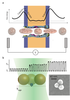
The goal of a quantum network is to establish entanglement as a resource between distant locations. Shared entanglement over long distances may enable distributed quantum computing, quantum-enhanced long-baseline interferometry, the transmission of complex quantum states, or a variety of other...

Quantum Nonlinear Optics for Metrology and Networking

Completed
We have generated "twin beams" of light using four-wave mixing (4WM) that are correlated at a level better than can be displayed by classical radiators. One particularly useful feature of the 4WM technique is that the light can easily be made in multiple spatial modes. That is, images with quantum...

Quantum Optical Networks

Ongoing
The program's technical research areas are: Architecture research for Quantum Optical Networks and integration with classical networks Management (label, identify, track) and Control Plane (signal and route optical paths) Software Stacks Performance monitoring for end-to-end Quality of Entanglement...

Quantum Pascal: Fixed Length Optical Cavity (FLOC) Pressure Standards

Ongoing
This project enables a quantum-based, SI-traceable method for realizing the pascal (Pa) while improving accuracy and allowing the replacement of existing mercury manometer pressure standards. The Fixed Length Optical Cavity (FLOC) pressure standard is a laser-based, SI-traceable primary pressure...

Quantum Physics Theory

Ongoing
The scope of the work ranges from calculations of QED effects in atoms to detailed studies of photon wave functions.

Quantum Radiometry

Ongoing
For quantum applications, it is important to generate quantum states of light and detect them with extremely high efficiency. This project explores the metrology challenges associated with precision measurement of single photon sources and detectors. The classical photonic radiometry techniques used...

Quantum Simulation and Sensing with Trapped Ion Crystals

Ongoing
Entanglement between individual quantum objects exponentially increases the complexity of quantum many-body systems, so systems with more than 30-40 quantum bits cannot be fully studied using conventional techniques and computers. To make progress at this frontier of physics, we are pursuing Feynman...

Raman Metrology and Instrumentation

Ongoing
Raman spectroscopy/microscopy is a powerful optical technique for rapid, non-destructive, label-free characterization of materials. It works under ambient conditions, often without requirement of any sample preparation. Applications span microelectronics, pharmaceutical, security and fundamental...

SDO/EVE/ESP Calibration

Ongoing
The SDO satellite is the first mission in NASA's Living With a Star program, which aims to understand the connections between the Sun and Earth. In addition to the light and heat with which we are familiar, the Sun produces x-ray radiation, extreme ultraviolet light, and the solar wind which...

Security (Archive): Neutron Detector Replacement Program

Completed
This course of action has included an intense sequence of tests of alternative technologies performed at the Los Alamos National Laboratory and the Nevada National Security Site. NIST has been integral to all phases of these testing programs, including evaluation of submitted detectors, design and...

Sensing and Imaging of concealed objects

Ongoing
Threats to personal and collective safety abound in our society. The Security Technologies Group (STG) performs research to advance the technology and measurement science of security imaging and sensing. This work includes the establishment of test and evaluation tools, reference test beds, test...

Sensing, Transport, and Simulation

Ongoing
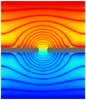
We have recently developed a finite-size scaling approach and special simulation cell aspect ratio—the golden aspect ratio—to enable accurate incorporation of access resistant and bulk diffusion in ionic transport, see the figure. This enables quantitative, and efficient, prediction of ion transport...

Silicon-based Solid-State Analog Quantum Simulators

Ongoing
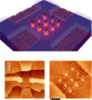
Why Atom-based Si AQS Analog quantum simulators are designed quantum systems with a tunable Hamiltonian to emulate complex quantum systems intractable using classical computers due to the exponential growth of the calculations with system size. Simulating strongly interacting fermions (electrons) on...

Single-molecule biosensors

Ongoing
We are developing new tools to investigate the energy landscape of single-molecule sensors. Our goal is to apply a wide-ranging array of technologies to probe the critical physicochemical properties of nanopore biosensors. These properties include the free energy of confinement for polymers as they...

Spectroscopy and Application of Solid-State Quantum Centers

Ongoing
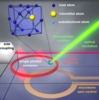
Quantum color centers in wide-bandgap semiconductors have spin and optical degrees of freedom, which can be leveraged for applications such as sensing and single-photon generation. In materials like diamond and silicon carbide, long spin lifetimes and quantum coherence times enable sensitive...

Standard Reference Materials: Standardization of 232U (SRM 4324c)

Ongoing
The certified massic activity for 232U was obtained by 4παβ LS spectrometry with two commercial LS counters. The beta detection efficiencies for the 232U daughters were calculated using the MICELLE2 code for the CIEMAT/NIST efficiency tracing (CNET) method with composition-matched LS cocktails of a...

Standard Reference Materials: Standardization of 243Am (SRM 4332f)

Ongoing
The certified massic activity for 243Am was obtained by 4παβ LS spectrometry with two commercial LS counters. The beta detection efficiencies for the 243Am daughter ( 239Np) were calculated using the CN2003 code for the CIEMAT/NIST efficiency tracing (CNET) method with composition-matched LS...

Standard Reference Materials: Standardization of 239Pu (SRM 4330d)

Ongoing
The certified massic activity for 239Pu was obtained by 4πα liquid scintillation (LS) spectrometry with two commercial LS counters. Confirmatory measurements were performed by LS counting comparative measurements against SRM 4330d, which was also standardized in 2009 by 4pa liquid scintillation (LS)...
Was this page helpful?