U.S. flag

An official website of the United States government

Official websites use .gov
A .gov website belongs to an official government organization in the United States.

Secure .gov websites use HTTPS
A lock ( ) or https:// means you’ve safely connected to the .gov website. Share sensitive information only on official, secure websites.

Projects/Programs

Displaying 51 - 75 of 86

A Point Process Model for Evacuation Flows: The Hawkes Mode

Ongoing
Results from a case study of evacuations of 14 office and residential buildings in the United States led us to model occupant exit times as a Hawkes point process, N(t). N(t) the number of evacuee exits in the time interval (0,t]. Because the Hawkes model is self-similar, human to human interaction...

Polymer Analytics

Ongoing
This project focuses on a variety of activities to achieve the aforementioned goal of accelerating the discovery of new polymer physics. Enhanced machine learning Two major hurdles to applying machine learning to polymer science is a lack of large datasets and a need to understand the model...

Publishing Services

Ongoing
The NIST Research Library occupies the unique position of serving NIST both as publisher of the NIST Technical Series, and in an archival capacity, responsible for collecting and preserving copies of NIST's grey literature. Over the last 15 years, the Library's publishing services have evolved from...

Quantifying Uncertainty in Accelerometer Sensitivity Studies

Ongoing
DESCRIPTION: International Key Comparisons are performed. The key comparison reference value for charge sensitivity as a function of frequency and the accompanying uncertainty are the principal objectives of these studies. In a suggested mixed effects model several methods for evaluation of this...

Radiative Decay of the Neutron

Ongoing
When a neutron decays by its radiative decay (RDK) mode, it produces a photon with a energy spectrum predicted by Quantum Electrodynamics. These RDK photons deposit energy in scintillators which produce voltage pulses in Avalanche Photo Diodes. We are developing nonlinear calibration models to...

Research Data Framework (RDaF)

Ongoing
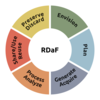
What is the Research Data Framework? A map of the research data space: who, what, where, why, when? A dynamic guide for the various stakeholders in research data to understand best practices for research data management and dissemination A resource for understanding costs, benefits, and risks...

Research on Statistical Methods Project

Ongoing
The division typically produces one to a few publications on new statistical methods each year. A list of publications on some research from the past few years is shown below below. Following the publication list, an example of current work on the development of novel statistical methods, useful...

SED Consulting Program

Ongoing
Description: Specific SED contributions include: Leadership in the establishment of a high standard of statistical practice within NIST via interactions with technical staff, publications, workshops, and seminars. Design and analysis of experiments, and evaluation of measurement uncertainties for...

Short Courses

Ongoing
Topics, along with a description, for previously-taught classes are below. New topics are being considered. If you have a suggestion for a course, or would like to request that a course be taught, please contact Julia Sharp (julia.sharp [at] nist.gov (julia[dot]sharp[at]nist[dot]gov)).

Smart Grid Communication Networks

Ongoing
Objective: To accelerate the development of scalable, reliable, secure, and interoperable communications and standards for smart grid applications; and to enable informed decision making by smart grid operators by developing measurement science-based guidelines and tools. What is the new technical...

Software and Data Carpentry

Ongoing
Software and Data Carpentry workshops conducted at NIST are designed to teach basic computing and data skills that enable NIST researchers to get more done in less time, while also making it easier to automate and document research workflows. These skills can allow for more rapid and reliable...

Speaker and Language Recognition

Ongoing
Current Speaker and Language Recognition technology activities: Speaker Recognition Evaluation series: (1996-) A biennial NIST evaluation of fully automated text-independent speaker recognition technology. View the 2012 NIST SRE report. Human Assisted Speaker Recognition Evaluation series: (2010- )...

Speech Analytics

Ongoing
Current speech analytics work: OpenSAT is a new speech analytic evaluation series designed to include developers from multiple speech analytic technologies where common datasets are used in NIST evaluations. The goal is to bring together developers focused on different speech analytic tasks to...

Statistical Characterization of High-Speed Oscilloscopes and Photodiodes

Ongoing
As part of a interdisciplinary team including staff from the Optoelectronics and the Radio Frequency Technology Divisions of EEEL, SED staff are developing statistical methods and associated software for calibration of high-speed digital sampling oscilloscopes and characterizing the impulse response...

Statistical Education Project

Ongoing
The NIST laboratory has over 1300 scientists and engineers formulating investigations, planning experiments, collecting data, analyzing data, and deriving scientific/ engineering conclusions. All of these scientific-method components may benefit from both the general and NIST-specific statistical...

Statistical Methods in Millimeter-Wave Wireless Metrology

Ongoing
DESCRIPTION: One of the measurement solutions is the use of reverberation chambers for free-field testing of wireless devices. A reverberation chamber is an environment for electromagnetic compatibility testing and other investigations. Quantities of interest that have been studied for wireless...

Statistical Methods for Quantitative Imaging

Ongoing
In this project, we have gained valuable experience in the emerging area of developing metrology support for medical image decision making, and we have focused mainly in the area of high resolution CT imaging for lung nodules,using both phantoms and clinical data, in the context of RSNA's QIBA...

Statistical Methods in Waveform Metrology

Ongoing
One of the methods developed is the timebase correction procedure for waveforms. A waveform is a representation of a signal varies with time. The most familiar waveform is the sine wave. Waveform measurements are required throughout the optical communications, computer, wireless communications...

Statistical Process Monitoring for Autocorrelated Data Project

Ongoing
Process monitoring is very important for industries. Statistical methodologies have been used to monitor various production process successfully. The majority of statistical process monitoring techniques assume that the process data are free of autocorreation. However, this assumption isfrequently...

Statistical Process Monitoring for Autocorrelated Data

Ongoing
DESCRIPTION: Process monitoring is very important for industries. Statistical methodologies have been used to monitor various production process successfully. The majority of statistical process monitoring techniques assume that the process data are free of autocorreation. However, this assumption...

Statistical Support for Bioassay Standard Development

Ongoing
Biological assays are procedures that can determine concentration, purity, or biological activity of a substance through scientific experimentation. Fluorescence-based quantification one of the most widely used technique in quantitative clinical and biochemical assays, and it depends on the...

Statistics for Ballistics Identification

Ongoing
DESCRIPTION: Statistical Engineering Division has had an ongoing collaboration with NIST's Precision Engineering Division (now Semiconductor and Dimensional Metrology Division) and Office of Law Enforcement Standards (now in the Office of Special Programs) in the field of firearms and tool mark...

Strategies for Testing Embedded Software

Ongoing
The objective of this project is to develop efficient new testing strategies for devices following a model outside the usual non-software-embedded framework using the concept of Expectation Maximization (EM). The EM approach is attractive because it would provide an efficient method for extending...
Was this page helpful?