U.S. flag

An official website of the United States government

Official websites use .gov
A .gov website belongs to an official government organization in the United States.

Secure .gov websites use HTTPS
A lock ( ) or https:// means you’ve safely connected to the .gov website. Share sensitive information only on official, secure websites.

Projects/Programs

Displaying 51 - 75 of 118

International Comparisons for Chemical Measurements

Ongoing
International agreements and decisions concerning trade and our social well-being increasingly require mutual recognition of measurements and tests among nations. The Mutual Recognition Arrangement (MRA) on national measurement standards and calibration and measurement certificates issued by NMIs...

Isotope Metallomics Quality Assurance Program (IMQAP) Consortium

Ongoing
The use of stable metal isotopes in the health and medical sciences, known as Isotope Metallomics, shows promise for developing clinical biomarkers and improving diagnostics and prognostics. This field is grounded in the idea that certain pathologies trigger physiological responses which lead to...

Isotope Metrology

Ongoing
The application of isotope measurements drives advances in an enormous number of fields and stakeholder engagements, including federal and state government agencies, academia, and private industry including the medical industry. The objective of the NIST Isotope Metrology Program is to address the...

Isotopes as Environmental Tracers in Biological Specimens

Ongoing
Multicollector inductively coupled plasma mass spectrometry (MC-ICP-MS) provides sensitive and precise measurements of stable isotope ratios and can be coupled to a variety sample introduction systems such as laser ablation and gas or liquid chromatography. The versatility and performance of MC-ICP...

Measurement Quality in Hydrogen Storage R&D

Ongoing
The hydrogen storage project targets metrologies that assess kinetics and energetics of hydrogen charging and discharging in combinatorial structures as well as the degradation mechanisms that limit life of use. New capabilities are being developed and several existing measurement capabilities are...

Measurements and Standards for Botanical Dietary Supplements

Ongoing
Many consumers believe that botanical dietary supplements will improve their health and that these "natural" remedies are both effective and free from the side effects that may occur with other medications. There are occasional reports of inaccurate labeling, adulteration, contamination (with...

Measurements and Standards for Contaminants in Environmental Samples

Ongoing
In 1971 NIST issued the first natural environmental matrix SRM for contaminants, SRM 1571 Orchard Leaves, with certified concentrations for trace elements. The development of SRM 1571 Orchard Leaves formalized the approach of combining results from "two or more independent and reliable analytical...

Measurements and Standards for Contaminants in Biological (Human) Materials

Ongoing
The development of SRMs to support measurements for contaminants in biological fluids and tissues will expand quality assurance capabilities to important species critical to human health. We will provide SRMs that are representative of the analytical challenges that may be encountered by analysts in...

Measurements and Standards for Organic Contaminants in Wildlife Matrices

Ongoing
Monitoring contaminant exposure in wildlife is crucial to assess the impact of environmental contaminants on animal health. The development of methods to screen samples for the presence of new compounds (non-targeted research) and to measure the accurate concentration of known, targeted compounds in...

Measurements and Standards to Support Nutrition Labeling

Ongoing
Well-characterized certified reference materials are needed by laboratories in the food testing and nutrition communities to facilitate compliance with labeling laws and improve the accuracy of information provided on product labels so that consumers can make good choices. As a result of the...

Method Assessment for Non-Targeted Analyses (MANTA) Program

Ongoing
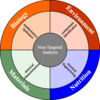
Typical targeted analysis aims to detect and/or quantify a set of known chemical compounds using specific instrumental techniques (such as liquid chromatography with triple quadrupole mass spectrometry). In contrast, non-targeted analysis is an analytical technique that detects, identifies, and/or...

METIS

Ongoing
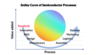
A Metrology Exchange to Innovate in Semiconductors

pH Metrology

Ongoing
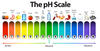
The suite of NIST pH SRMs forms the basis for pH measurements in the United States, and pH is the most-often-measured chemical quantity. Hence this NIST work directly or indirectly impacts a large number of users in industry, government, and academia. One of the most critical set of users is in...

Metrology of Purity and Contaminants in Solid Materials

Ongoing
Purity evaluations of high-purity bulk materials used in chips manufacturing are calibrated against reference materials that are often not matrix-matched to the materials under test. In other words, differences in the compositions of the calibrants and the samples being analyzed can result in large...

Metrology and Standards for Canine Olfactory Detection of Explosives

Completed
Effective and accepted by the public, trained dogs are the most frequently deployed detection systems for identification of explosives threats in mobile applications. In addition to being highly sensitive, dogs can rapidly discriminate the unique profile of an explosive in a presence of a large...

Microbial Metabolomics

Ongoing
Mass spectrometry (MS) and nuclear magnetic resonance (NMR) spectroscopy are widely used and complementary analytical platforms for the characterization, identification, and quantification of a metabolome. MS techniques, typically coupled to chromatography, provide a chemical fingerprint of complex...

Micronutrients Measurement Quality Assurance Program (MMQAP)

Completed
The MMQAP supported the long-term (months to years) reliability of selected fat- or water-soluble vitamin measurements in human serum and plasma. Results from the comparison studies helped participants to make accurate clinical and health-care decisions as well as to maintain and improve their...

Molecular Innovation in Agriculture

Ongoing
Plant science and breeding aim to develop new plant phenotypes with desired qualities, increased production, disease resistance, and traits that reduce water usage. At the federal level, plant research is conducted by the USDA's Animal and Plant Health Inspection Service (APHIS) and Agricultural...

Multidimensional Chromatography

Ongoing
The development of robust analytical methods remains one of the most important (and costly) parts of chemical metrology. The separation of targeted constituents from other components in a sample matrix is necessary for accurate and precise measurements. Multidimensional chromatography is an...

New Chemical Measurement Methods

Ongoing
The Biochemical and Exposure Science Group (BESG) located at the Hollings Marine Laboratory is focused on advancing measurement techniques to effectively detect compounds of emerging concern. The BESG has a long history of developing accurate and precise analytical methods for emerging organic...
Was this page helpful?