Official websites use .gov
A .gov website belongs to an official government organization in the United States.

Secure .gov websites use HTTPS
A lock (
) or https:// means you’ve safely connected to the .gov website. Share sensitive information only on official, secure websites.


Blog Search


Jason Hattrick-Simpers
Jason Hattrick-Simpers is a materials research engineer in the Materials for Energy and Sustainable Development Group at the National Institute of Standards and Technology. He got his B.S. in mathematics and physics at Rowan University and his Ph.D. in materials science and engineering at the University of Maryland. Prior to joining NIST, he was an assistant professor of chemical engineering at the University of South Carolina. When he isn’t doing science, he is either running, eating, playing video games or spending time with family.

Thomas Lucatorto
Tom Lucatorto received his Ph.D. from Columbia in 1968 for work on atomic structure. He has over 125 publications and four patents, is a Fellow of the American Physical Society, and is the recipient of the Department of Commerce Silver Medal in 1980 and in 2013. He has been the leader of the Ultraviolet Radiation Group at NIST for the last three decades. That group’s role is to provide accurate measurements in the spectral range from 4 nm to 400 nm, which include calibrations of all NASA and NOAA’s solar UV instruments and other optics used in astronomy, fusion plasma diagnostics, laser development and EUV lithography.
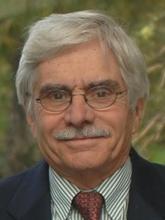
Charles Tarrio
Charlie Tarrio received his BS from Bates College in Lewiston, Maine, and Ph.D. in physics from the University of Virginia. He has been at NIST since 1991 developing at-wavelength EUV metrology and studying properties and contamination of EUV optics.


Robert M. Thompson
Robert M. Thompson is a senior forensic science research manager and has been with the Special Programs Office-Forensic Sciences at the National Institute for Standards and Technology (NIST) for 12 years. Mr. Thompson has a master of forensic science degree from The George Washington University and a BS in forensic science from the California State University in Sacramento.
Prior to joining NIST, Mr. Thompson worked as a forensic examiner with the Bureau of Alcohol, Tobacco, Firearms and Explosives (ATF), the Washoe County Sheriff’s Department, the Oregon State Police, and the GeneLex Corporation. He is a court-accepted expert in several disciplines and has testified as an expert witness in numerous federal and state courts. He is a member of and presents in regional, national, and international forensic science societies. He has numerous publications in international forensic science journals.



Jenise Reyes-Rodriguez
Jenise Reyes-Rodriguez is a computer scientist within the Information Technology Laboratory at NIST. She holds a bachelor’s degree in computational mathematics from the University of Puerto Rico at Humacao, with some grad courses in digital forensics. Some of her interests outside work are spending time with family, playing sports, working out, dancing and is also a dance fitness instructor at the NIST gym.
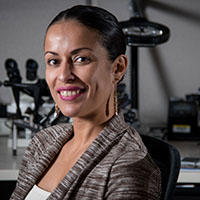


Kristen Greene
Kristen Greene is a Cognitive Scientist in the Visualization and Usability Group at NIST. She conducts usability and human factors research for NIST’s Public Safety Communications Research (PSCR) and usable cybersecurity programs. She has an M.A. and Ph.D. in cognitive psychology from Rice University. She is an experienced researcher, having conducted research in the Attention and Perception Laboratory at the University of South Carolina, the Usability Testing and Analysis Facility at NASA Johnson Space Center, the Computer Human Interaction Laboratory at Rice University, and now the Information Technology Laboratory at NIST.