Official websites use .gov
A .gov website belongs to an official government organization in the United States.

Secure .gov websites use HTTPS
A lock (
) or https:// means you’ve safely connected to the .gov website. Share sensitive information only on official, secure websites.


Blog Search



B. Carol Johnson
B. Carol Johnson received the B.S. in engineering physics from the University of Colorado in 1979 and a M.A. and Ph.D. in astronomy from Harvard University in 1980 and 1985, respectively, arriving at NIST as a National Research Council (NRC) Fellow and later joining the Radiometric Physics Division (now the Sensor Science Division). She has received several awards, including the NIST Distinguished Career Award and the Department of Commerce Gold Medal. Her hobbies include conversion to native plants, hiking, and watching Misty the Blue Weimaraner enjoy life.
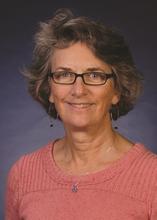


Maxwell Maurice
Maxwell is a physicist and an electronics engineer at NIST. He primarily performs system integration and testing of mobile broadband communications systems and is currently focused on the Highly Mobile Deployed Networks project (HMDN). Maxwell obtained a bachelor of science in engineering physics from the University of Colorado at Boulder in May 2018. Prior to joining NIST in March 2017, he worked with RF cavity resonators in Boulder. He will be graduating from the University of Colorado at Boulder with a master's of engineering in electrical engineering in August 2021.
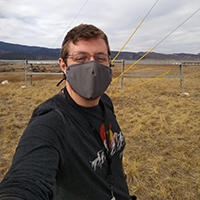

Judah Levine
Judah Levine has been a physicist at NIST and a professor at the University of Colorado Boulder since 1969. He is also a fellow of NIST and a fellow of JILA, a joint institute of the NIST and the University of Colorado Boulder. Presently, he designs the algorithms that realize UTC(NIST) and TA(NIST) and maintains the code that realizes these algorithms. He also designs and operates a number of services to distribute time and frequency information. These services include digital-network based services such as the Network Time Protocol and ACTS and services based on both geosynchronous and navigation satellites.
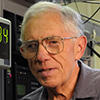



Xi He
Xi He is an assistant professor in the Cheriton School of Computer Science at the University of Waterloo. Her research interests span the areas of privacy and security for big-data management and analysis. She obtained her Ph.D. at Duke University. She has given tutorials on privacy at VLDB 2016 and SIGMOD 2017. She received a best demo award on differential privacy at VLDB 2016 and was awarded a 2017 Google Ph.D. Fellowship in Privacy and Security

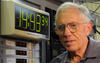

William A. MacCrehan
Research chemist Bill MacCrehan has been with NIST for 44 years, developing new measurement technology for applications as diverse as measuring organomercury in fish tissue, nitroaromatic pollutants in diesel soot, sulfidic compounds in Chesapeake Bay sediments, chlorination products of pharmaceutical compounds in wastewater, vitamins A,E, and K in human serum, organic gunshot residue, trace explosives detection, nanoparticle characterization, and novel materials for bomb dog training. He has been adjunct professor at The George Washington University and University of Maryland and is affiliate professor at Auburn University. He likes boating and riding his motorcycle and has three adult sons – all professionals.



Matt Fieldman
Matthew Fieldman is currently Executive Director of America Works, a nationwide initiative to coordinate the American manufacturing industry's training efforts, generating a more capable, skilled, and diverse workforce. Based at MAGNET: The Manufacturing Advocacy and Growth Network, Matt works across the nation's Manufacturing Extension Partnership (MEP) system to increase collaboration, efficiency, and impact of local and regional workforce development efforts.
Previously, he was Vice President of External Affairs for MAGNET, a nonprofit that helps Northeast Ohio’s small- and medium-sized manufacturers grow locally while competing globally. In this role, he launched the Ohio Manufacturing Survey; mspire, a regional startup pitch competition; helped launch manufacturing apprenticeships for inner-city youth; and is responsible for fundraising, legislative relations, media relations, and more. Concurrently, Matthew is the founding Board Chair of EDWINS Restaurant and Leadership Institute, Cleveland's first nonprofit restaurant and one of the first of its kind nationally to train formerly incarcerated individuals to work in fine dining. He raised over $600,000 to start EDWINS and was named “2014 Fundraiser of the Year” by Fundraising Success magazine for his efforts. He is also the founder of Cleveland Codes, one of the nation's first nonprofit software bootcamps devoted specifically to training low-income adults for careers in technology. Originally from Orlando, Florida, Matt earned a Bachelor of Science in Psychology, cum laude, from the University of Florida, a Master of Business Administration from The George Washington University, and a Certificate in Nonprofit Management from Case Western Reserve University. He is a former Ariane de Rothschild and American Council on Germany Transatlantic Fellow, and is currently a Civil Society Fellow at the Aspen Institute.