Official websites use .gov
A .gov website belongs to an official government organization in the United States.

Secure .gov websites use HTTPS
A lock (
) or https:// means you’ve safely connected to the .gov website. Share sensitive information only on official, secure websites.


Blog Search

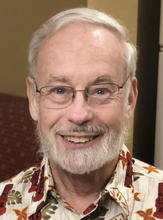
Richard G. Gann
Richard G. Gann is the retired chief of the Fire Science Division at the National Institute of Standards and Technology (NIST). His 49-year career runs the gamut from basic fire science to its application in fire safety standards. Among his 148 technical publications, he was the editor of the final NIST reports: The Collapses of the World Trade Center Towers and The Collapse of World Trade Center Building 7, and the 1200-page Advanced Technology for Fire Suppression in Aircraft.


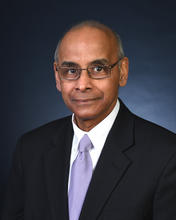
S. Shyam Sunder
S. Shyam Sunder led the Federal Building and Fire Safety Investigation of the World Trade Center Disaster in the aftermath of the terrorist attacks of Sept. 11, 2001. He is now the director of NIST’s Special Programs Office and its Chief Data Officer. Sunder is a recipient of the Presidential Rank Award of Distinguished Executive (2017), and the Gold Medal Award (2005) from the U.S. Department of Commerce, its highest honor, for distinguished leadership of the WTC investigation. Sunder was elected to the National Academy of Construction in 2012.
Kathryn Butler
Kathryn Butler is a physicist in the NIST Fire Research Division. She is currently working on understanding the fire behavior of fences, mulch and woodpiles in wildland-urban interface (WUI) fires. Butler received a Department of Commerce Gold Medal for her work on the NIST investigation of the World Trade Center disaster and a NIST Bronze Medal for her work on the evacuation of people with mobility impairments during building fires.



Michael Pease
Michael Pease joined the Engineering Lab at the National Institute of Standards and Technology (NIST) in 2018 with more than 25 years of experience in both the public and private sector supporting information technology (IT), Cybersecurity, and maintaining cybersecurity programs for IT and operational technology (OT) environments. Michael is currently focused on cybersecurity for industrial control systems (ICS) and their operating environments as a member of the Cybersecurity for Smart Manufacturing Systems Project. Working collaboratively with the NIST Computer Security Division (CSD), the National Cybersecurity Center of Excellence (NCCoE), and the Manufacturing Extension Partnership (MEP), Michael supports developing specific guidance on the application of NIST security standards and guidelines to ICS environments.
Michael has a Bachelor of Science in Mechanical Engineering from the University of Maryland, College Park and hold certifications from both ISACA and (ISC)2 including Certified Information Systems Security Professional (CISSP), Certified Information Security Auditor (CISA), and Certified Risk and Information Systems Control (CRISC). Additionally, Michael is a Certified Java Programmer and is proficient in multiple technologies including JavaScript, .Net, Python, and C/C++ in addition to SQL and non-SQL databases.



Erin Legacki
Erin Legacki is a National Research Council (NRC) post-doctoral associate at NIST Charleston with the Biochemical and Exposure Sciences group at NIST. She received a B.S. in animal science and a Ph.D. in animal biology with a designated emphasis in reproductive biology from The University of California, Davis (UC Davis). Currently, she is working in comparative endocrinology measuring hormones and hormones metabolites in unique matrices, mucus and urine, using LC-MS/MS methodology. Her projects span multiple species (salmon, cheetah and human) as well as multiple government and academic institutions.



Dave Pierson
Dave Pierson is a Senior Design Engineer for MAGNET, part of the MEP National Network, and a notable figure in the advanced manufacturing (AM) community. He has 25 years of varied and practical additive manufacturing training experience that covers seven AM standards categories as set by the American Society for Testing and Materials.


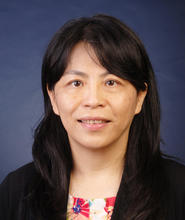
Yee-Yin Choong
Yee-Yin Choong is a Human Factors Scientist in the Visualization and Usability Group, Information Technology Laboratory at NIST. Yee-Yin conducts research in human-centered design and evaluation, public safety communication technology, augmented-reality usability, usable cybersecurity, and biometrics usability. Prior to joining NIST in 2006, she practiced human factors and usability engineering in the private sector for 10 years, covering areas such as telecommunications, Business-to-Business eCommerce, Web-based applications, and software internationalization. Yee-Yin received her MS degree in Industrial Engineering from the Pennsylvania State University and her PhD in Industrial Engineering, specialized in Human Factors from Purdue University.



Chike Abuah
Chike Abuah is a PhD candidate (computer science) at the University of Vermont. His interests include software engineering, data privacy, computer security, and programming languages. Currently he researches and implements programming languages and analysis tools which help programmers build reliable software. Chike received his BA from Grinnell College, MS from the University of Massachusetts, and was previously a full stack software engineer at a startup in NYC.