

Official websites use .gov
A .gov website belongs to an official government organization in the United States.

Secure .gov websites use HTTPS
A lock (
) or https:// means you’ve safely connected to the .gov website. Share sensitive information only on official, secure websites.


Blog Search



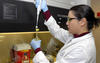
Stacy S. Schuur
Stacy S. Schuur is a biologist in the Biospecimen Sciences Group at NIST. She has a master's in marine biology from the College of Charleston and a bachelor’s degree in biology with environmental emphasis from Southwest (Minnesota) State University. Stacy has served as a science advisor at NIST and as an Embassy Science Fellow in Palau,where she helped to co-create the Our Ocean conference. Stacy is also lead for several standard reference materials (SRMs) in addition to STAMP. Outside of NIST, Stacy is often found building community, cooking plant-based meals, facilitating healing through ayurveda, NLP, reiki, yoga, learning something new, and traveling.

René Peralta
René Peralta received a B.A. in Economics from Hamilton College in 1978. In 1980 he received a M.S. in Mathematics from the State University of New York at Binghamton. In 1985 he received a Ph.D. in Computer Science from the University of California at Berkeley. For the next 20 years he held various positions in academia, mostly as a professor of cryptology, algorithmics and computational number theory. In 2005 he moved to NIST. He is currently a scientist with the Computer Security Division. Among the projects he is currently involved in are The NIST Randomness Beacon, Circuit Complexity, Privacy Enhancing Cryptography, and Post-Quantum Cryptography.


Luís T.A.N. Brandão
Luís Brandão received a Lic. in Technological Physics Engineering from Technical University of Lisbon, and a Ph.D. in Electrical and Computer Engineering from Carnegie Mellon University. He is currently with the NIST cryptographic technology group, computer security division, as a foreign guest researcher (contractor from Strativia). Among his activities at NIST, he is currently involved with the Privacy Enhancing Cryptography, Threshold Cryptography, Interoperable Randomness Beacons and Circuit Complexity projects.
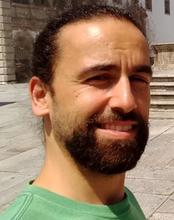

Nicholas G. Dagalakis
Nicholas G. Dagalakis has undergraduate university degrees in mechanical and electrical engineering and three graduate degrees from the Massachusetts Institute of Technology.
He has worked for two small private companies and two universities.
He has several years of University teaching experience and many years of engineering research work experience in high-speed trains, superconducting generators, modal analysis, robotics and artificial skin, loss of control biomechanics, impact biomechanics and computer-assisted orthopaedic surgery.
He has conducted research for the NIST RoboCrane, now used for the clean-up of the Chernobyl and Fukushima nuclear power plants disaster sites, also on high precision micro-nano robot manipulators and positioners, now part of the NIST physical realization of the kilogram instrument displayed in the NIST museum. Currently, his research focus is on collaborative robots’ control and metrology instrumentation and for understanding the human injury mechanism inflicted by robots, using human tissue bio-simulant artifacts.
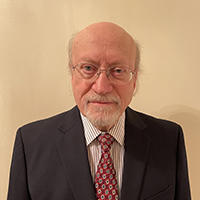
Jamie L. Weaver
Jamie L. Weaver holds a Ph.D. in chemistry with a focus in radiochemistry from Washington State University. During her graduate studies, she was a research fellow in the Radiochemical Processing Laboratory at Pacific Northwest National Laboratory. She joined NIST as a National Research Council post-doctoral associate in 2017 and was appointed the neutron depth profiling (NDP) instrument custodian in 2018.





Juliana Canale
Juliana Canale, a Food Manufacturing and Regulatory Expert at New Jersey Manufacturing Extension Program (NJMEP), is an experienced food safety and quality professional. Her expertise lies in food safety, regulation and compliance for small-to-midsize companies.





Michelle Peña
Michelle Peña is a writer/editor for the Baldrige Performance Excellence Program at NIST. Her background includes degrees in English and Spanish from George Mason University, an advanced degree from George Washington University, and more than 20 years of experience in the publishing industry.
Michelle is passionate about the benefits of personal development in the workplace and helping others become more emotionally resilient leaders in their community. Her blogs provide encouraging perspectives to help employees and businesses thrive and build a culture of continuous improvement.
As a digital marketing enthusiast, she also enjoys sharing motivational social media content and actionable growth strategies that professionals can use to empower their organization.



Jonathan Griffin
Jonathan Griffin is a science writer and media liaison in the NIST public affairs office, where he tells stories about and disseminates NIST’s engineering research through several mediums. During graduate school, he transitioned from engineering research to science communication and went on to write for the University of Florida, American Geophysical Union and American Society for Biochemistry and Molecular Biology. If you catch him during his off-hours, you may find him sketching or cruising on a skateboard.

