Official websites use .gov
A .gov website belongs to an official government organization in the United States.

Secure .gov websites use HTTPS
A lock (
) or https:// means you’ve safely connected to the .gov website. Share sensitive information only on official, secure websites.


Blog Search


Mark Esser
Mark Esser has been a writer/editor in the NIST Public Affairs Office since October 2007. He has written internal and external news, video scripts, speeches and other content on a wide variety of subjects. He helped to initiate and served as contributing and managing editor of the NIST Taking Measure blog from 2016 until 2021. He now works in NIST internal communications.
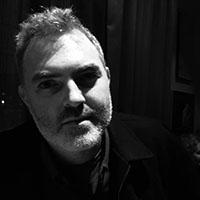



Claire McKay Bowen
Claire McKay Bowen is the Lead Data Scientist for Privacy and Data Security at the Urban Institute. Her research focuses on assessing the quality of differentially private data synthesis methods and science communication. In 2021, the Committee of Presidents of Statistical Societies identified her as an emerging leader in statistics for her technical contributions and leadership to statistics and the field of data privacy and confidentiality.


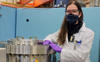
Matthew Inniger
Matt has been with CIFT, which is part of Ohio MEP, for three years, and in that time has worked with hundreds of companies providing various engineering solutions needed to fit unique situations. He manages CIFT’s Advanced Technology Program in the areas of automation and robotics. Matt also supports the Product Development team on certain projects, both in benchtop work and production scale-up.




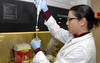
Stacy S. Schuur
Stacy S. Schuur is a biologist in the Biospecimen Sciences Group at NIST. She has a master's in marine biology from the College of Charleston and a bachelor’s degree in biology with environmental emphasis from Southwest (Minnesota) State University. Stacy has served as a science advisor at NIST and as an Embassy Science Fellow in Palau,where she helped to co-create the Our Ocean conference. Stacy is also lead for several standard reference materials (SRMs) in addition to STAMP. Outside of NIST, Stacy is often found building community, cooking plant-based meals, facilitating healing through ayurveda, NLP, reiki, yoga, learning something new, and traveling.
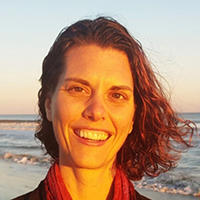
René Peralta
René Peralta received a B.A. in Economics from Hamilton College in 1978. In 1980 he received a M.S. in Mathematics from the State University of New York at Binghamton. In 1985 he received a Ph.D. in Computer Science from the University of California at Berkeley. For the next 20 years he held various positions in academia, mostly as a professor of cryptology, algorithmics and computational number theory. In 2005 he moved to NIST. He is currently a scientist with the Computer Security Division. Among the projects he is currently involved in are The NIST Randomness Beacon, Circuit Complexity, Privacy Enhancing Cryptography, and Post-Quantum Cryptography.
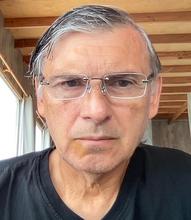
Luís T.A.N. Brandão
Luís Brandão received a Lic. in Technological Physics Engineering from Technical University of Lisbon, and a Ph.D. in Electrical and Computer Engineering from Carnegie Mellon University. He is currently with the NIST cryptographic technology group, computer security division, as a foreign guest researcher (contractor from Strativia). Among his activities at NIST, he is currently involved with the Privacy Enhancing Cryptography, Threshold Cryptography, Interoperable Randomness Beacons and Circuit Complexity projects.
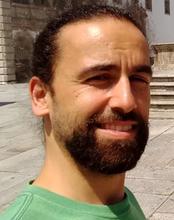

Nicholas G. Dagalakis
Nicholas G. Dagalakis has undergraduate university degrees in mechanical and electrical engineering and three graduate degrees from the Massachusetts Institute of Technology.
He has worked for two small private companies and two universities.
He has several years of University teaching experience and many years of engineering research work experience in high-speed trains, superconducting generators, modal analysis, robotics and artificial skin, loss of control biomechanics, impact biomechanics and computer-assisted orthopaedic surgery.
He has conducted research for the NIST RoboCrane, now used for the clean-up of the Chernobyl and Fukushima nuclear power plants disaster sites, also on high precision micro-nano robot manipulators and positioners, now part of the NIST physical realization of the kilogram instrument displayed in the NIST museum. Currently, his research focus is on collaborative robots’ control and metrology instrumentation and for understanding the human injury mechanism inflicted by robots, using human tissue bio-simulant artifacts.