Official websites use .gov
A .gov website belongs to an official government organization in the United States.

Secure .gov websites use HTTPS
A lock (
) or https:// means you’ve safely connected to the .gov website. Share sensitive information only on official, secure websites.


Blog Search
Keith Groves
Keith Groves is a Manufacturing Consultant for the University of Tennessee Center for Industrial Services (UT CIS), part of the MEP National NetworkTM. He is an expert on Lean Methodologies and Business Transformation.


Maria Dillard
Maria is a research social scientist for NIST's Community Resilience Group. Her research is focused on community response to hazards and chronic stressors and the development of methods for measurement and modeling community resilience, recovery, well-being and vulnerability. She serves as associate team lead for the NIST Hurricane Maria Program and associate lead technical investigator of the National Construction Safety Team (NCST) investigating the impacts of Hurricane Maria on Puerto Rico. She also leads a National Windstorm Impact Reduction Program (NWIRP) project in the Hurricane Maria Program that examines the recovery of the services provided by schools and hospitals and the role of these social institutions in the recovery of communities following disasters.





Kris Bertness
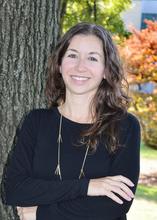
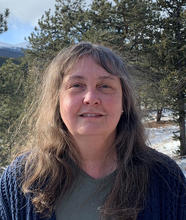
Kris Bertness is a group leader in the Applied Physics Division of NIST in Boulder, Colorado. She has been at NIST for over 25 years, working mostly on semiconductor metrology and crystal growth, with a focus on nanostructures. Before coming to NIST, she worked at the National Renewable Energy Laboratory in Golden, Colorado, developing high-efficiency solar cells, one of which set at new world record for efficiency. She also worked early in her career at the industrial research center for Varian Associates, which is where she first learned semiconductor crystal growth. Kris has a Ph.D. in physics from Stanford University and a B.A. in physics from Oberlin College. She is an avid gardener and amateur singer, and volunteers in local and international charitable endeavors.

Abhradeep Guha Thakurta
Abhradeep Guha Thakurta is a senior research scientist at Google Research - Brain. His primary research interest is in the intersection of data privacy and machine learning. He focuses on demonstrating, both theoretically and in practice, that it is possible to design differentially private learning algorithms that can scale to industrial workloads. Prior to Google, Abhradeep was a faculty at UC Santa Cruz. And even before that he worked at Apple and Yahoo Labs as research scientists. He did his Ph.D. from The Pennsylvania State University in 2013, and his postdoctoral appointment was with Stanford University and Microsoft Research Silicon Valley Campus. Abhradeep has more than 40 publications at prestigious conferences/journals in computer science, including, STOC, FOCS, SODA, ICML, NeurIPS, COLT, IEEE S and P, JMLR, and Siam Journal of Computing. Abhradeep holds more than 10 granted US patents.
Nicolas Papernot
Nicolas Papernot is a Research Scientist at Google Brain, and an Assistant Professor in the Department of Electrical and Computer Engineering and the Department of Computer Science at the University of Toronto. He is also a faculty member at the Vector Institute where he holds a Canada CIFAR AI Chair, and a faculty affiliate at the Schwartz Reisman Institute. His research interests span the security and privacy of machine learning. Nicolas is a Connaught Researcher and was previously a Google PhD Fellow. His work on differentially private machine learning received a best paper award at ICLR 2017. He is an associate chair of IEEE S&P (Oakland) and an area chair of NeurIPS. He earned his Ph.D. at the Pennsylvania State University, working with Prof. Patrick McDaniel.