An official website of the United States government
Here’s how you know
Official websites use .gov
A .gov website belongs to an official government organization in the United States.
Secure .gov websites use HTTPS
A lock (
) or https:// means you’ve safely connected to the .gov website. Share sensitive information only on official, secure websites.

According to the Office of the US Surgeon General, approximately one in five deaths annually is related to smoking. Additionally, the economic impact of smoking...
The Centers for Disease Control and Prevention (CDC) estimates that over 40 % of Americans suffer from diabetes-related conditions, including 29 million...
Natural erosion and weathering of rocks and soils, as well as inputs from industrial processes, contribute to the mineral content of groundwater, rivers, lakes...
Blog Posts
Measuring Microplastics: To Solve the Problem, We Have to Understand and Measure It
Ambient Ionization Mass Spectrometry (AI-MS) AI-MS remains a versatile field enabling direct analysis of samples in situ, requiring minimal or no sample preparation. These platforms are leveraged for the trace detection of organic and inorganic compounds, including, homemade and improvised...
Surface and Trace Chemical Analysis Group employs a range of commercial pneumatically-assisted electrospray ionization (ESI), atmospheric pressure chemical ionization (APCI), and atmospheric pressure photoionization (APPI) sources for traditional mass spectrometric chemical analysis, identification...
Protocol gas standards are employed in measurements made for compliance purposes; one of the major uses is for measurements of regulated gaseous species from stationary source emitters, i.e., stack gases. Many of these stationary sources are regulated through the Cap and Trade program; therefore...
CO 2 Reference Materials The Gas Sensing Metrology Group at NIST has a long history of providing reference materials to industry, monitoring communities, and academia. The program began in the 1970’s by developing an initial suite of CO2 primary standard mixtures (PSMs) to support the US Department...
Zachary Reed, Manfred Birk, Yan Tan, Christina Cecelski, Georg Wagner, Shui-Ming Hu, David Long, Rui-Heng Yin, Joseph Hodges
We present accurate transition intensities for the R0 to R10 manifolds of 12CH4 in the 2ν3 tetradecad region determined independently by two separate...
Evan Groopman, Todd Williamson, Kyle Samperton, Spencer M. Scott, Bryan Foley, Michael Bronikowski, George King, Matthew Wellons
In this study, we demonstrate a new dual-field multicollector protocol for magnetic sector large-geometry secondary ion mass spectrometry that enables...
Ashley Russell, Carolyn Burdette, Johanna Camara, Nathanael Heckert, Jennifer Hoguet, Kevin Huncik, Jared Ragland, Elena Wood
Standard Reference Material (SRM) 3672a Organic Contaminants in Smokers' Urine (Frozen) and SRM 3673a Organic Contaminants in Non-Smokers' Urine (Frozen) are...
Lee Yu, Steven Christopher, Regina Easley, Monique Johnson, Dennis Leber, Thomas Vetter, Jason Waters, Charles Barber, Karen Murphy, Laura Wood, Stephen Chin, Murli Narayan, Alexander Rhodes, Michael Nash
The National Institute of Standards and Technology (NIST) Standard Reference Material® (SRM®) 956e Electrolytes in Frozen Human Serum is intended for use in the...
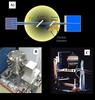
Field evaporates (with a voltage and laser pulse) a sharp tip-shaped specimen. Collects the ionization products in a position-sensitive, time-of-flight mass
Light elements such as helium, lithium, boron, and nitrogen are essential constituents in materials that enable energy technologies; lithium ion batteries