

Official websites use .gov
A .gov website belongs to an official government organization in the United States.

Secure .gov websites use HTTPS
A lock (
) or https:// means you’ve safely connected to the .gov website. Share sensitive information only on official, secure websites.


From its inception 100 years ago, the field of quantum mechanics has produced some of the most unexpected insights into the natural world, unlocking a vast universe of technologies that enhance our daily lives in ways we may not even realize. From GPS and smartphones, to cybersecurity and precision instruments for defense, to exquisitely accurate measurements that underpin our commercial transactions, quantum has made our technologies more accurate, more trustworthy, and more secure. Quantum science promises to generate new knowledge and technologies that will offer revolutionary advances in physics, materials science, chemistry, biomedicine, encryption, communications and many other areas.
NIST's Role in Quantum Science
NIST is developing measurement science techniques, tools and related standards to enhance the competitiveness of the U.S. quantum industry and the economic well-being and national security of the United States.
NIST has become a world leader in quantum science and technology based on decades of fundamental research. Quantum technologies developed by NIST — from new encryption algorithms to world-leading sensors and deployable standards — provide transformative solutions for national challenges. NIST has played a key role in American leadership in quantum science by contributing its technical depth and excellence to a wide range of activities resulting from the 2018 National Quantum Initiative (NQI) Act.
Subtopics


Explainers

Quantum Computing Explained

What Is Quantum Cryptography?

What Is Post-Quantum Cryptography?

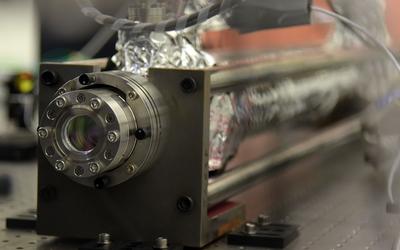
Optical Frequency Combs
Spectroscopy: A Measurement Powerhouse
NIST In Focus
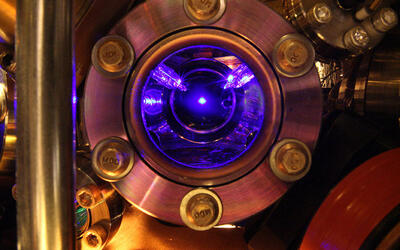
Atomic Clocks

NIST and The Nobel
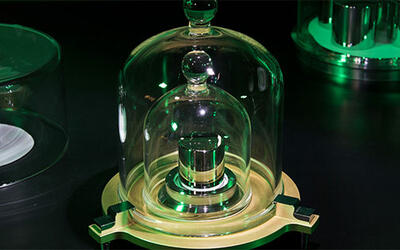
SI Redefinition
Leveraging NIST experience by forging strategic partnerships
NIST engages with U.S. quantum stakeholders through the industry-led Quantum Economic Development Consortium, which has more than 250 member organizations, including 180-plus industry members.
NIST has three joint institutes focused on different aspects of QIS: JILA at the University of Colorado Boulder, and the Joint Quantum Institute (JQI) and
Joint Center for Quantum Information and Computer Science (QuICS) at the University of Maryland. These long-standing partnerships enable highly productive collaborations among physicists, computer scientists and quantum information scientists.
NIST supports National Science Foundation, Department of Energy, Department of Defense, DARPA and IARPA efforts in QIS by providing technical expertise, collaborating with quantum centers, and forming joint consortia. Ongoing programs include the Quantum Systems through Entangled Science and Engineering
(Q-SEnSE), Quantum Systems Accelerator (QSA), Superconducting Quantum Materials and Systems Center (SQMS), the Institute for Robust Quantum Simulation (RQS), and Entangled Logical Qubits (ELQ).
Featured Blog Posts
Quantum and Dance: It Takes 2 to Entangle
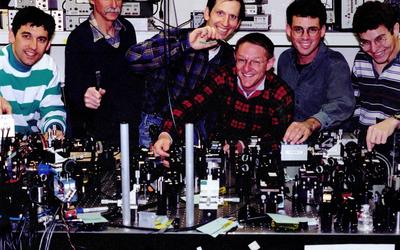
How NIST Helped Start an Industry: Our Role in Jump-Starting Quantum Information Science
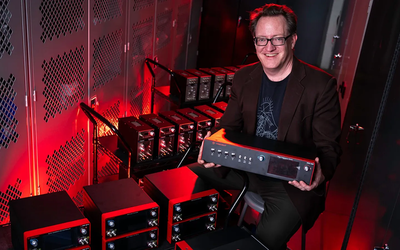
Quantum Advances: NIST and Industry Drive Powerful Computing and Clocks
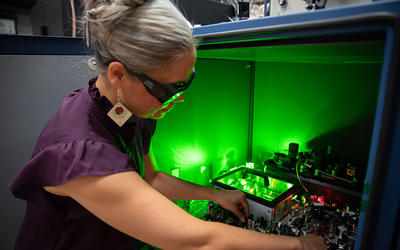
5 Concepts Can Help You Understand Quantum Mechanics and Technology — Without Math!
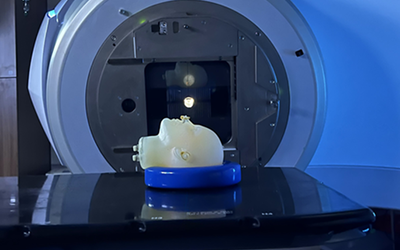
Precise Measurements Can Help Cancer Patients Live Longer, Healthier Lives
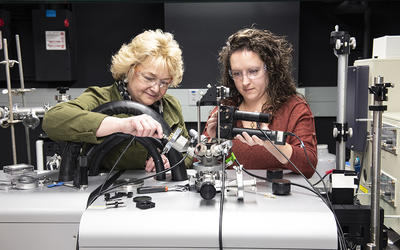
From Postdoc to Quantum Physicist: How NIST Made Me a Better Scientist and Leader
Cross-cutting impact
The NIST quantum research program is geared toward developing the measurement science and standards considered essential to building a strong quantum ecosystem in the U.S., from ground-breaking fundamental science to a thriving quantum industry.
Computing
NIST’s basic research on trapped ions, neutral atoms, superconducting circuits, photons and performance benchmarking has underpinned the development of commercial quantum computing technologies. NIST continues to advance the performance and scaling of quantum systems necessary to overcome the technical barriers to building the large quantum computers that will be able to solve high-impact practical problems.
Standards
To strengthen U.S. competitiveness in the emerging global quantum market, NIST actively contributes to and facilitates industry engagement in the standardization of quantum technologies. NIST administers the U.S. Technical Advisory Group of the IEC/ISO Joint Technical Committee on Quantum Technologies, which is the international hub for quantum standardization. The committee is driving science-based pre-standardization work in areas such as quantum-relevant photonics and other quantum-enabling technologies.
Sensors
NIST actively develops novel quantum-enhanced sensors, such as atom-based magnetic field sensors and superconducting photon detectors. Many of these technologies have been commercialized, giving U.S.-based businesses a competitive advantage in critical and emerging technology.
Timekeeping
To support the U.S. economy, including e-commerce, secure communications, and positioning, navigation and timing (PNT), NIST develops world-leading clocks, including those based on novel optical-lattice, trapped-ion and nuclear-transition approaches.
Networking
To capture the anticipated benefits of distributed quantum computing and sensing, NIST develops and tests key components of quantum networks, builds network prototypes, and maintains a test bed. Through the Washington Metropolitan Quantum Network Research Consortium (DC-QNet), NIST supports the Department of Defense in its development of national security applications of quantum technologies.
Quantum-enabling technologies
NIST develops supporting technologies that make field deployment of quantum devices easier, such as advancing single-photon detectors and optimizing cryogenics for faster cooldown and lower energy consumption.
Post-quantum cryptography (PQC)
In 2024, NIST published the first three post-quantum encryption standards to protect data from the threat of a future quantum computer that could break or weaken classical encryption. This work will help to protect trillions of dollars of global e-commerce, assure the confidentiality of national security information, and secure the intellectual property of U.S. industry.
Workforce training
To meet industry demand, NIST helps develop a quantum-ready workforce through its joint institutes and undergraduate, graduate and postdoctoral programs. Hundreds of NIST alumni fill key industry research, development and management positions, strengthening U.S. quantum information science competitiveness.