

Official websites use .gov
A .gov website belongs to an official government organization in the United States.

Secure .gov websites use HTTPS
A lock (
) or https:// means you’ve safely connected to the .gov website. Share sensitive information only on official, secure websites.


Resilient Infrastructure and Future Hazard Impacts: Windstorms
Summary
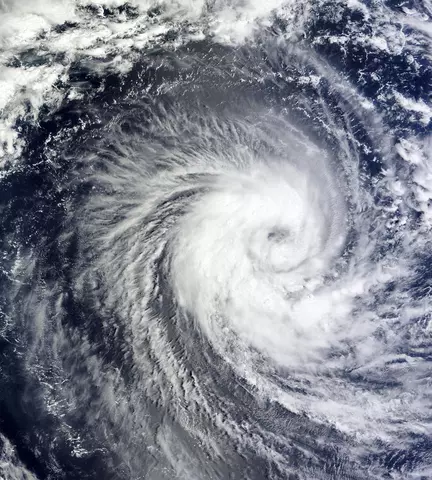
This project focuses on supporting NIST’s Forward Looking Building Standards efforts and identifying methods and practices for incorporating future hazards from various windstorm types (e.g., extratropical and tropical cyclones, thunderstorms, and tornadoes) into codes and standards, to support the resilience of buildings, infrastructure, and communities.
Description
Objective
By 2026, publish A Roadmap to Advance Standards for the Built Environment Subject to Future Hazards and Conditions. By 2028, have provisions for future wind hazards incorporated into the ASCE 7-28 Standard for Minimum Design Loads on Buildings and Other Structures.
Technical Idea
Engineers, planners, and communities are addressing future hazards and conditions to meet client requests and are looking for consensus guidance and standards to support their practice and decision-making. Currently, this challenge is being addressed ad hoc using available knowledge, resulting in significant variability across projects and communities. The next generation of national consensus standards needs to provide analysis methods and design criteria for future hazard events including consideration of their impacts on community resilience. Design criteria that address future hazards and conditions require an understanding of how these hazards affect the performance of construction materials and structural systems in new and existing buildings and infrastructure. For example, the current approach for addressing structural reliability needs revision, as reliability methods based on historical events do not adequately address future nonstationary hazards and conditions. Current design criteria may lead to buildings and infrastructure that cannot withstand future events due to increased loads from future hazards or reduced capacity due to accelerated degradation. Accommodation of future hazards and conditions will reduce economic and social impacts through improved performance and post-event recovery.
The next edition of the ASCE 7 Standard for Minimum Design Loads and Associated Criteria for Buildings and Other Structures will incorporate a new Chapter 36 on Loads in Future Conditions. Using the latest research in nonstationarity of observed hazard conditions and forecasts of future hazard conditions, NIST will lead the development and management of proposals to incorporate predicted changes in future extreme winds into ASCE 7-28.
This project will (1) advance our understanding of past and future windstorm hazards, including spatiotemporal changes in the frequency and intensity of extreme winds due to extratropical and tropical cyclones, thunderstorms and tornadoes, and (2) develop a scientific basis for incorporating the effects of future windstorm hazards and conditions on the performance of buildings and infrastructure. NIST possesses core competencies in the technical fields mentioned above and has a reputation for thoroughness, integrity, and effective collaboration with code and standard development organizations and federal and private sector partners.
Research Plan
The project will develop a science-based approach to address nonstationary future windstorm hazards and conditions for buildings and infrastructure, with a focus on future hazard characterization for design applications. Historical data on extreme winds from different windstorm types will be analyzed to quantify observed temporal trends in frequency and intensity across the country. Projections of potential future changes in extreme winds will also be developed. Results of these analyses will be used to create best estimates of future wind conditions over the typical service life of new buildings, forming the basis for proposing new future condition wind provisions for the ASCE 7-28 standard.