

Official websites use .gov
A .gov website belongs to an official government organization in the United States.

Secure .gov websites use HTTPS
A lock (
) or https:// means you’ve safely connected to the .gov website. Share sensitive information only on official, secure websites.


Remembering Pearl Harbor: NIST Metallurgists Help Preserve USS Arizona
- Residual oil from the attack on Pearl Harbor in 1941 is still leaking into the ocean.
- Today, the USS Arizona Memorial rests atop the sunken remains of the once-mighty warship.
- Luckily, two NIST experts determined it will take 100-plus years before the USS Arizona's steel hull will collapse.
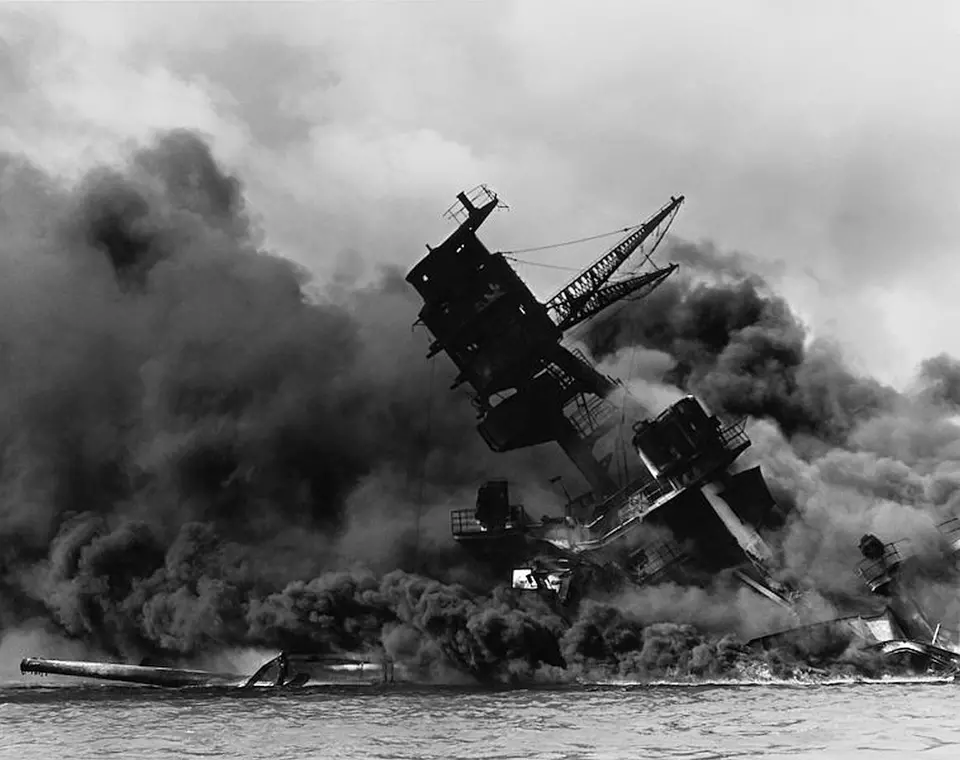
Within nine minutes of being bombed by the Japanese on Dec. 7, 1941, the USS Arizona sank to the bottom of Pearl Harbor. More than 2,000 service members and civilians were killed in the attack.
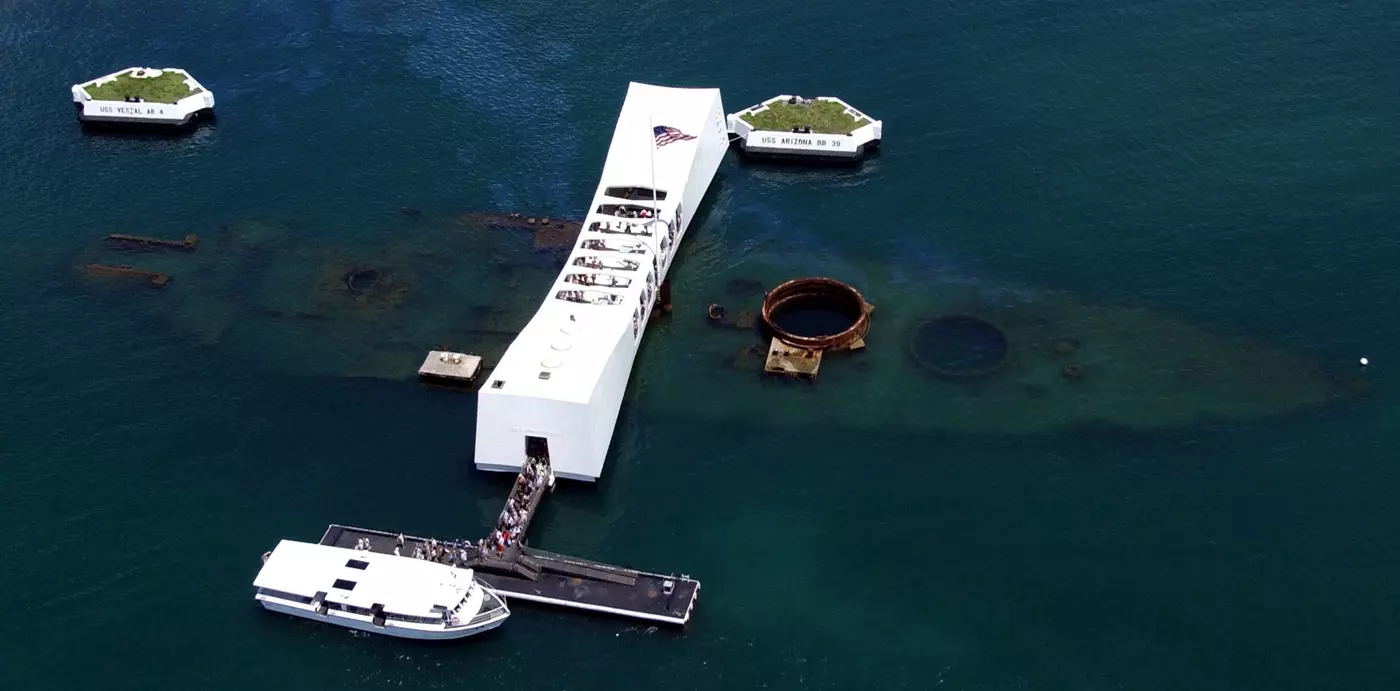
Today, the USS Arizona Memorial rests atop the sunken remains of the warship.
Approximately 1.9 million liters (500,000 gallons) of residual oil remain inside the deteriorating hull. Fuel continues to seep out of the wreckage.
The National Park Service (NPS) and the U.S. Navy are focused on the rate of oil release and the cumulative impacts of small amounts of oil on Pearl Harbor's tropical waters.
Research led by scientists from the National Institute of Standards and Technology (NIST) has shown that Arizona's structure will remain largely intact for many years.
In 2006, then-NIST researchers Tim Foecke and Li Ma built a highly detailed computer model of the ship’s midsection. The model allowed Foecke to “virtually degrade” the ship by simulating decades of seawater exposure and structural deterioration.
Based on his calculations, Foecke believes that it will be between 100 and 150 years before the Arizona’s steel hull completely collapses.
The oil cannot be completely removed without compromising large sections of the vessel and intruding on what is considered an underwater cemetery. Therefore, NPS and the Navy are considering nonintrusive methods to “seal” the fuel permanently inside.

Did You Know?
- Since 1982, the U.S. Navy has allowed survivors of the 1941 attack on the USS Arizona to be interred inside the vessel upon their deaths. Following a full military funeral at the USS Arizona Memorial, the cremated remains are placed in an urn and deposited by divers beneath one of the submerged gun turrets.
- President Dwight D. Eisenhower signed legislation in 1958 to create the national memorial to the fallen of the USS Arizona. Funds to build it came from both public and private donations, including more than $50,000 contributed by entertainer Elvis Presley, who performed a benefit concert in 1961 near the site.