

Official websites use .gov
A .gov website belongs to an official government organization in the United States.

Secure .gov websites use HTTPS
A lock (
) or https:// means you’ve safely connected to the .gov website. Share sensitive information only on official, secure websites.


Wai Cheong Tam (Fed)
Mechanical Engineer
Dr. Andy Tam is a Mechanical Engineer in the Fire Fighting Technology Group at the National Institute of Standards and Technology (NIST). As the Lead for the AI-Enabled Smart Fire Fighting project, he directs a team that leverages artificial intelligence and machine learning to develop data-driven safety solutions. His work focuses on enabling real-time hazard forecasting and delivering actionable intelligence to enhance situational awareness for first responders.
Dedicated to mentorship, Dr. Tam serves as an advisor in the U.S. National Research Council (NRC) Research Associateship Programs. He actively recruits postdoctoral researchers interested in AI, fire hazard forecasting, physiological monitoring, recommendation systems, and the early detection of Li-ion battery thermal runaway. Additionally, he facilitates research opportunities for students through the SURF (undergraduate) and GMSE (graduate) programs, as well as international collaborations via the Foreign Guest Research Program (FGRP).
Prior to his current role, Dr. Tam was an NRC Postdoctoral Research Associate at NIST. He holds a Ph.D. in Mechanical Engineering from the Hong Kong Polytechnic University, where he worked with Professor Walter W. Yuen to develop RADNNET-ZM , a neural network-based radiation solver for heat transfer analysis. His current research interests bridge thermal radiation heat transfer with interdisciplinary machine learning applications for smart firefighting, firefighter health monitoring, and battery safety.
Recently Funded Proposals
Augmented Intelligence in Semiconductor Manufacturing (Gregory Vogl, Peter Denno, Wai Cheong Tam, Christopher Lemieux, Van Sy Mai) ($4.9M) (FY25 - FY27)
Development of a Robust Sensing System to Detect Early Thermal Runaways in Lithium-ion Batteries
(Wai Cheong Tam, Anthony Putorti Jr., Qi Tong) ($150K) (FY25)
Supporting the Fire Service: Research Needs for Emerging Electrification Fire Risks (Hongqiang Fang, Juan Fung, Michelle Donnelly, Stanley Gilbert, David Butry, Wai Cheong Tam) ($114K) (FY25)
A Motion-Cancelling Physiological Monitoring Device for Safe Fire Fighting
(Wai Cheong Tam, Christopher Brown, Jun Wang) ($112.5K) (FY22)
True local temperature measurement for fire exposed surfaces using fiber optic sensor array (Chao Zhang, Tobias Herman, Wai Cheong Tam, Thomas Cleary) ($120K) (FY21)
A Neural Network Approach to Smart Firefighting for Residential Buildings in Realistic Fires (Wai Cheong Tam, Tom Cleary) ($150K) (FY20)
Service roles
Member of the Institutional Review Board (2025 –Present): NIST IRB
AI Task Group (2025 –Present) SFPE Foundation
Member-at-Large for Engineering Laboratory (2024 – Present): NIST AI Community of Interest
External advisory panel member (2024 – Present): SFPE Foundation Grand Challenges Initiative
Scientific advisory committees (2024 – 2025): Intl. Symposium on Lithium Battery Fire Safety
Program committee in AI (2024 – 2025): 2025 AI in Fire Engineering Summit
Recent news

A Warning For When A Lithium-Ion Battery Is About To Explode
December 06, 2024
Interview with Mr. Ira Flatow from Science Friday.
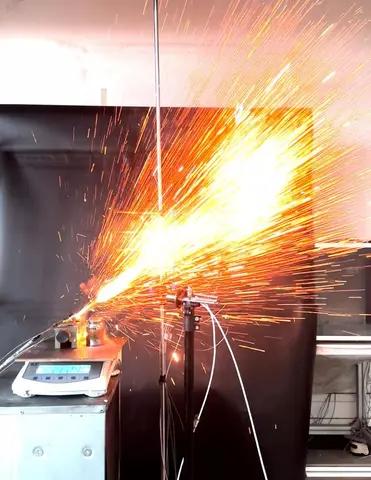
AI Can ‘Hear’ When a Lithium Battery Is About to Catch Fire
November 14, 2024
About a minute before a battery is about to explode, built-up gases escape and make a small noise. Using machine learning, the NIST team developed a program that can identify that sound with 94% accuracy.

AI Can Accurately Predict Potentially Fatal Cardiac Events in Firefighters
July 11, 2023
There’s a lesser-known danger to the firefighters who brave smoke and flames: stress on their hearts. But an AI-based tool developed at NIST could help predict life-threatening cardiac events.
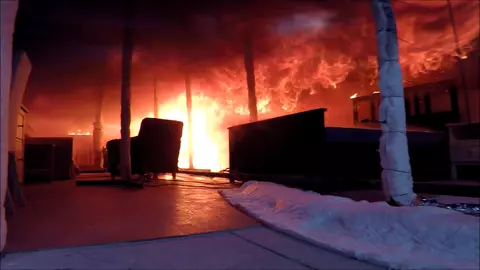
AI May Come to the Rescue of Future Firefighters
AUGUST 10, 2022
Flashover is one of the leading causes of firefighter deaths, but new research suggests that artificial intelligence (AI) could provide first responders with a much-needed heads-up.

NIST researchers have a breakthrough that could save the lives of firefighters
JULY 8, 2021
Interview with Mr. Tom Temin from Federal News Network
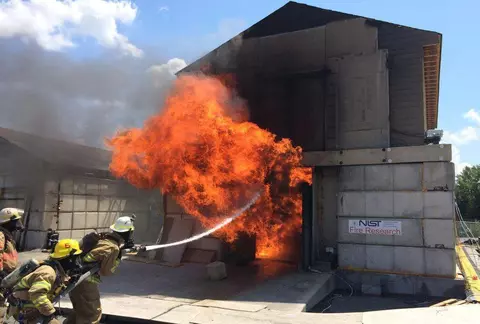
How AI Could Alert Firefighters of Imminent Danger
JUNE 1, 2021
Firefighting is a race against time. Exactly how much time? For firefighters, that part is often unclear. Building fires can turn from bad to deadly in an instant, and the warning signs are frequently difficult to discern amid the mayhem of an inferno.
Recent scholars and students in my team
- Mr. Md. Ismail Siddiqi Emon, Machine Learning Associate at NIST, 2024 – Present
- Dr. Hongqiang Fong, Research Scientist at NIST, 2023 – Present
- Dr. Qi Tong, Research Scientist at NIST, 2023 – 2024 (Currently a Fire Protection Engineer at Fire and Risk Alliance, USA)
- Mr. Linhao Fan, M.S. student at Zhengzhou University, CN, 2022 – Present (Currently a Ph.D. student at University of Science and Technology of China)
- Mr. Denglin Kang, M.S. student at the University of Southern California, USA, 2022 - Present
- Dr. Jiajia Li, Research Scientist at NIST, 2022 – 2023 (Currently a UX Researcher at Google Inc., USA)
- Mr. Michael Ngai, a volunteer student from Phillips Exeter Academy, 2021 - 2022
- Ms. Christina You, SURF student in Summer 2020 at NIST (Currently an ML engineer at META, USA)
- Dr. Jun Wang, PostDoc at NIST from 2019 - 2020 (Currently a Data scientist at Xiaomi, CN)
Awards
- Jack Watts Award by Fire Technology Journal, Springer (2025)
- People's Choice Poster Award - Preliminary Steps Towards A Wearable Device For Real-time Cardiac Monitoring Among Active Firefighters To Prevent Sudden Cardiac Events (2025)
- Best Oral Presentation Award - Development of a Robust Early-Stage Thermal Runaway Detection Model for Lithium-ion Batteries by Asia-Oceania Symposium on Fire Science and Technology Conference (2024)
- Ronald K. Mengel Award - Development of an Explainable Machine Learning Based Flashover Prediction Model by NFPA Suppression, Detection and Signaling Research and Applications Conference (2023)
- Sheldon Tieszen Award - An Explainable Machine Learning Based Flashover Prediction Model Using Dimension-Wise Class Activation Map by the 14th International Symposium on Fire Safety Science (2023)
- Honorable Mention - Alice Hamilton Award for Occupational Safety and Health by National Institute for Occupational Safety and Health (2021)
- Best Paper Award - Assessment of Radiation Solver of Fire Simulation Models Using RADNNET-ZM in the 11th Asia-Oceania Symposium on Fire Science and Technology (2019)