U.S. flag

An official website of the United States government

Official websites use .gov
A .gov website belongs to an official government organization in the United States.

Secure .gov websites use HTTPS
A lock ( ) or https:// means you’ve safely connected to the .gov website. Share sensitive information only on official, secure websites.

Projects/Programs

Displaying 176 - 200 of 226

Quantum Voltage Project

Ongoing
Researchers in the Quantum Voltage Project develop and disseminate highly accurate instruments that exploit the quantum mechanical properties of superconductive devices known as Josephson junctions (JJs), as well as measurement techniques and best-practices for using these instruments. When a JJ is...

Raman Metrology and Instrumentation

Ongoing
Raman spectroscopy/microscopy is a powerful optical technique for rapid, non-destructive, label-free characterization of materials. It works under ambient conditions, often without requirement of any sample preparation. Applications span microelectronics, pharmaceutical, security and fundamental...

Reference Fluid Thermodynamic and Transport Properties Database (REFPROP)

Ongoing
REFPROP is a computer program, distributed through the Standard Reference Data program of NIST, that provides thermophysical properties of pure fluids and mixtures over a wide range of fluid conditions including liquid, gas, and supercritical phases. It contains critically evaluated mathematical...

Reliable, High Performance Industrial Wireless Systems: Wi-Fi and TSN

Ongoing
Through collaboration with industry and academia, we will continue to develop model architectures for high-priority industrial use cases that include mobile robotic and collaborative platforms. We will continue to select use cases based on industry input and our independent research. In this project...

Reliable Vaccine Storage

Completed
Our group examines best practices for the storage and monitoring of vaccines in partnership with the Centers for Disease Control and Prevention’s (CDC) Vaccine Supply and Assurance Branch. Vaccines are highly temperature sensitive, and inappropriate storage conditions can render them ineffective...

Resilient Communities for Future Hazards and Changing Conditions

Ongoing
Objective Publish (by 2026) a guidance document on flood mitigation alternatives for Community Resilience Planning specific to the built environment that effectively incorporates future hazards. Publish (by 2028) guidance documents for characterizing future hazards and conditions to support...

Risk Reduction and Recovery Program

Ongoing
Objective Advance innovative, high-value solutions to inform earthquake risk reduction and multi-hazard community resilience by applying measurement science, developing design standards and guidance recommendations, producing interdisciplinary decision-support tools, and conducting stakeholder...

RMAT Laboratory Programs

Ongoing
Examples of Current Activities: Cell Counting and viability are key measurements critical for decision making from R&D to manufacturing. We recently developed an approach for evaluating the quality of cell counting measurements through experimental design and statistical analysis that does not...

Smart Grid Interoperability Testbed Facility

Ongoing
Objective - To develop and progress an advanced multi-mode interacting measurement testbed that leverage cross-OU expertise to facilitate implementation, validation, and full characterization of smart grid interoperability standards and smart grid performance, with a particular emphasis on DER...

Smart Grid Testing and Certification

Completed
Objective: To accelerate the development of new test programs and improve existing test programs for smart grid interoperability and security by utilizing the ANSI/NEMA Interoperability Process Reference Manual (IPRM) testing and certification framework, and demonstrating benefits of testing and...

Solid-state lighting metrology

Ongoing
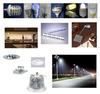
Light Emitting Diodes (LEDs) are increasingly being introduced into lighting market, and solid state lighting (SSL) is becoming a reality. But, this new technology still faces many challenges. Lighting consumes a huge amount of energy, currently 22% of all electricity consumed in the U.S. White LED...

Speaker and Language Recognition

Ongoing
Current Speaker and Language Recognition technology activities: Speaker Recognition Evaluation series: (1996-) A biennial NIST evaluation of fully automated text-independent speaker recognition technology. View the 2012 NIST SRE report. Human Assisted Speaker Recognition Evaluation series: (2010- )...

Speech Analytics

Ongoing
Current speech analytics work: OpenSAT is a new speech analytic evaluation series designed to include developers from multiple speech analytic technologies where common datasets are used in NIST evaluations. The goal is to bring together developers focused on different speech analytic tasks to...

Standard Platinum Resistance Thermometer Calibration Laboratory (SPRTCL)

Ongoing
The SPRTCL provides an extensive list of calibration services that cover the whole temperature range for which long-stem SPRTs, including high-temperature SPRTs, are the ITS-90 interpolation artifacts. This range spans from the triple point of argon (-189.3442 °C) to the freezing point of silver...

Standard Reference Materials for Hexavalent Chromium in Contaminated Soil

Completed
During the last century, chromate and dichromate chemical production facilities processed considerable amounts of chromite ore for industrial manufacturing purposes. The waste material from these operations called chromite ore processing residue (COPR) was disposed of in waste sites across the...

Standard Solution SRMs Provide Traceability for Millions of Measurements

Ongoing
Literally millions of measurements of elemental composition are performed each year worldwide. The vast majority of these measurements depend upon reference materials for establishing traceability of results to the SI. Leveraged through commercial CRM producers, the NIST SRM 3100 series provides an...

Standards

Ongoing
Standards for Optical Based Standoff Detection NIST is researching methods for creating explosive threat materials standards relevant to optical detection technologies (e.g. that result in samples with particle morphologies similar to those found in explosive threat devices). This includes both...

Standards Development to Ensure Reliable Breath Analysis in the Field

Ongoing
Numerous volatile organic compounds (VOCs) have been identified in human breath. These compounds can be produced by the body or by organisms in the body (e.g., bacteria or viruses) and provide a non-invasive window into human health. Inexpensive point-of-care devices are being developed to diagnose...

Standards for Metagenomics

Ongoing
Metagenomics is a powerful technology combining high-throughput (a.k.a. “next-generation”) sequencing with advanced bioinformatics to identify and quantify mixtures of organisms in a sample. Metagenomics workflows consist of 4 main steps: Sample collection: location, amount, storage, etc. Extraction...

Standards to Support Biological Detection in the Field

Ongoing
NIST is working in partnership with the Department of Homeland Security Science and Technology Directorate (DHS S&T) to develop methods, guidance, standards, and reference materials to support and improve our Nation's ability to detect and respond to suspected biothreat incidents. Specific...

Standards to Support Biothreat Detection

Ongoing
Since 9/11 and the subsequent anthrax attacks in 2001, suspicious white powder incidents continue to occur within the US, often requiring Federal law enforcement response. Suspect samples are sent to public health laboratories for confirmatory evaluation, which can take hours to weeks to receive...
Was this page helpful?