U.S. flag

An official website of the United States government

Official websites use .gov
A .gov website belongs to an official government organization in the United States.

Secure .gov websites use HTTPS
A lock ( ) or https:// means you’ve safely connected to the .gov website. Share sensitive information only on official, secure websites.

Projects/Programs

Displaying 1226 - 1250 of 1601

Quantum Networking with Trapped Ions in Optical Cavities

Ongoing
The goal of a quantum network is to establish entanglement as a resource between distant locations. Shared entanglement over long distances may enable distributed quantum computing, quantum-enhanced long-baseline interferometry, the transmission of complex quantum states, or a variety of other

Quantum Nonlinear Optics for Metrology and Networking

Completed
We have generated "twin beams" of light using four-wave mixing (4WM) that are correlated at a level better than can be displayed by classical radiators. One particularly useful feature of the 4WM technique is that the light can easily be made in multiple spatial modes. That is, images with quantum

Quantum Optical Networks

Ongoing
The program's technical research areas are: Architecture research for Quantum Optical Networks and integration with classical networks Management (label, identify, track) and Control Plane (signal and route optical paths) Software Stacks Performance monitoring for end-to-end Quality of Entanglement

Quantum Pascal: Fixed Length Optical Cavity (FLOC) Pressure Standards

Ongoing
This project enables a quantum-based, SI-traceable method for realizing the pascal (Pa) while improving accuracy and allowing the replacement of existing mercury manometer pressure standards. The Fixed Length Optical Cavity (FLOC) pressure standard is a laser-based, SI-traceable primary pressure

Quantum Physics Theory

Ongoing
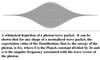
The scope of the work ranges from calculations of QED effects in atoms to detailed studies of photon wave functions.

Quantum Radiometry

Ongoing
For quantum applications, it is important to generate quantum states of light and detect them with extremely high efficiency. This project explores the metrology challenges associated with precision measurement of single photon sources and detectors. The classical photonic radiometry techniques used

Quantum Simulation and Sensing with Trapped Ion Crystals

Ongoing
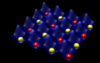
Entanglement between individual quantum objects exponentially increases the complexity of quantum many-body systems, so systems with more than 30-40 quantum bits cannot be fully studied using conventional techniques and computers. To make progress at this frontier of physics, we are pursuing Feynman

Quantum State-Resolved Spectroscopic Techniques

Ongoing
Terahertz radiation interrogates the lowest frequency vibrational (phonon) modes of biomolecules. These modes characterize the incipient motions for large-scale conformational changes responsible for the backbone flexibility of protein, polynucleotide and polysaccharide. Thus, terahertz spectral

Quantum Transport Measurements

Ongoing
It is necessary to isolate, control, and understand the fundamental physics of exotic states of matter to create nanoengineered systems with the requisite quantum properties for quantum information systems and advanced computing applications. We develop measurement capabilities and design test

Quantum Voltage Project

Ongoing
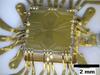
Researchers in the Quantum Voltage Project develop and disseminate highly accurate instruments that exploit the quantum mechanical properties of superconductive devices known as Josephson junctions (JJs), as well as measurement techniques and best-practices for using these instruments. When a JJ is

Quantum Waveform Metrology

Ongoing
The 2019 redefinition of the SI was motivated in part by the success of quantum electrical standards, such as those based on the Josephson and quantum Hall effects. Quantum standards enable the direct realization of physical quantities that are traceable to fundamental constants, invariant with

Radiation Protection: Support of the Navy Dosimetry Program

Ongoing
Since 2010, the U.S. Navy has adopted a personal dosimeter designated as the model DT-702/PD, which was demonstrated to have an improved accuracy, energy discrimination and a lower detection limit than prior Navy designated models such as the DT-5XX/PD and DT-6XX/PD series. This dosimeter is used to

Radiation Sensitivity of Thermoluminescent Dosimeter Sensors

Completed
The radiation sensitivity of a Thermoluminescent Dosimeter (TLD) is defined as dosimeter light output per dose unit. TLD light output depends not only on the sensitivity of the TLD elements (Fig.1) but also on the transparency of the Teflon® used for their encapsulation. The effect of encapsulation

Radiation Thermometry

Ongoing
Radiation thermometers are calibrated using a range of variable-temperature blackbodies. For heatpipe blackbodies and fluid-stirred blackbodies, the temperatures of these blackbodies are determined using platinum resistance thermometers. These blackbodies can also be assigned temperatures using

Radiative Decay of the Neutron

Ongoing
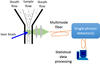
When a neutron decays by its radiative decay (RDK) mode, it produces a photon with a energy spectrum predicted by Quantum Electrodynamics. These RDK photons deposit energy in scintillators which produce voltage pulses in Avalanche Photo Diodes. We are developing nonlinear calibration models to

Radioanalytical Metrology

Ongoing
The Group engages in a wide range of methods applicable to the detection and characterization of nuclear materials. The work can benefit environmental studies, waste remediation, naturally occurring radioactivity detection and characterization and general radioanalytical metrology. Expertise in

Raman Metrology and Instrumentation

Ongoing
Raman spectroscopy/microscopy is a powerful optical technique for rapid, non-destructive, label-free characterization of materials. It works under ambient conditions, often without requirement of any sample preparation. Applications span microelectronics, pharmaceutical, security and fundamental

Rapid DNA Typing

Ongoing
The Applied Genetics Group at NIST has been involved in testing integrated rapid DNA instruments since the prototype stage in the fall of 2012 and began robustly testing the maturity of these rapid DNA instruments in 2013. The three maturity assessments conducted by NIST focused on the genotyping

Reactivity of Nanoparticle Catalysts

Ongoing
Goals: Provide mechanisms for various prototypical electrocatalytic reactions on different metallic surfaces an nanoparticles. Validate the results of DFT calculations versus experimental data. Research Activities: Studying the methanol oxidation reaction on Pt and PtRu surfaces. Studying the effect

Real Fuels

Ongoing
The variability of the price of oil, the need for energy efficiency and pollution minimization has led to increasing interest in alternative fuels. These fuels are structurally and compositionally different than the conventional fuels presently used.  Past work on conventional fuels have established

Real-time Image Intensity Transformation for Surgical Displays

Ongoing
The goal of the project is to develop multiple approaches to fusing dim fluorescent and vivid bright-field images such that surgery-relevant anatomical features are easily perceived. Our approach is based on transforming image intensities in fluorescent surgical microscopy images and blending them

Real-Time Monitoring and Control of Additive Manufacturing Processes

Completed
Objective: Develop process metrology, in-process sensing methods, and real-time process control approaches to maximize part quality and production throughput in Additive Manufacturing (AM). Technical Idea: Additively manufactured metal parts can have many quality issues, such as undesired pores or
Was this page helpful?