

Official websites use .gov
A .gov website belongs to an official government organization in the United States.

Secure .gov websites use HTTPS
A lock (
) or https:// means you’ve safely connected to the .gov website. Share sensitive information only on official, secure websites.


The Gut Microbiome: Measuring Microbes and Setting Standards for Better Health
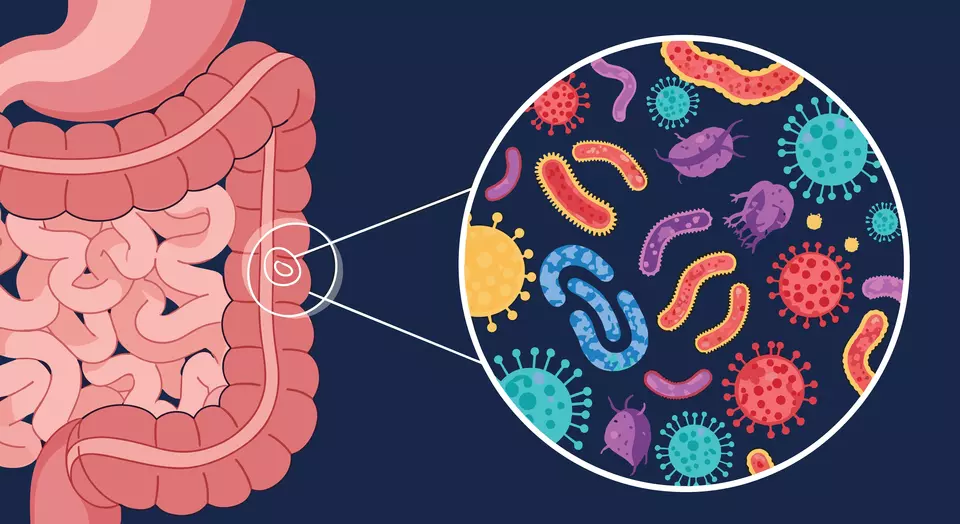
Only about half of the cells in your body are human. The other half are trillions of microbes that thrive on or inside your body to form a group of biological communities known as the human microbiome. These microbial communities can vary greatly in size and character.
The digestive tract hosts the largest number of microbes, forming a complex ecosystem known as the gut microbiome. Concentrated primarily in the large intestine, it consists of thousands of different species of bacteria, viruses, fungi and other microorganisms.
Like a fingerprint, your gut microbiome is entirely unique. It starts developing the moment you are born. Over time, the amount and types of microorganisms change based on factors such as your environment and diet.
Why is the gut microbiome important?
We could not survive without these microscopic companions. Most share a symbiotic relationship with us, offering vital benefits while enjoying food and shelter in our body. They play such an active and critical role in maintaining our health that many scientists consider the gut microbiome to be an organ of its own.
The microbes within the digestive tract help us get the most out of our diet. These gut microbiota break down complex carbohydrates such as starches and fibers that our bodies cannot digest alone. This process produces helpful compounds that can guard against obesity and diabetes. On top of that, these microbes supply the enzymes needed to synthesize essential vitamins, such as B1 and K.
The gut microbiota train immune cells to distinguish them from dangerous pathogens, helping the body fend off toxins more effectively. By competing with invading microorganisms for space and nutrients, they prevent harmful bacteria from multiplying.
The gut microbiome is believed to interact with many other systems in our body, such as the endocrine and nervous systems, through connections that researchers are still actively studying.
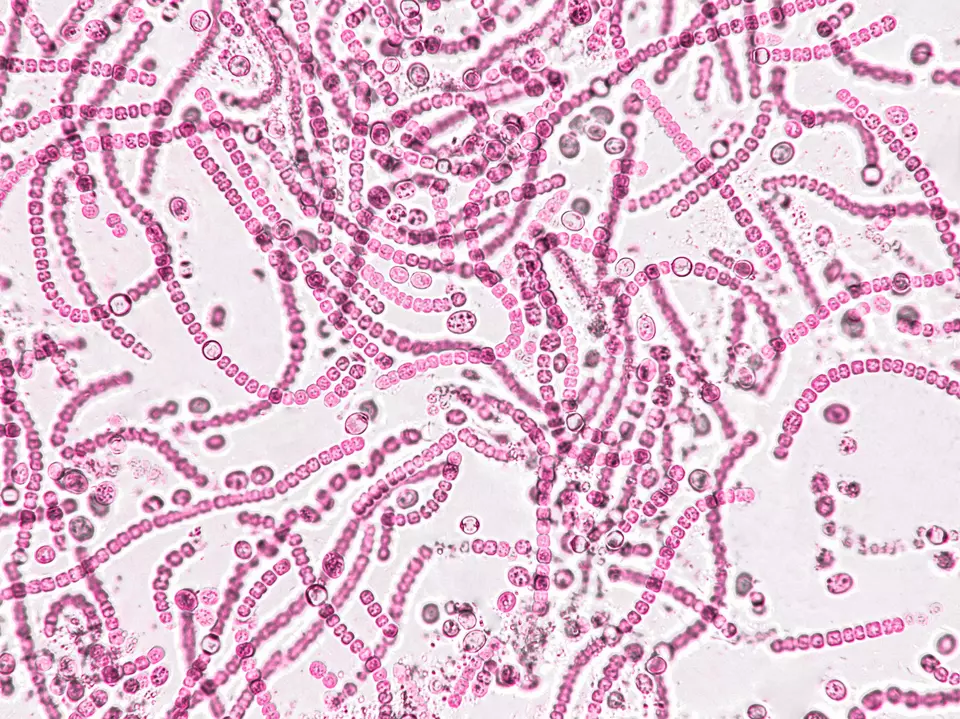
What is the relationship between the gut microbiome and human health?
Experts are only beginning to understand the relationships between the gut microbiome and different diseases. Because each of us is a unique, complex organism, these relationships are vastly challenging to untangle. Just because changes in the gut microbiome correlate with a particular disease doesn’t necessarily mean they cause it in an individual.
Still, it’s clear that the signals gut microbes send to each other and to cells elsewhere in the body significantly affect our health.
In the last decade, scientists have linked the gut microbiome to a raft of human diseases, from inflammatory bowel disease to autoimmune disorders and obesity. Two highly active areas of research are in neurological conditions and cancer treatments. Through the connection between the digestive tract and the central nervous system, known as the gut-brain axis, gut microbes are thought to affect mood and mental health, and perhaps influence outcomes for neurological conditions, such as Alzheimer’s disease.
Researchers are also investigating the link between gut microbiota and cancer. There is a growing body of research examining the role that the gut microbiome plays in how well a person responds to certain cancer treatments. While much remains to be learned about the gut microbiome’s connection to cancer, scientists have an immense opportunity to improve human health if they can uncover the underlying mechanisms.
Microbiome therapeutics: Is the future of medicine in your poop?
The gut microbiome holds great potential in the treatment of diseases. There are already therapies that target the restoration of the gut microbiome. Probably the most well known is the therapy called fecal microbiota transplantation (FMT). An FMT is exactly what it sounds like: the transfer of fecal material, typically from a healthy donor, to restore the gut microbiome. Transplantation is commonly carried out through a colonoscopy, though doctors can also deliver the transplant through other methods, such as a capsule the patient swallows or a feeding tube inserted through the nose (known as a nasoduodenal tube).
FMTs are most commonly used to treat recurrent Clostridioides difficile infection (rCDI), a sometimes-deadly bacterial infection commonly picked up in hospitals. The microorganisms from the transplant help regenerate the healthy ecosystem in the gut microbiome, assisting the immune system in fighting off the infection. For recurrent CDI, the procedure has a success rate of up to 90%, a remarkable result for just about any therapy.
Clinicians and researchers are testing the effectiveness of these transplants for a host of conditions ranging from colitis to alcoholic hepatitis. Doctors are investigating ways to alter the gut microbiome so that cancer patients respond more effectively to targeted treatments.
As gut microbiome therapies advance, the medical field is moving away from direct stool donations, which are naturally unpredictable because every donor is different. Instead, doctors are increasingly relying on FDA-approved microbial treatments that can deliver consistent, reliable results.
Microbiome testing: Can the gut microbiome be used to detect diseases?
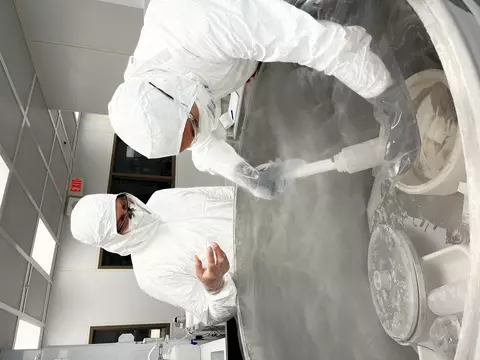
While the gut microbiome opens new therapeutic possibilities, the flip side of the coin is its diagnostic potential.
Given the microbiome’s intricate relationship with the body’s systems and disease, measuring the composition of an individual’s gut microbiome could help doctors diagnose medical conditions. Researchers need good samples of the microbiome to explore its potential for diagnosis. But getting a direct sample from inside the gut requires invasive procedures such as a colonoscopy.
Fortunately, there’s a much easier alternative: stool samples.
While human feces contain water, undigested food and assorted inorganic matter, anywhere from 30% to 50% of feces is made up of bacteria, viruses, fungi and other organisms that once resided in our guts. By analyzing a stool sample, doctors can capture a snapshot of an individual’s gut microbiome.
Because the microbiome is shaped by genes, environment, health and diet, everyone's poop is different. However, scientists are beginning to uncover general associations between microbiome composition and health. People with Parkinson’s disease, for instance, show both higher and lower concentrations of certain bacterial species. Another important measure is the number of different organisms present. Reduced levels of microbial diversity have been reported in people with asthma.
While there is still much to be learned, these correlations may someday make it possible to use stool samples to diagnose a wide range of illnesses and conditions.
Why does NIST care about the microbes in your gut?
Unlike a standard blood or urine test, which usually looks at one specific thing (like your vitamin D level), a microbiome test must look at the big picture. It measures an entire ecosystem, identifying all the different microbes present and how they interact with one another. Because scientists are measuring complex communities rather than a single target, getting accurate and consistent results every time is challenging.
Two laboratories analyzing the same stool sample can arrive at strikingly different results because they may use different protocols or tools. Those inconsistencies make it difficult to compare studies, reproduce findings and develop reliable diagnostic tests and microbial therapies. Currently, home tests for the microbiome show widely varying results.
To help solve this, NIST has been working with government, industry and universities to figure out how to measure the microbiome reliably for both diagnostics and new treatments. In 2025, NIST developed a reference material with the most comprehensive microbiological and biochemical breakdowns ever produced for human feces. Officially called RM 8048 Human Fecal Matter, it contains hundreds of species of microorganisms as well as thousands of different molecules called metabolites. Often created by microbes, these metabolites convert nutrients into energy or synthesize molecules for cellular functions. Other components of the RM include many compounds you might not even have known were in feces, such as serotonin, most of which is found in the cells lining the gastrointestinal tract.
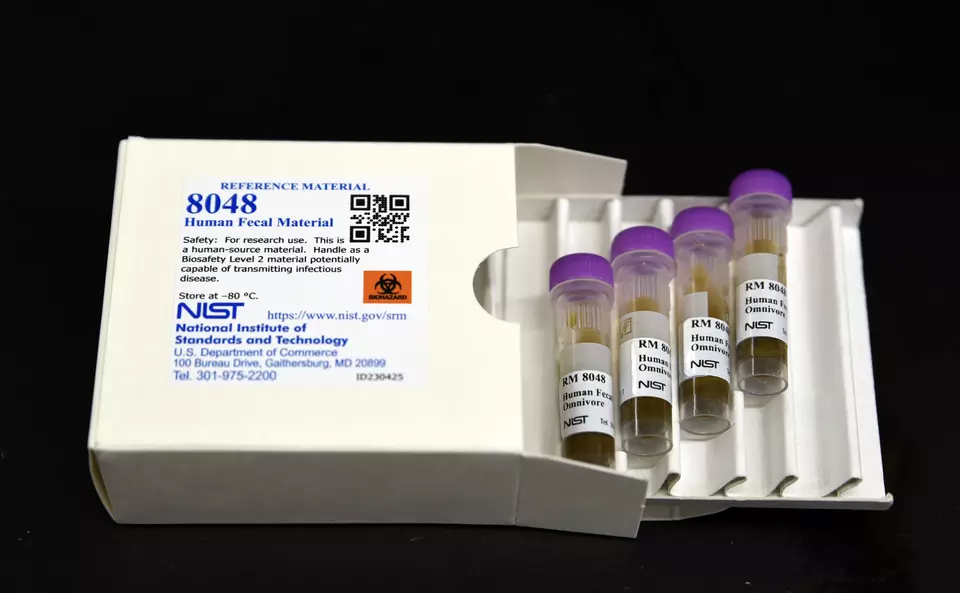
A single unit of RM 8048 consists of a tube filled with a slurry of fecal matter accompanied by a detailed report that labs can use to check their measurements and fine-tune their instruments to make sure they are making reproducible readings. The RM gives researchers a much-needed and trusted benchmark for their results and lays the groundwork for future diagnostic and fecal-based therapies.
The fecal RM is just one product of NIST’s overall effort to ensure reliable quantitative measurements for human health. Beyond the gut, NIST makes reference materials for assessing kidney health through compounds in urine such as albumin and creatinine, detecting toxic metals and metabolites in blood, and measuring vitamin, cholesterol and glucose levels.
NIST’s reference materials also help scientists develop a wide range of new drugs and medical treatments. For example, many companies use the NISTmAb and NISTCHO reference materials, made of compounds known as monoclonal antibodies (mAbs), when developing and manufacturing new mAb drugs for cancer, autoimmune diseases and many other conditions.
Spanning many fields of human biology, NIST’s work provides important tools that the biotech industry needs to have confidence in its results when developing new drugs and creating new diagnostic tests and therapies.
—by Shannon Horning