U.S. flag

An official website of the United States government

Official websites use .gov
A .gov website belongs to an official government organization in the United States.

Secure .gov websites use HTTPS
A lock ( ) or https:// means you’ve safely connected to the .gov website. Share sensitive information only on official, secure websites.

Gaithersburg

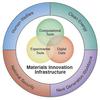
Materials Data Repository

The NIST Materials Data Repository is open to the research community interested in developing best practices in the management of materials data. We are

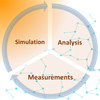
Materials Design Toolkit

This framework provides the generic environment for materials design. The ICME (Integrating Computational Materials Engineering) approach is implemented for

Object Oriented Finite Elements (OOF)

OOF is a collaborative effort between the Information Technology Laboratory and the Material Measurement Laboratory at NIST. The intended audience of the OOF

OpenCALPHAD

OpenCalphad (OC) is an informal international collaboration of scientists and researchers interested in the development of high quality software and databases

MGI Code Catalog

The MGI Code Catalog represents an extensive collection of information about software relevant to computational materials science and materials data analysis

CHiMaD Phase Field Community

Website | Gitter Chat In January 2015 a group of phase field theorists and code developers met at the headquarters of the Center for Hierarchical Materials

Jacob Taylor Named 2017 APS Fellow

For his wide ranging contributions in using quantum properties of light and matter towards developing applications ranging from extreme sensitivity sensors and transducers to quantum information processing.

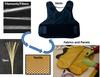
Body Armor and Related Materials

Body armor provides protection from penetrating and blunt force phenomena. Generally, body armor is classified as either being ballistic resistant or stab resistant, or both. The STG performs research that supports the standardization of both types of body armor. These research activities span the range from examining fundamental material behavior through system level performance.

Rheological Characterization of Ballistic Witness Materials

Body armor testing frequently requires the use of a ballistic witness material (BWM), such as clay, to support the armor while it is being tested. The BWM is a critical component of the testing since the depth of the backface signature (BFS) generated from the ballistic impact is often used as an armor performance metric. To improve repeatability and reproducibility in testing, a particular brand and hardness of clay is typically specified. As a commercial product generally intended for use by artists, there are no specifications that precisely describe clay characteristics that are relevant for ballistic applications. To address this need, various methods are used to characterize the current clay and potential replacement BWMs.

Scaffold Handling Device

Background: In tissue engineering laboratories, delicate fibrous scaffolds, such as electrospun nanofiber scaffolds, are often used as...

Proposal Statistics

Call 41: Results for this call will be posted once the reactor restarts. Individual experiments will be scheduled once the reactor schedule...

X-ray Backscatter Systems

X-ray backscatter systems are used for the screening of personnel for hidden weapons and other contraband. Unlike conventional radiographic x-ray systems

1500-100

NIST SP 1500-100 Election Results Reporting Common Data Format Specification This page lists the XML and JSON schema for the NIST 1500...

Cabinet x-ray system

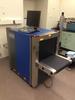
The Smiths Detection 6046si cabinet x-ray system was designed for security screening of bags, parcels and other objects of similar size. The system runs at 160
Was this page helpful?