

Official websites use .gov
A .gov website belongs to an official government organization in the United States.

Secure .gov websites use HTTPS
A lock (
) or https:// means you’ve safely connected to the .gov website. Share sensitive information only on official, secure websites.


Taking Measure
Just a Standard Blog

You’ve probably heard that time is relative. It sounds like a banal cliche, akin to “time flies when you’re having fun.”
But it’s no mere cliche: Time really is relative. Though it’s not noticeable in daily life, time passes slightly more slowly when you’re moving versus when you’re standing still. It also moves slightly more slowly when you’re at sea level than when you’re on top of a mountain.
We know this thanks to a remarkable timekeeping technology invented at NIST: the atomic clock. During the past half-century, scientists have designed a series of increasingly ambitious experiments to show that atomic clocks tick faster when moving and slower in stronger gravity. Now, a generation of clocks more precise than any that have come before is allowing physicists to push such measurements to new extremes.
One ongoing experiment is tracking the ticking of high-precision atomic clocks aboard the International Space Station and comparing them to ones on the ground.
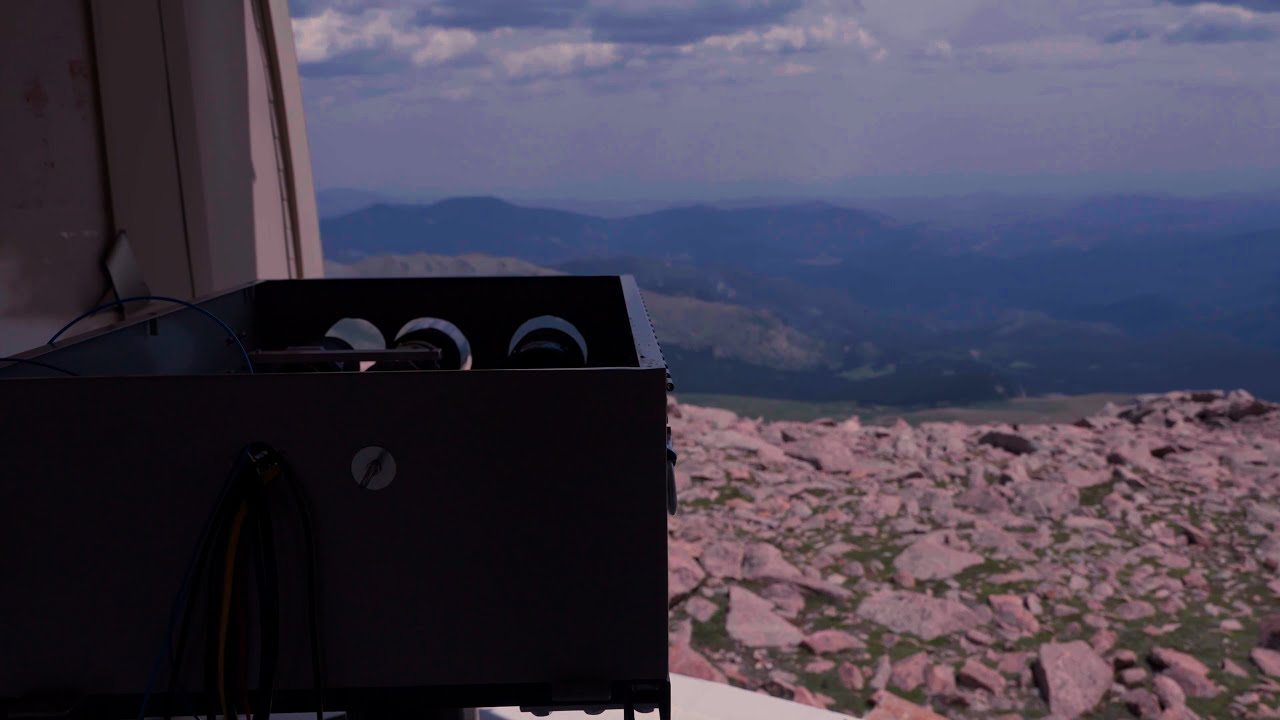
Another is taking one of the world’s best clocks up a 4,348-meter (about 14,000-foot) mountain in Colorado and comparing its ticking rate to a clock nearly 2,700 meters (about 9,000 feet) lower. The experiments will provide the most stringent tests ever done of whether clocks tick as expected in lower gravity.
While measuring time is a core part of what institutes like NIST do, these experiments go beyond basic metrology. If predictions about how gravity affects time prove to be even the least bit off, the discrepancy could upend our theories about the universe — potentially launching a revolution in physics as profound as the discovery of time’s relative nature, more than 100 years ago.
The experiments also have more practical goals. Right now, almost all optical clocks and fountain clocks — the highest-precision clocks ever made — live in laboratories. That allows scientists to tightly control variables like temperature and vibrations, but it limits what clocks can be used for.
If ultra-accurate clocks can be made to work in the rough-and-tumble world, they could launch a technological revolution, transforming activities as diverse as earthquake and volcano prediction, surveying and navigation.
A Revolutionary Idea

Like many mind-bending physics concepts, the relativity of time traces back to Einstein.
In 1905, a young Albert Einstein — while employed as a junior examiner in the Swiss patent office — published his world-changing special relativity theory. Along with the famous equation E = mc2, the theory made a startling statement about time: The faster you move relative to a motionless observer, the slower time passes for you. The phenomenon became known as time dilation.
Einstein was just getting started. Ten years later, his even more audacious theory of general relativity predicted that time is also affected by gravity.
Einstein’s theory referred specifically to gravitational potential, which describes the energy landscape created by massive objects and reflects the propensity of an object to roll or fall. For example, a ball will naturally roll from the higher gravitational potential at the top of a mountain to the lower potential at the bottom of a valley, but not the other way.
The deeper you are in a gravitational potential, Einstein argued, the more slowly time passes for you. This effect became known as gravitational time dilation.
These theories revolutionized our understanding of the universe. Special relativity united space and time in an all-permeating fabric known as space-time. General relativity uncovered a tight connection between two seemingly unrelated realms: gravity and time. And both made surprising predictions that challenged people’s common intuitions and experiences. For example, if you had a twin who went on a spaceship ride at close to the speed of light or who spent time near a black hole and then rejoined you on Earth, according to relativity, you would be older than your own twin!
Extraordinary claims, which Einstein’s certainly were, demand extraordinary evidence. Scientists soon started putting Einstein’s theories to the test using experiments and observations. Verifying many of Einstein’s predictions about time, however, proved to be beyond the experimental capabilities of his day. The clocks of the early 1900s were simply not good enough to detect minuscule changes caused by differences in speed or gravity. Experimental confirmation of time dilation would have to wait.
A New Clock Appears
In the 1950s, things started to change. That’s when scientists built the first usable atomic clocks — devices thousands of times more accurate than any that had come before.
And in 1971, two scientists — Joseph Hafele of Washington University in Saint Louis and Richard Keating of the U.S. Naval Observatory — had a bold idea: take atomic clocks for a ride in the sky, where they would travel at high speeds in a lower gravitational field, and then compare them to clocks that had remained on the ground.
Why do such an experiment at all, you might ask? Even though physicists had confirmed many of Einstein’s predictions, they worked to test his theories to greater and greater precision. If the theories’ predictions proved to be even slightly off, these discrepancies could reveal important new information about the universe.
Hafele and Keating booked plane tickets for two commercial cesium beam clocks to fly around the world eastward and for another two clocks to fly westward. Thanks to Earth’s rotation, the eastward-flying clocks moved faster relative to the ground than the westward-flying ones. And all the flying clocks spent time in lower gravity than the earthbound clocks.
After the flights landed, the scientists compared the airborne clocks with the observatory’s atomic clocks, which had remained on the ground. All three sets of clocks told slightly different times. The experimental results, published in the journal Science and covered widely by the media, agreed with the predictions of both special and general relativity to within the margin of error.
Later experiments using planes and rockets further confirmed time dilation to greater precision. And so did a technology you probably use every day.
GPS satellites — the ones that control the blue dot on your phone and enable you to order rides and share your location with friends — all carry atomic clocks. These satellites hurtle so fast through space that special relativity indicates they should fall behind earthbound clocks by seven microseconds (millionths of a second) per day.
Meanwhile, the lower gravity they experience in medium-Earth orbit should speed them up by 45 microseconds per day. Combining the two effects, GPS clocks run 38 microseconds per day faster than Earth clocks — a discrepancy that would quickly make their positioning and timing signals useless if they were not constantly corrected.
GPS was not created to test Einstein. But when military scientists and engineers launched the initial constellation of positioning satellites, they realized they needed to account for relativity to get the system to work. In a way, GPS has proved to be the longest-running test we have of Einstein’s theories.
Indeed, relativity has become one of the most rigorously tested physical theories of all time. But two recent experiments, one accidental and one intentional, pushed the envelope further than ever before.

Satellite Snafu
In 2014, the European Space Agency launched two satellites that were intended to join its Galileo navigation system — the European version of GPS. But an error put the satellites into an elliptical orbit that sent them thousands of kilometers beyond the circular orbit flown by their peers.
The snafu was bad for Galileo — but good for physics. It meant the elliptically orbiting satellites — and their atomic clocks — would spend a lot more time in lower gravity than the others in the constellation. By comparing time signals from the clocks in the different orbits, physicists could isolate the effects of gravity on the clocks’ ticking rate.
Using nearly three years of clock data, two different research groups were able to confirm the predictions of general relativity 5.6 times more precisely than the previous best result, a rocket-based experiment from the 1970s. As you might be starting to suspect, Einstein and his famous theory once again aced the test.
Tower Test
In 2019, a research team led by Hidetoshi Katori, a physicist at the University of Tokyo, took an optical lattice clock up the Tokyo Skytree, Japan’s tallest building. The optical lattice clock, invented by Katori in the early 2000s, is one of the most sophisticated atomic clock designs, capable of measuring time to 18 digits of accuracy.
Optical clocks typically require cumbersome arrays of lasers, mirrors and electronics, often sprawling across multiple laboratories. But scientists such as Katori have found ways to shrink them without sacrificing accuracy.
For the experiment, the scientists connected their tower clock to a second lattice clock on the ground with an optical fiber, so they could compare the clocks’ ticking rates and look for slight deviations. As predicted, the elevated clock ran a tiny bit faster — four nanoseconds (billionths of a second) faster per day, to be precise.
Although Katori’s result was less precise than the earlier Galileo experiment, it notched another win for Einstein: It became the most precise test of gravity’s effect on time ever conducted on Earth — and an inspiration for even more ambitious experiments to come.
Up the Mountain and Into Space
Perhaps it’s fitting that 2025, the International Year of Quantum, saw the launch of two audacious new efforts to use the atomic clock — the original quantum technology — to push deeper than ever into the connection between time and gravity.

In early August, scientists from NIST and the nearby University of Colorado Boulder drove up Mount Blue Sky, a 14,130-foot (4,348-meter) peak that rises southwest of the city. Inside the researchers’ van was precious cargo: an optical lattice clock based on ytterbium atoms that they had spent years designing and perfecting.
The scientists have a bold plan: compare the ticking rates of two of the world's best clocks at a height difference of more than 2,500 meters — a far greater vertical separation than has ever been attempted with high-precision clocks. This combination, they believe, could best every other time dilation test.
For years, NIST physicist Andrew Ludlow and colleagues have run a lab-sized ytterbium lattice clock that has set records for stability. More recently, the researchers shrank their clock hardware down to a couple of racks the size of compact refrigerators, while nearly maintaining the accuracy and stability of the original. Similar to Katori, Ludlow hopes to get optical clocks — the world's most complex and finicky timekeepers — out of the lab and into the rough-and-tumble world.
The mountaintop experiment will push the limits of the possible. Operating even one optical lattice clock in the controlled confines of a lab requires highly trained scientists to be on hand tweaking dials and turning knobs. Doing so in a remote and rugged location while syncing the clock with another one 56 kilometers away adds layers of complexity.
On top of that, there is no direct line of sight connecting the Blue Sky summit to NIST. So the research team had to send data from the lab clock through an optical fiber to a location 10 miles outside Boulder that could intercept laser signals from the mountaintop clock.
Last summer was devoted to testing the equipment and the data connection during the brief summer window when the mountain’s summit is accessible. Actual data collection will start next year.
If the experiment is successful, it could advance the science of using optical clocks to measure Earth’s shape and gravity field, potentially transforming the field known as geodesy. This could, in turn, improve predictions of how rivers will flood during storms, how magma moves below Earth’s surface and many other things.

The other project is the Atomic Clock Ensemble in Space, or ACES, led by the European Space Agency with NIST involvement. On April 21, 2025, a SpaceX rocket blasted off carrying a laser-cooled cesium fountain clock and a hydrogen maser to the International Space Station (ISS), which orbits at 370-460 kilometers (229-286 miles) above Earth. Similar to GPS clocks, the ISS clocks will tick slightly faster in the lower gravity of space than they would on Earth. However, the ISS clocks are much more precise than GPS clocks. Combined, they are good enough to drift no more than one second in 300 million years.
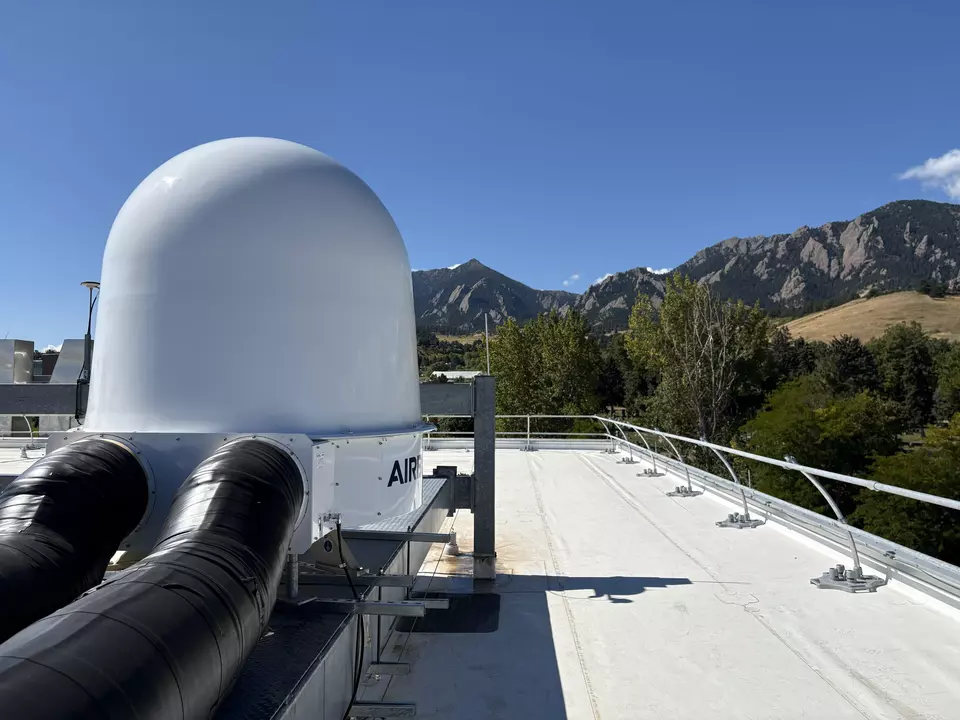
To isolate the effects of gravity, ACES will compare the space clocks to ground-based atomic clocks, including those housed at NIST’s Boulder lab. To receive signals from the space station clocks, NIST researchers have installed a special satellite antenna system on a campus building.
Scientists plan a two-year mission during which the clocks will record data over at least 10 sessions of 25 days each. If all goes well, it should yield a test of relativity 10 times more stringent than any previous one, reaching a level of precision beyond even that of the mountaintop experiment.
Eventually, scientists hope to combine the strengths of the two experiments and place an optical clock in space. While still years away, such an experiment could pave the way toward a space-based network of clocks to support precision navigation, geodesy and more.
More profoundly, it would put Einstein to his toughest test yet — and allow scientists to peer ever deeper into the mysteries of the universe.
About the author

Related Posts



Comments
Connecting two clocks using an optical fiber is not the same thing as connecting them through a light beam propagating in vacuum. The light travel time between these connected clocks is different. The reason is while a light beam traveling in vacuum follows a geodesic the same light beam traveling through an optical fiber does not. As a result the light travel time through an optical fiber is longer.
Unless the light travel time is calculated for travel through an optical fiber (a non-trivial task) the conclusion drawn from this experiment is not the time delay predicted by general relativity.
In the early 1980s I was installing some e-beam equipment at a Hewlett-Packard facility in Santa Clara CA. My contact pointed out a clsoed-off room and told me that they built the atomic clocks there. I was impressed, having built a electron microscope that was designated for NBS.
a couple of years later I got stranded at JFK by snow, ended up spending 2 nights and fell in to a conversation with a man who had a luggage cart with several pieces of rack-mounted equipment. He told me that he had just returned from Europe, farance, I believe, and the top unit was a "flying atomic clock" along with a power source. He said they travel the world with them to compare and coordinate the time standards of different countires, and that the flights changed the clock's time!
Q: Would the two flights in opposite directions cancel out each other?
Since Creation everywhere in the universe a same amount of time has passed but clocks differ in reading because the speed of physical processes depends on the local gravity. To say that time varies is old fashioned and confusing. No atomic clock is precise up to a second in a billion years because the universe changes all the time. Some years ago I told NIST that the proper way of expressing is that an atomic clock (or beter the average of atomic clocks) may be precise upt to a billionth per second.
A photon has energy and since there is a correllation between energy and mass the speed of a photon depends on the local gravity. When a photon is sent from a satelite to Earth it increases energy like a falling object or its frequency becomes higher. One should not think that this frequency existed already at the satelite! For more see Vasily Yanchilin's book The quantum theory of Gravitation, available in the Library of Congress. NIST may organize a lecture by this Russian scientist.
Not yet measurable is delta energy of electrons when changing orbit in the atom at different g. Mathematicians may have a job to find how much this is of importance in the discussion whether time runs faster or slower near mass, or in today's language whether physical processes run slower or faster near mass. In the Beginning all went very fast, but not originating from a Big Bang point since a point is a mathematical concept and does not exist in physics/Nature because it has no dimensions. (May be so called black holes are remnants or new formed stuff comparable with things before the universe became transparant. The photo of a black hole had an opening in the radiation around towards Earth to let us see the thing. Or to deceive?) Jitso Keizer
"... the most stringent tests ever done of whether clocks tick as expected in lower gravity ..." Is the Weizmann Institute's Mordehai "Moti" Milgrom the Kepler of contemporary cosmology? Is Milgrom 20 year overdue for a Nobel Prize? Milgrom has not yet been acclaimed as the Kepler of contemporary cosmology, because MOND is inconsistent with special relativity theory. However, Guendelman's "Dynamical String Tension Theories with target space scale invariance SSB and restoration" provides a highly plausible mathematical model for Newton-Einstein inertia originating from one type of string tension and for FUNDAMOND inertia originating from another type of string tension. General relativity theory predicts twice as much gravitational lensing as the gravitational lensing predicted by Newtonian dynamics. "Principles of Gravitational Lensing: Light Deflection as a Probe of Astrophysics and Cosmology" by Arthur B. Congdon, Charles R. Keeton" In the MOND regime in which MOND makes approximately accurate predictions, consider the standard form of Einstein's field equations and replace the –1/2 by –1/2 + FUNDAMOND-bending-function — or one might say, FUNDAMOND-data-function. This hypothetical FUNDAMOND-bending-function might be approximately (3.9±.5) * 10^–5 . This suggests that FUNDAMOND string theory predicts twice as much gravitational lensing as Milgromian dynamics. According to Zhang, Zonoozi, & Kroupa (4 Feb. 2026, arxiv.org), "... within the MOND framework, galaxy clusters still require an additional amount of unseen matter, roughly twice the observed baryonic mass, to explain their gravitational behavior." It seems plausible that there is a huge amount of empirical evidence in favor of FUNDAMOND string theory. Should gravitational metrologists consider the hypothesis suggested by FUNDAMOND string theory?
this type of study shows that time is not any more fundamental, it varies, it means when we are observing anything in space, time is different what we noted it on earth. but one more interesting point is how it changing, on what rate ... i have so many doubt...like if we go near center of earth, it works differently, above earth differently.... very eager to know what exactly define it?
Interesante el tema, me apasiona la metrología. felicitaciones por los avances