

Official websites use .gov
A .gov website belongs to an official government organization in the United States.

Secure .gov websites use HTTPS
A lock (
) or https:// means you’ve safely connected to the .gov website. Share sensitive information only on official, secure websites.


Taking Measure
Just a Standard Blog

From blood tests to mammograms, doctors need reliable measurements to make informed decisions about their patients’ health and deliver safe treatments.
That’s why NIST serves as an important partner to health professionals and their patients nationwide. This blog post highlights just a few ways in which our measurement science is critical in medicine.
Accurate Diagnostics
Blood work and urine tests help doctors evaluate a variety of health concerns.
But imagine going to one doctor for testing and getting one result, then going to another and getting a wholly different one.
In the U.S., that is rarely an issue anymore, thanks in large part to NIST’s standard reference material (SRM) program. SRMs are precisely measured materials that labs and manufacturers use to ensure that their devices are calibrated and functioning properly.
Our SRMs help labs accurately measure cholesterol, DNA of certain viral infections and trace metals in human blood, among many other health-related applications. Though it may sound spooky, the SRM for trace metals in human blood helps medical professionals accurately diagnose joint replacement failures.
More recently, NIST created an SRM for albumin, a biomarker in human urine that providers use to assess patients’ kidney health.
Beyond routine tests, we also work in infectious disease response — when a rapid result is critical, but accuracy is equally essential.
Responding to the COVID-19 pandemic in 2020, NIST researchers produced a research-grade test material (RGTM) made from synthetic gene fragments. Manufacturers used this material, similar to an SRM , to check the accuracy of diagnostic tests for the virus. Two years later, we released a similar RGTM for mpox. Most recently, NIST researchers produced an RGTM to support diagnostic tests for the H5N1 virus, which causes bird flu.
Medical Imaging
I hinted at the spooky side of NIST’s medical-related role in the previous section, but this next innovation isn’t nearly as disturbing as its name suggests.
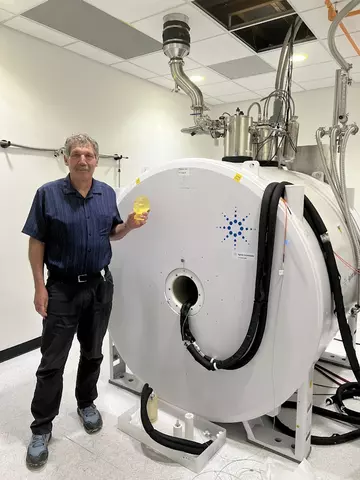
Similar to standard reference materials, medical imaging phantoms enable repeatable and consistent measurements. These phantoms serve as stand-ins for human tissue in MRI machines to test the accuracy of those machines. Phantoms are now part of clinical trials that use medical imaging, and we are researching how frequently they need to be used to be effective.
MRI isn’t the only diagnostic imaging tool that NIST supports. Hundreds of millions of X-ray diagnostic procedures occur nationally each year, and most of the equipment that is used can trace its measurement accuracy back to NIST.

When a patient gets an X-ray at any medical facility in the U.S., they need to receive enough radiation to make a high-quality image for a diagnosis, but not so much that it causes harm. To serve this national need, a lab here at NIST calibrates devices (ion chambers) that measure the intensity of X-ray beams. The more intense the beam, the higher the radiation dose.
For that measurement quality assurance, the buck stops at NIST. We provide calibration services mostly to secondary calibration laboratories for their ion chambers. They, in turn, offer calibration services to medical facilities across the country. We call it a chain of traceability. At medical facilities, X-ray technicians can be confident that the intensity of their X-ray beam delivers a known dose of radiation that produces the desired image but keeps their patients safe.
(More!) Radiation for the Medical World
The concept of radiation may seem scary, but it plays multiple critical roles in health care.
First, I need to digress from our blog topic with a lesser-known fact: You are exposed to radiation every day (in moderation). Every time you eat a banana, scoop your cat’s litter box, soak in the Sun’s warming rays or fly on an airplane, you are exposed to low levels of radiation. And those amounts of radiation are not dangerous.
Too much radiation exposure could indeed be harmful to your health, so that’s why it is critical to have accurate measurements to deliver the right radiation dose for everything from chest X-rays to aggressive cancer treatment. These measurements minimize risks and ensure that the patient receives only the necessary exposure for the treatment or test.
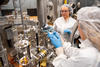
For example, NIST research chemists solve measurement problems to support cancer therapies that precisely target tissue and destroy cells of concern.
Beyond diagnostics and treatment, another critical medical use of radiation often flies under the radar: sterilization.
Technicians often shine gamma rays or other types of radiation on medical equipment to sterilize it. Though this may sound concerning, there is a big difference between something radioactive and something that has been irradiated. Radioactive means that the object in question emits radiation. An irradiated object is exposed to radiation and does not emit radiation.
Think of it like a light bulb. In this analogy, the bulb represents the radioactive source, and the light represents the radiation. If you stand near the bulb, you are “irradiated” by the light. However, you do not become a light bulb yourself. You don't start glowing or emitting light just because the light hits you. Irradiation is helpful for sterilizing medical implants and single-use equipment, such as catheters, tubing and surgical tools.
While these devices are manufactured in sterile environments, they may contain small amounts of microbes. Irradiation effectively inactivates these microbes, providing an additional layer of safety before surgery.
Irradiation is even more vital for blood transfusions, particularly for vulnerable patients such as newborns or those with weakened immune systems. In these cases, irradiation is used to “turn off” white blood cells in the donor blood. If left active, these cells could attack the patient’s body — a rare but dangerous complication. By irradiating the blood first, hospitals ensure that the transfusion helps the patient without causing this serious reaction.
Whether for tools or blood, the equipment used in the irradiation process must be calibrated to NIST (or equivalent) standards. This ensures that the radiation dose is strong enough to be safe but precise enough to leave the medical devices or blood undamaged.
Biopharmaceuticals and Bio-Based Therapeutics
Long live the living (cells)! Some of today’s tools that health professionals use are derived from organisms in our own bodies or from living cells in labs.
Take, for example, the human gut microbiome. Bacteria, viruses, fungi and other organisms living in the human body play a critical role in metabolism, vitamin production, digestion and even mental health. One of the most promising areas of medical research involves treatments derived from human feces, which are rich in these organisms.
Last year, NIST released a human fecal matter reference material, which is similar in its purpose to the SRMs and RGTMs listed above. Biotech and biopharmaceutical scientists can use it to ensure precision in their research and drug development efforts.
Monoclonal antibodies (mAbs) are proteins that can bind to specific targets in the body, making them prime biopharmaceutical tools in the fight against cancer, rheumatoid arthritis, COVID-19 and other maladies.
The antibody protein standards developed by our researchers (NISTmAb and NISTCHO) remain the industry’s gold standard for analyzing proteins. We understand these standards so well that organizations worldwide use them to verify that their instruments are measuring their finished drugs correctly.
Accurate Measurements for a Healthier You
All of this lab work on our part will ultimately lead to better health outcomes for you. This blog post highlights only some key aspects of NIST’s role in health.
So, the next time you go into the doctor’s office for a checkup, get scanned for an accurate diagnosis or receive an up-and-coming treatment, you’ll now understand how measurements make these things possible.

Remarkable research and development - great jobs. Thank you very much.