Official websites use .gov
A .gov website belongs to an official government organization in the United States.

Secure .gov websites use HTTPS
A lock (
) or https:// means you’ve safely connected to the .gov website. Share sensitive information only on official, secure websites.


Blog Search

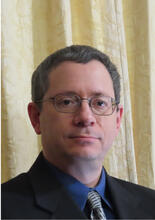
Tom Clancy
As a principal cybersecurity engineer with MITRE, Tom Clancy collaborates with government, industry, and the user community to solve identity, credential, and access management challenges. Working exclusively in the public interest, MITRE takes on some of the most difficult cyber challenges facing the nation. Previously, Tom served in the U.S. Army as a tanker and information systems engineer. Tom has a master’s degree in computer science from SUNY Stony Brook, a master’s degree in national resource strategy from the Industrial College of the Armed Forces (The Eisenhower School), and a bachelor’s degree in systems engineering from the United States Military Academy at West Point. Tom is also a Certified Identity Professional (CIDPRO).

Andrew Slifka
Andrew Slifka is a materials research engineer and has worked at NIST since 1991. Among Andrew’s research interests are mechanical measurements of structural steels in high-pressure hydrogen gas. Andrew earned his bachelor’s degree and Ph.D. from the Colorado School of Mines and his master’s degree from the University of Colorado.
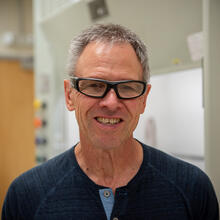

Manny Mejias
Manny Mejias is the radiation safety officer (RSO) and chief of the Radiation Safety Division at NIST. He is responsible for ensuring the safety and compliance of ionizing radiation programs and Nuclear Regulatory Commission (NRC) licenses across the agency's Gaithersburg and Boulder campuses. Manny is passionate about reducing legacy waste and safely repurposing materials that retain scientific value. His foundation in health physics includes an A.S. in nuclear engineering technology, National Registry of Radiation Protection Technologists certification, and serving as a Nuclear Technical Advisory Group member. Outside of his professional duties, he can often be found playing chess or billiards.
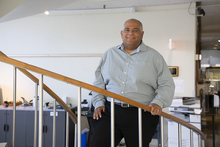
Robert Horansky
Robert D. Horansky received the B.A. degree in chemistry and the Ph.D. degree in physics from the University of Colorado Boulder in 1999 and 2005, respectively. He joined NIST in 2005. Rob has developed metrology techniques for single photon sensors in nuclear radiation and optical power measurements and calibrations and traceability for millimeter-wave wireless systems and reverberation-chamber measurements for cellular applications. Rob is the secretary of the IEEE P1765 Standards Working Group on Uncertainty for EVM and the winner of two Department of Commerce Medals for research in LTE Factor Screening and Novel Single Photon Detectors.
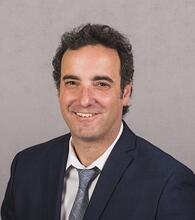

Jacob Rezac
Jacob Rezac is an applied mathematician in NIST’s Communications Technology Laboratory. He specializes in developing techniques for efficient measurements of electromagnetic quantities — reducing measurement burdens without sacrificing quality. Prior to joining NIST, he earned a bachelor’s and master’s in applied mathematics from the Colorado School of Mines and a Ph.D. in applied mathematics from the University of Delaware.

Gabriel Popkin
Gabriel Popkin formerly wrote for the NIST website. Before coming to NIST, he was a freelance science and environmental journalist for more than 10 years, writing for globally recognized outlets including the New York Times, Washington Post, Science, National Geographic, Quanta and many others. He has served as president of the DC Science Writers and chair of the National Association of Science Writers' information access committee. He studied physics at Wesleyan University and science writing at Johns Hopkins University. Outside of work, he spends as much time as he can outdoors, hiking, biking, gardening, canoeing and playing in the NIST soccer and ultimate frisbee games.
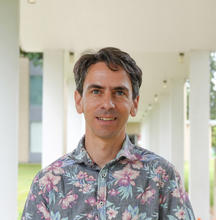


John Wiltberger
John Wiltberger is a cybersecurity engineer at MITRE specializing in operational technology (OT) and applied cybersecurity research. He has co-authored a wide array of guidance focusing on developing and testing practical methods for detecting sophisticated cyber activity across both IT and OT environments. With 15 years in the industry, his work has focused on turning emerging technologies and research concepts into practical capabilities for defenders.
Robert Stea
Bob Stea is a cybersecurity engineer at MITRE, working on the assessment of risk and resilience for critical infrastructure sectors, and the development of guidelines for the security of operational technology systems. Prior to MITRE, Bob was an environmental systems engineer in a wide range of industries both in the US and abroad.
CheeYee Tang
CheeYee Tang is an electronic engineer at NIST focusing on cybersecurity for Operational Technology (OT) research. Chee co-authored influential NIST guidelines on critical infrastructure and OT cybersecurity, notably NIST SP 800-82 and NIST IR 8576. Chee has over 20 years of experience in product development and embedded systems. Prior to NIST, Chee led software engineering teams in the rail and telecom sectors.
Carina Hahn
Carina Hahn is a social scientist in NIST's Information Technology Laboratory. With a Ph.D. in cognition and neuroscience from the University of Texas at Dallas, Carina's research is centered around facial forensic expertise, where she works to understand this specialized type of facial recognition ability. Carina was part of a team that won a gold medal from the U.S. Department of Commerce — the highest honor granted by the secretary.




Michael Galler
Michael A. Galler is a mechanical engineer in the Engineering Laboratory (EL) at the National Institute of Standards and Technology. He is an Investigator on the AI Optimized Building Controls project and is the founding Chair of the ASHRAE MTG for Cybersecurity for HVAC Systems and Related Infrastructure, protecting heating, ventilation, air conditioning (HVAC) systems, building management infrastructure, and associated digital interfaces from cyber threats.