Official websites use .gov
A .gov website belongs to an official government organization in the United States.

Secure .gov websites use HTTPS
A lock (
) or https:// means you’ve safely connected to the .gov website. Share sensitive information only on official, secure websites.


Blog Search
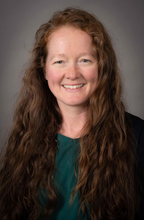
Jon Boyens
Jon Boyens is the Chief of the Computer Security Division within the Information Technology Laboratory at NIST. In this role, he oversees NIST’s critical cybersecurity research and development initiatives, as well as the creation of essential cybersecurity standards and guidelines that secure federal agency programs.
A recognized expert in supply chain security, Mr. Boyens leads NIST's Cybersecurity Supply Chain Risk Management (C-SCRM) Program. He also serves as NIST's principal to the Federal Acquisition Security Council, helping guide the government-wide implementation of the Federal Acquisition Supply Chain Security Act.
Additionally, Mr. Boyens helps develop and coordinate cybersecurity policy across the Department of Commerce’s bureaus and represents the Department in the Administration’s interagency policy process. Throughout his tenure, he has been a key contributor to numerous high-profile, White House-led initiatives. In addition to being detailed to the National Security Council to help lead the development of a landmark cybersecurity Executive Order, his diverse portfolio includes foundational work on the Cybersecurity Framework, trusted identities, botnets, and telecommunications and software supply chain security.

Harold Booth
Harold is a Computer Scientist and Group Manager for the Software Security Group at the National Institute of Standards and Technology in the Computer Security Division. Current projects include Dioptra, an open source software platform for the test and evaluation of machine learning systems, as well currently developing a project at the National Cybersecurity Center of Excellence (NCCoE) on Software and SI Agent Identity and Authorization. Past work includes serving as the Project Manager for the Cryptographic Algorithm Validation Program (2018-2020) and the National Vulnerability Database at NIST (2010-2017).

Henry Nonnemaker
Henry Nonnemaker is an undergraduate at Case Western Reserve University, where he studies applied math, with a secondary major in English literature. Although he’s fond of the abstract, he likes math best when he can apply it to the real world. In his spare time, he’s a Magic: The Gathering player and amateur jazz saxophonist.



Erica Romsos
Erica Romsos is a research biologist with the Applied Genetics Group at NIST, focusing on rapid DNA testing, digital PCR analysis and standards development. Her work in standard reference material (SRM) characterization has assisted with the creation of many SRMs produced by NIST for the forensic DNA community. Additionally, Erica is the leader of the Forensic Science Quality Assurance Program, supporting method testing, validation and technology performance across different forensic science disciplines.



Stephanie Servetas
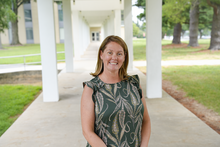
Stephanie Servetas is a microbiologist at NIST. Stephanie’s research focuses on the development of laboratory-grown, reproducible microbial communities that can serve as tools for the development of next-generation, sequencing-based diagnostics, pathogen detection and microbial therapeutics (bugs-as-drugs). She received her bachelor’s degree in biotechnology from the Rochester Institute of Technology and a Ph.D. in emerging infectious diseases from the Uniformed Services University of the Health Sciences.


Hanna Kras
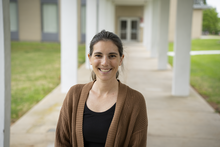
Hanna Kras is a Drupal web developer with a passion for usability and user experience. Before coming to NIST, she worked in various communications roles, including videographer and video team lead, writer, social media content creator and website manager for Fairfax County, the Pentagon, the National Institutes of Health, and local media. She has a bachelor’s degree from George Mason University in English, linguistics, and film & media studies. When she’s not working, she’s reading and writing, watching films, and practicing Brazilian jiu jitsu.

Kathryn Keenan
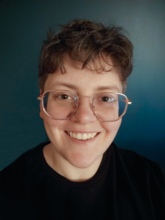
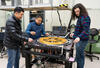
Katy Keenan is a biomedical engineer in the Physical Measurement Laboratory at the National Institute of Standards and Technology. She earned her Ph.D. in mechanical engineering at Stanford University where she found her passion for medical imaging and specifically MRI. Currently, her work focuses on improving the repeatability and reproducibility of MRI across field strengths and the possibilities of low-field MRI.