

Official websites use .gov
A .gov website belongs to an official government organization in the United States.

Secure .gov websites use HTTPS
A lock (
) or https:// means you’ve safely connected to the .gov website. Share sensitive information only on official, secure websites.


Taking Measure
Just a Standard Blog
Science and medicine are constantly evolving. So, research facilities sometimes end up with outdated materials that researchers no longer need.
In years past, cancer patients were treated with a type of radiation that doctors don’t use anymore.
But what happens to those old radioactive materials?
Much like old clothes in the back of your closet, these materials often sit in medical and scientific facilities for many years.
One reason is that disposing of radioactive materials is expensive. When an institution receives funding to buy new materials, they’re often not given enough money to dispose of the old ones.
That’s a problem because radioactive materials can be a safety hazard. This has been an issue for almost any organization that handles radioactive materials. Universities, hospitals and scientific facilities all face the challenge of getting rid of old radioactive material.
Thanks to new scientific developments, NIST and the Department of Energy are reusing these materials for targeted cancer therapies. We call that type of input material “feedstock.” Our old materials will be used as a feedstock for a robust domestic supply of chemical elements, known as isotopes, for cutting-edge cancer treatment.

‘Recycling’ Radioactive Materials
On our NIST campus in Gaithersburg, Maryland, we had a material called radium-226 that had been previously used in research and cancer treatment. This material stopped being medically useful many decades ago. But it still had scientific value to NIST until about 10 years ago. So, within the last several years, we’ve been working to dispose of it safely.
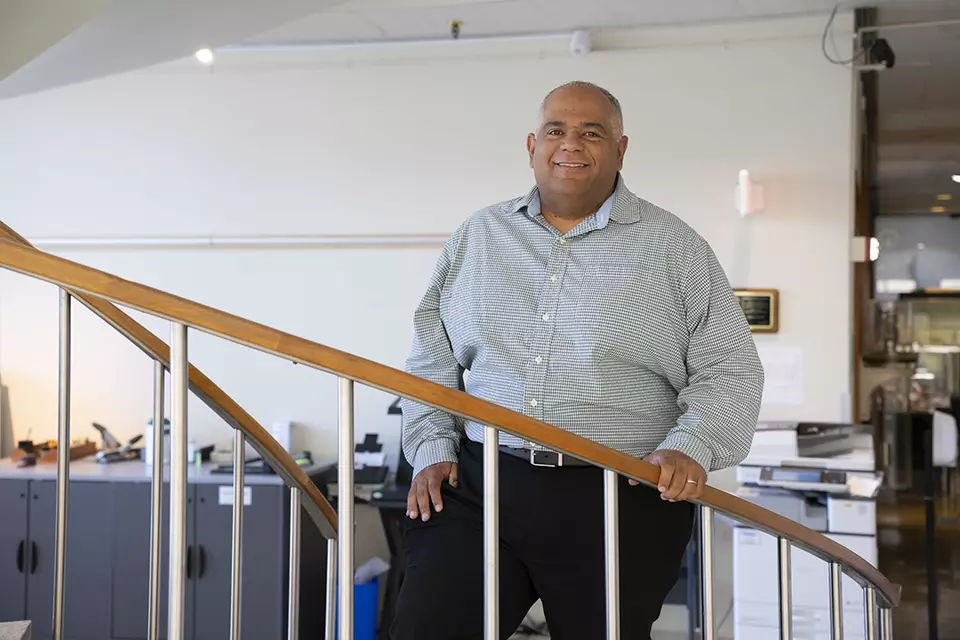
When I learned that the Department of Energy was interested in reusing dated radioactive materials, I connected with my colleagues to see if they were interested in working with us to take our material. The next step in my role as a radiation safety officer was to identify the available feedstock.
Handing off radioactive material is not a simple or quick process. The Department of Energy’s experts had to create a heavy, custom-made lead case to store and transport the materials.
In addition to managing complex logistics, my team worked diligently to make sure this effort could be done safely.
My most important job is keeping NIST employees, our campus and our surrounding community safe. I was honored to have the opportunity to do the right thing not only from a safety and stewardship perspective, but also to contribute in a small way to helping people with cancer.
Future of Radiation Recycling
One lesson we’ve learned from this project is that we shouldn't wait until a material has lost its scientific usefulness before thinking about its eventual disposal or reuse.
We are looking more systematically at legacy radioactive materials. We’re considering what still has scientific value, what no longer does, what options exist to remove or recycle material, what those options cost, and whether another government agency or scientific institution may have a use for something we no longer need. The goal is to move from managing these issues on a case-by-case basis to a life-cycle approach.
A key part of that is recognizing disposition as part of the life-cycle cost of scientific work. Acquiring material is only one part of our responsibility. We also have to anticipate how it will ultimately be reused, transferred or disposed of safely. That requires technical expertise, planning and funding.
We’ve developed a safe, thorough process with the Department of Energy and are working to standardize it for other institutions that may share their leftover radioactive materials. Our hope is that this can be scaled up so that institutions can safely hand off their materials to help keep everyone safer and help patients who need cancer therapies.



I suggested oil waste for coral reefs because read article about ancient skimming of oil and guessed they were corked. Remembered publized spills being eaten by various organisms and figured coral is one of them. Read article next year they were healthier.