U.S. flag

An official website of the United States government

Official websites use .gov
A .gov website belongs to an official government organization in the United States.

Secure .gov websites use HTTPS
A lock ( ) or https:// means you’ve safely connected to the .gov website. Share sensitive information only on official, secure websites.

Material Data Division

NIST's Material Data Division provides modern data infrastructure, data science capabilities, and modeling and simulation expertise to enable the Material Measurement Laboratory's technical staff to carry out NIST’s mission.

The Material Data Division (MDD), formerly the Office of Data and Informatics, provides modern data infrastructure, data science capabilities, and modeling and simulation expertise to enable the Material Measurement Laboratory (MML) technical staff to carry out NIST’s mission. In partnership with U.S. industry, federal agencies, and other stakeholders, MDD develops reference data to:

  1. Establish the accuracy of measurement methods, including those evolving from emerging automated laboratories technologies, and theoretical approaches, including modeling, simulation, and AI/ML, that describe chemical, materials, and biological systems essential to the competitiveness of the U.S. economy, and
  2. Help fill key data gaps germane to MML’s core competencies in critical emerging technologies. MDD supports dissemination of reference data to stakeholders and manages the NIST’s Standard Reference Data program.

News and Updates
120 Years of Data at NIST

In celebration of the 50 th anniversary of the founding of the Journal of Physical and Chemical Reference Data (JPCRD), two NIST scientists have published a...

MRS Bulletin Material Matters

The MGI [Materials Genome Initiative] is going to change the way materials science is done. In the next 10-to-20 years, we’ll be doing materials discovery and...

Events

Projects and Programs

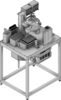
A Low-Cost Robot Science Kit for Education

Ongoing
Despite its low cost, Legolas has been demonstrated for machine learning-driven hypothesis design, discovery, and validation. For the last four years, Legolas has been used in hands-on courses at the University of Maryland to teach next-generation workforce skills, including ML, control systems...

Annual Machine Learning for Materials Research Bootcamp

Ongoing
Four days of lectures and hands-on exercises covering a range of data analysis topics from introduction to python and data pre-processing to advanced machine learning analysis techniques. Example topics include: Identifying important features in complex/high dimensional data Visualizing high...

Autonomous Scanning Droplet Cell

Ongoing
Corrosion impacts a broad spectrum of application areas including infrastructure, transportation, and the military. The annual price tag for corrosion mitigation and remediation is 3.4 % of the US GDP. The team is particularly interested in discovering new metallic glasses (metals without long range...

Autonomous Synthesis of Metal-Organic Frameworks

Ongoing
Metal-organic frameworks (MOFs) show great promise for a variety of applications, from industrial gas separation, to catalysis, to PFAS absorption. One challenge to the adoption of these technologies is determining and optimizing the synthesis of these materials. There are large computational...

Awards

Aaron Gilad Kusne Named APS Fellow

For pioneering work on applications of machine learning for automated delineation of materials phase diagrams, and for the development of novel physics-informed machine learning for closed-loop autonomous materials exploration and optimization.

Contacts

Was this page helpful?