

Official websites use .gov
A .gov website belongs to an official government organization in the United States.

Secure .gov websites use HTTPS
A lock (
) or https:// means you’ve safely connected to the .gov website. Share sensitive information only on official, secure websites.


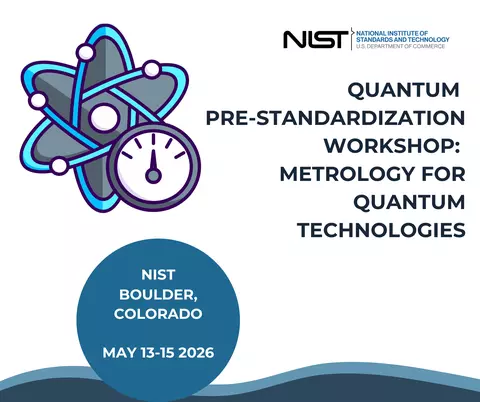
This workshop will bring together stakeholders from across the quantum technology ecosystem to provide input on industry’s most pressing measurement and characterization needs. This information will inform the workplan of NMI-Q, a new G7-endorsed international collaboration of National Metrology Institutes to accelerate the quantum economy through vetted measurement practices. The first day will include a focused workshop on materials for quantum, and optional tours of local quantum companies in the Boulder vicinity.
Keynote Speaker
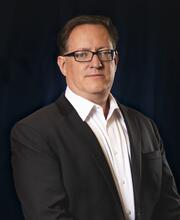
Scott R. Davis, Ph. D., CEO and co-founder Vescent
NMIs: The Hidden Engine Powering the Quantum Revolution
Dr. Davis is a physicist entrepreneur with an emphasis on new technology transition from the laboratory to manufacturing. He has spent his career inventing, developing, and commercializing a wide variety of technologies. As a co-founder and VP of technology at Vescent he led the development of non-mechanical beamsteerers and oversaw the asset sale of that technology to Analog Devices for the autonomous vehicles market. He spent three years working at Analog Devices before returning to Vescent as CEO in 2020. Since then, he has been leading the development and commercialization of technologies and products, such as compact laser systems for trapping and cooling atoms, compact and deployable frequency combs, miniature spectroscopic standards, photon control solutions for quantum computers, next generation atomic clocks, and other tools aimed at furthering the development and deployment of quantum systems. Several of these products are based on technologies the originated in NMIs. He has over 30 papers published, has co-authored two book chapters, and has twenty-seven patents pending and/or issued.
Agenda
Check back for updates.
| Wednesday, May 13 10:00-1:00 Materials for Quantum Roundtable/Workshop (10-1) Co-Chairs: Albert Davydov (NIST), Olga Kazakova (NPL) Room: 81-1A116 | |
| 10:00 -10:10 am | Welcome - Tim Prior |
| 10:10 - 10:25 am | Introduction to Quantum Standards (Barbara Goldstein) |
| 10:25 - 10:40 am | Objectives of the Materials for Quantum (MQT) Technical Work Area of NMI-Q, initial steps (Olga Kazakova) |
| 10:40 -10:55 am | Industrial engagement and needs (Albert Davydov) |
| 10:55 - 11:15 am | Materials for Quantum supply chain and limitations (Olga Kazakova) |
| 11:15 -11:35 am | Break |
| 11:35 - 11:50 am | Industrial speaker: Icarus Quantum Inc. (Fateme Mahdikhany) |
| 11:50-12:15 pm | VAMAS goals and perspectives on pre-standardization in material science (Jeff Fagan) |
| 12:15 - 12:45 pm | Round table (led by Olga Kazakova / Albert Davydov) |
| 12:50pm | Grab & go lunches provided onsite |
| 2:00 pm | Tour of Quantum Commons 18300 SH-72, Arvada; Colorado 80007 Tour includes an overview of Elevate Quantum, a tour of the facilities and the companies located there. Note: Transportation is NOT provided (driving time from NIST to Quantum Commons is ~ 20 min)
|
| 4:00 pm | Vescent Tour includes: |
| Thursday, May 14, Building 81, Room 1A116 Co-Chairs: Barbara Goldstein (NIST), Tim Prior (NPL) | |
| 8:30 am | Arrival, check-in at Visitor’s Center. Coffee, light breakfast outside 81-1A116 |
| 9:00 am | Setting the scene / aims for the workshop. Barbara Goldstein, Tim Prior – Co-chairs, NMI-Q |
| 9:30 am | Keynote: "NMIs: The Hidden Engine Powering the Quantum Revolution” Scott Davis, CEO and Co-Founder, Vescent |
| 10:00 am | Panel Discussion: Quantum Computing Measurement Needs Moderator: Jessi Olsen, CEO, Elevate Quantum Panelists: David Allcock, IonQ Charles Baldwin, Quantinuum Remy Notermans, Atom Computing Ryan Paske, IBM |
| 11:00 am | Break |
| 11:30 am | Panel Discussion: Quantum Sensing Measurement Needs Moderator: Thomas Gerster (PTB) Panelists: Kaitlin Moore, Rydberg Technologies Max Perez, Infleqtion Mesa Quantum |
| 12:20 pm | Group photo |
| 12:30 pm | Lunch (provided on-site) |
| 1:30 pm | Panel Discussion: How National Metrology Institutes are Innovating to Meet the Demands of the Emerging Quantum Economy Moderator: Tim Prior, NPL Panelists: Kristan Corwin, NIST (US) Dimitrios Georgakopoulos, NMIA (Australia) Thomas Gerster, PTB (Germany) Nobuhisa Kanisa, G-QuAT NMIJ/AIST (Japan) Felicien Schopfer, LNE (France) |
| 2:15 pm | Break |
| 2:30 pm | Panel Discussion: Measurement Challenges for Quantum Enabling Technologies Moderator: Phil Makotyn Panelists: Chris Myatt, QPICS Wei Dai, Quantum Machines Kurt Vogel, Vescent Fateme Mahdikhany, Icarus Corban Tillemann-Dick, Maybell Quantum |
| 3:30 pm | Break-out Discussion The Role of National Metrology Institutes Computing Sensing Networking Enabling Technologies |
| 4:30 pm | Report Outs The Role of National Metrology Institutes Materials for Quantum Roundtable - Olga Kazakova (NPL), Albert Davydov (NIST) Break-out Groups: Computing Sensing Networking Enabling Technologies |
| 5:00 pm | “Fire-side chat” wrap-up |
| 5:15 pm | Adjourn |
| Friday, May 15 | |
| 9:00 am | Working session to review Thursday’s material and begin draft of quantum pre-standardization plan and identify priority areas for pre-standardisation activities. Room: 81-1A116 |
| 10:00- 12:00pm | Option: Tours of selected NIST quantum research labs Sign up sheets will be available on Thursday |
| 12:00 pm | Lunch - grab & go lunches provided onsite |
| 1:00 pm | Continuation of working session |
| 3:00 pm | Adjourn |
Speakers
Andrew Attar
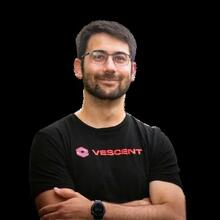
Dr. Attar is an AMO physicist by training with deep expertise in atomic/molecular spectroscopy, optical frequency combs, precision laser frequency control, optical clocks, and photonic ultralow-phase-noise microwave generation. He is currently the Director of Product Development at Vescent Technologies.
Kristan Corwin

Dr. Kristan Corwin is Chief of the Applied Physics Division in the Physical Measurement Laboratory (PML) at the National Institute of Standards and Technology (NIST). The Division, located in Boulder, CO, is responsible for laser metrology, quantum metrology, quantitative imaging, and other applications of photonic and magnetic technologies. The division supports quantum metrology through a single photon calibration service, workforce development through the annual Q school, and fundamental and research in quantum sciences through photonics, superconducting circuits, and magnetics. For the American Physical Society, she serves as Speaker of the Council of Representatives and Councilor for the Division of Laser science.
Dr. Corwin pursued a faculty career at K-State from 2003 – 2019, holding positions including Ernest K. and Lillian E. Chapin Professor of Physics and Associate Dean for Research in the College of Arts and Sciences. Her research interests center on nonlinear optics, frequency metrology, and novel laser systems, emphasizing gas-filled hollow optical fibers. She received a B.S. in Physics from the State University of New York at Buffalo in 1993, and earned both a M.S. and Ph.D. degree at the University of Colorado in laser trapping and cooling under the direction of Carl Wieman. After a postdoctoral position at École Normale Supérieure in ultracold quantum gasses with Christophe Salomon, she joined NIST Boulder Laboratories as a National Research Council (NRC) postdoctoral fellow working with optical frequency combs.
She is a Fellow of Optica (formerly the OSA), has co-authored more than 60 peer-reviewed publications, holds several patents, received multiple teaching awards, served as principal investigator for many millions of dollars of research grants from NSF, AFOSR, AFRL, and others. She supported undergratudate research by leading the K-State Physics Research Experience for Undergraduates (REU) program for over a decade. In 2015, she was a visiting fellow at JILA, University of Colorado and NIST. She sits on the Board of Directors of the Jonathan F. Reichert Foundation. She received the APS Five Sigma Physicist Award in 2019.
Wei Dai
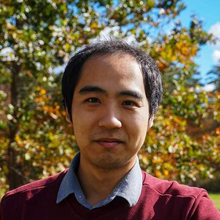
Wei Dai is a Product Solutions Physicist at Quantum Machines. He leads product research to advance the control technologies for quantum processors, and interfaces with academic and industrial customers. He earned his Ph.D. in Applied Physics from Yale University under the advice of Prof. Michel Devoret, with a research focus on the readout of superconducting qubits.
Dr. Albert Davydov
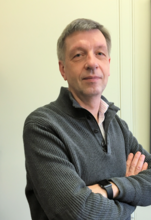
Dr. Albert Davydov leads the Functional Nanostructured Materials Group at NIST, focuses on materials and processes for advanced electronics, magnetics, energy, and catalysis. His research interests include fabrication, processing, and microstructural characterization of electronic materials, including semiconductor nanowires, two-dimensional materials, and quantum materials. He is a member and project lead in the ISO Technical Committee on Nanotechnologies, co-lead of the Quantum Materials Workgroup at the Mid-Atlantic Quantum Alliance, and co-chair of the NMI-Q Technical Working Area on Materials for Quantum Technologies.
Dimitrios Georgakopoulos
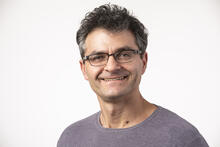
Dimitrios Georgakopoulos is a Senior Research Scientist at the National Measurement Institute, Australia, specializing in quantum voltage standards and high‑precision electrical measurements. He holds a Ph.D. from the University of Manchester and previously worked at the UK National Physical Laboratory. He is a Senior Member of IEEE and a co‑recipient of the 2020 IEEE Instrumentation and Measurement Society Technical Award.
Barbara Goldstein

Ms. Barbara Goldstein serves as Associate Director of the NIST Physical Measurement Laboratory. She is a leader in international quantum standardization, launched the development of Standardization Readiness Levels within the Quantum Economic Development Consortium, and serves as the inaugural co-chair of NMI-Q, a new international collaboration to advance the quantum economy by addressing industry’s most pressing measurement needs. She leads the “NIST on a Chip” program which is developing a suite of quantum sensors and standards to take precision measurements out of the lab and into the field. She is President-Elect of IMEKO, an international federation of 42 member organizations committed to metrology, after serving as that organization’s inaugural chair of Technical Committee 25 - Quantum Measurement and Quantum Information, and is a Fellow of the Washington Academy of Sciences.
Olga Kazakova

Olga Kazakova is a Fellow at the National Physical Laboratory (NPL) and a leader in materials metrology for quantum and emerging technologies, working at the interface of academia, industry and government. She is a co-chair of NMI-Q TWA Materials for Quantum Technology, and a Professor at Univ of Manchester. She is also a Fellow of Institute of Physics.
Dr. Kaitlin Moore

Dr. Kaitlin Moore is a Senior Physicist and Project Manager at Rydberg Technologies, leading a portfolio of projects in quantum sensing and technology. She previously led a quantum research team at a nonprofit research institute, focusing on defense applications of quantum sensing. Her work has been recognized with a DARPA Young Faculty Award. She has been a National Research Council Postdoctoral Fellow at the National Institute of Standards and Technology. Dr. Moore earned her Ph.D. in Applied Physics from the University of Michigan, where she was a Rackham Graduate Fellow. Her research spans quantum sensing, including Rydberg-atom sensors and chip-scale platforms.
Remy Notermans

Dr. Remy Notermans is Director of Strategic Planning at Atom Computing, where he oversees product commercialization, user experience strategy, marketing, and the development of external partnerships. As one of the company’s earliest employees, he played a key role in the design and engineering of Atom Computing’s prototype and second‑generation quantum computers before joining the company’s product team. Prior to his work at Atom Computing, Dr. Notermans was a postdoctoral researcher at Stanford University, focusing on high‑precision measurements with quantum superpositions of neutral atoms. He holds a Ph.D. in Physics from the Vrije Universiteit Amsterdam and is the co‑author of multiple peer‑reviewed scientific publications.
Ryan Paske
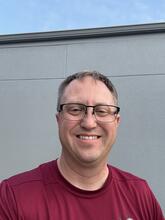
Ryan Paske is a Senior Technical Staff Member in IBM Supply Chain Engineering. Ryan is responsible for enabling IBM’s supply chain to support Quantum as it scales. Ryan’s career has been at IBM in a variety of roles, starting as a Manufacturing Engineering Intern in the late 90’s. Through out his career he has lead a variety of projects that range from significant new product introductions, building manufacturing facilities, the technical lead on significant out-sourcing and transformation projects that affected IBM’s end to end supply chain, as well as leading the delivery of the CORAL super computers.
Maximillian A. Perez (PhD, MBA)
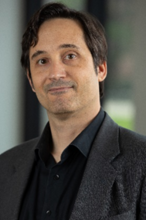
Dr. Maximillian Perez is the Vice President of Strategic Initiatives at Infleqtion, formerly known as ColdQuanta. Built on almost two decades of pioneering quantum research, Infleqtion develops scalable quantum technologies deployed by organizations worldwide.
Since joining the company in 2012, Dr. Perez has played a key role in helping build Infleqtion from an early-stage research organization into a global quantum technology company. In previous leadership roles, he spearheaded strategic government business development through a customer-focused growth strategy. He also helped lead the company’s 2015 expansion into the United Kingdom, and continues to support the growth of Infleqtion’s international partnerships and presence.
Dr. Perez’s technical work has focused on the development of quantum components and systems enabling next-generation compact atomic sensors and timing technologies. Most recently, he served as General Manager of Infleqtion’s Tiqker product line, leading go-to-market strategy for advanced quantum timing and synchronization products.
Prior to joining Infleqtion, Dr. Perez was a National Research Council (NRC) Postdoctoral Fellow at the National Institute of Standards and Technology, where he worked with John Kitching, Liz Donley and Svenja Knappe on the miniaturization of atomic systems and quantum sensors.
Tim Prior

Tim Prior leads NPL's activities on quantum standardisation and international collaboration. He is the co-chair of NMI-Q (an international initiative, formed of the G7 countries and Australia) to support the development and adoption of quantum technologies, vice-chair of IMEKO TC25, the international measurement confederation, with a focus on quantum measurement and quantum information, and will be the Programme Director of the UK Quantum Standards Network, when it launches in Summer 2026.
Dr. Félicien Schopfer
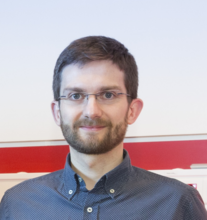
Dr. Félicien Schopfer is Director of the Quantum Technologies Program at LNE, the French National Metrology and Testing Laboratory. After he earned an Engineer’s degree in 2001 and a PhD in Physics in 2005, he joined LNE to advance research in quantum electrical metrology (quantum Hall effect and graphene) and provide high-level measurement services. He awarded the LNE Research Prize 2018. Dr. Schopfer has been in his current Director position since 2022, notably focusing on the development of metrology for quantum technologies to meet industry needs, within the French National Quantum Strategy, at the European level and at the international level, within NMI-Q. He is also involved in quantum technologies standardization at AFNOR National Committee for Quantum, at CEN-CENELEC JTC22 and IEC/ISO JTC3.
Alireza Shabani
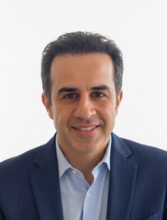
Alireza Shabani is a scientist and entrepreneur with over two decades of experience in quantum technologies, including establishing Cisco Quantum Lab and working at Google Quantum AI Lab. He is currently advising quantum companies and academic research centers."
The title of my talk will be: "An overview of Quantum Networking Applications Roadmap, a joint project between NSF-CQN and QED-C."
Kurt Vogel
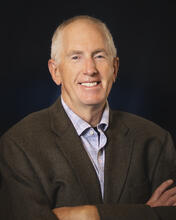
Dr. Vogel has more than 25 years of experience developing photonics-based products. He currently leads technology and product development at Vescent Photonics, a company specializing in high performance laser systems, control electronics, and optical frequency combs for quantum markets. Prior to joining Vescent Photonics, Dr. Vogel led an engineering team at MBio Diagnostics developing a fluorescence-based microarray reader for point-of-care medical diagnostics. In 2000, he co-founded Precision Photonics, where he led technology development and developed multiple products for laser frequency measurement and stabilization. As an NRC post-doctoral researcher at NIST Boulder, he performed some of the first optical frequency measurements with stabilized frequency combs. His graduate thesis studies under Nobel Laureate Dr. John Hall involved laser cooling and trapping experiments with neutral strontium.
Security Instructions
Visitor Access Requirement:
- For Non-US Citizens: Please have your valid/non-expired passport for photo identification.*
- For US Permanent Residents: Please have your valid/non-expired green card for photo identification.*
- For US Citizens: Please have your valid/non-expired state-issued driver's license. NIST will only accept a REAL ID-compliant form of identification. Visitors with state-issued identification must now present a REAL ID or a different form of government-issued photo identification, such as: a valid/non-expired passport, passport card, DOD's Common Access Card (CAC), Veterans ID, Federal Agency HSPD-12 IDs, and Military Dependents ID.*
*Use of apps, physical photocopies, and/or digital screenshots of your ID, Passport or Green card will not be accepted.
Failure to show proper valid and compliant/non-expired photo identification upon check-in will result in denied entry into the facility.
For more information please visit our Campus Access and Security page.