U.S. flag

An official website of the United States government

Official websites use .gov
A .gov website belongs to an official government organization in the United States.

Secure .gov websites use HTTPS
A lock ( ) or https:// means you’ve safely connected to the .gov website. Share sensitive information only on official, secure websites.

Projects/Programs

Displaying 1 - 25 of 27

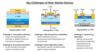
Advancing Power Electronics with Defect Metrology

Ongoing
Power electronics play a central role in all aspects of electrical energy storage, distribution, conversion, and consumption. Currently, power electronics heavily rely on Si-based insulated-gate bipolar transistors (IGBT), which have large footprints, are inefficient, and require extensive cooling

Air Distribution Impacts in Net-Zero Energy Homes

Completed
Objective To acquire high-quality data from well-controlled field configurations that inform residential building designers and equipment standards organizations about space conditioning and ventilation system performance characteristics, especially the air distribution system(s), when applied in

Building Integration with Smart Grid

Completed
Objective - To develop the measurement science for industry standards that will enable interconnection of home and building automation and control systems with a future "smart" utility grid, provide consumers with energy usage information, and support industry efforts to develop the needed standards

Commissioning Building Systems for Improved Performance and Cybersecurity

Ongoing
Objective To improve the performance of building systems by providing the measurement science needed to develop improved building commissioning techniques that utilize embedded capabilities of building control systems, accelerate the adoption of cost-effective commissioning as standard practice and

Embedded Intelligence in Buildings Program

Ongoing
Objective To develop and deploy advances in measurement science that will improve building operations to achieve lower operating costs, energy waste, occupant comfort/safety/security, and smart grid integration through the use of intelligent building systems. What is the problem? Over 80% of the

Energy Measurements for Existing Residential Buildings Project

Ongoing
Objective: To improve estimates of residential whole-building energy consumption by 2014 through characterization of uncertainties of tools used in providing energy feedback to building occupants and selecting retrofit options to improve the performance of existing buildings. What is the new

Fault Detection and Diagnostics for Air-Conditioners and Heat Pumps

Ongoing
Objective Develop fault detection and diagnostic (FDD) methods and measurement tools to ensure air conditioners (ACs) and heat pumps (HPs) perform as designed throughout their lifetime and develop a testing and rating methodology to assess relative merits of different commercial FDD products

Flammability Metrics for New Low-GWP Refrigerants

Completed
Objective: To develop the capability to measure and predict the burning velocity of mixtures of low-Global Warming Potential (GWP) refrigerants to allow the ranking of the mixtures in terms of their flammability, to assist in the selection and implementation of the best replacements for high-GWP

Flammability Metrics for Next Generation Refrigerants

Ongoing
Objective To develop the capability to measure and predict the flammability of next generation refrigerants to (1) allow the ranking of mixtures in terms of their flammability, (2) assist in selection and implementation of the best replacements for legacy hydrofluorocarbon (HFC) refrigerants, (3)

Indoor Contaminants

Ongoing
Objective To provide the measurement science to lead the development of industry-consensus standards and guides to optimize buildings and operate products relevant to the indoor environment and indoor air quality in an efficient and safe manner. Technical Idea This project seeks to provide the

Intelligent Building Agents

Ongoing
Objective Demonstrate the feasibility of AI control techniques for reducing the energy costs of HVAC systems in commercial buildings and create a research infrastructure, the Intelligent Building Agents Laboratory (IBAL), suitable for ongoing demonstration, development, and evaluation of advanced AI

Low-GWP Refrigerants for High-Efficiency HVAC&R Equipment

Completed
Objective - To develop heat transfer and system performance information that will assist in the selection and implementation of the best replacements for high-GWP hydrofluorocarbon (HFC). What is the new technical idea? Most of the currently used HFC refrigerants will be phased out or phased down

Measurement Science for Building Systems Program

Ongoing
Objective To develop and deploy advances in measurement science to support the design and operation of high-performance building systems capable of better supporting resiliency, grid-reliability/stability, and affordability while maintaining a healthy, safe indoor environment. What is the problem

Measuring the Performance of Net-Zero Energy Homes

Completed
Objective: Develop the measurement science necessary to evaluate various technological approaches to achieve net-zero energy residential buildings, including innovative monitoring techniques, methods of test, performance metrics and high quality experimental data for the validation and improvement

Premise Plumbing Systems for High-Performance Buildings

Ongoing
Objective To develop new measurement methods, modeling approaches, and data to support improvements in building plumbing design, utility consumption, and water quality. Technical Idea The technical idea is to advance understanding of the impacts water use and water-related energy use on its delivery

Semantic Interoperability for Building Data

Ongoing
Objective To pursue an effort that results in national and international standards that define concepts and a methodology to create interoperable, machine-readable semantic models for representing building system information for analytics, automation, and control. Technical Idea The new technical

Smart Building Automation and Control Testbed and Standards

Completed
Objective - To enable the development of a new generation of commercial products for integrated cybernetic building systems and transform industry practices for building operations, through a combination of measurement science research enabled by state-of-the-art testbeds and direct involvement in

Transactive Energy for Effective Integration of Customer Flexibility

Ongoing
Objective The TE Flex project will provide the scientific basis for effective customer DER integration using transactive methods by 2026 with industry collaboration. Simulation studies in the NIST TE Testbed will investigate how transactive exchanges can optimally engage the flexibility of different
Was this page helpful?