

Official websites use .gov
A .gov website belongs to an official government organization in the United States.

Secure .gov websites use HTTPS
A lock (
) or https:// means you’ve safely connected to the .gov website. Share sensitive information only on official, secure websites.


Taking Measure
Just a Standard Blog
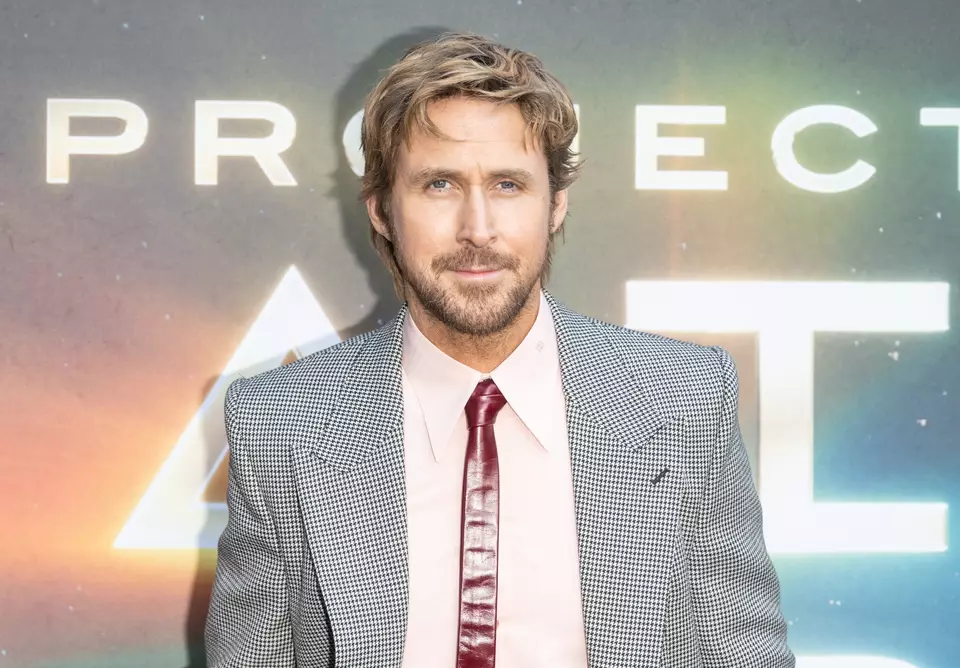
Actor Ryan Gosling plays a science teacher in Project Hail Mary.
Let’s be honest here. If you’re a scientist — or, in our case, scientist adjacent — and you’re watching a movie that involves science, your viewing experience may be just a bit different than that of most moviegoers.
That’s because scientists, especially NIST scientists, are a — let’s just say — precise bunch. They like to analyze. They like to question. And they like to discuss the accuracy of how science is portrayed in books and movies.
So, with that in mind, we thought we’d treat you to some of the things that went through our heads while watching Project Hail Mary.
Spoiler Alert and a Disclaimer
- The viewing of this movie was done on our own time, not during work hours.
- Spoilers ahead. You may not want to read this if you plan on watching the movie and haven’t read the book yet.
Setting the Scene
For those who haven’t seen it, the premise of the movie is that science teacher Ryland Grace (played by Ryan Gosling) is sent to space to figure out why one faraway star isn’t dying when the other stars in our cosmic neighborhood, including our Sun, are dying. Essentially, his mission is to save Earth and all of humanity. (No pressure, right?) The film is based on a novel by Andy Weir.
Measurement Is Important!
The world is racing to go into space and figure out how to combat astrophages, made-up microorganisms that are eating the Sun and potentially going to cause the extinction of the human race.
Then — **boom** (literally) — a supply error. A sample is provided at a quantity one million times larger than it’s supposed to be. The scientists requested one nanogram of the material but were given one milligram, and this resulted in an explosion that killed the space crew’s scientist. Grace ends up being “voluntold” that he will replace that scientist on the mission.
Mismeasurement at its finest ... or rather, its worst? That measurement error is the catalyst for the rest of the story, and it shows that measurements can have life-or-death consequences. Take that, people who think measurement science isn’t cool or sexy.
SRMs in Spaaaace …
Our NISTy eyes could not miss a detail at the very end of the movie. When Grace sends the petri dish of taumoebas (a fictional antidote that will save our solar system from the fictional astrophages) back to Earth, we see that it arrives inside a government-issued jar labeled “Peanut Butter.”
It could be just a government-issued food container from the spaceship ... but we couldn’t help wondering if the filmmakers knew about our famous peanut butter standard reference material (SRM). Or was it just a strange coincidence? That would be our No. 1 burning question if we met Gosling or Weir!
There is some precedent here; NIST recently sent a few of our reference materials to space for the first time. Our researchers are analyzing how space travel affected these precisely measured materials. (Luckily, our reference materials didn’t have to save the planet; their job was just to exist in space.)

Tape Measure Mayhem, and Time Is Ubiquitous …
Grace (the science teacher/hero) shows his alien sidekick Rocky a clock and a tape measure when first trying to communicate with him. Rocky shows Grace a cool clock of his own, a small tower-like structure with rotating components. Rocky also has a bit of trouble with the tape measure and gets tangled in it.
For the record, if Rocky visited NIST’s Gaithersburg campus, we’d be happy to show him not only how to use a tape measure, but how to calibrate it in our tape tunnel. And, if he ended up at our Boulder campus (which would be fitting given his name), we’d show him our super cool atomic clocks.
Technology That’s Out of This World ... Or Is It?
People often watch sci-fi flicks to escape from their everyday lives, but sometimes the sights and sounds are very familiar to us NISTers.
One of the first things we hear Grace talk about is that he knows something is a scanning electron microscope (SEM), but he isn’t sure why he knows that fact. (He’s suffering from some amnesia.) We recognized it, too, because we have them here at NIST and have written about them on our social media accounts.
And that creepy, weird “glove box?” And no, we're not talking about the type you see in cars, we’re talking about that box with the big black gloves attached that Grace uses when he’s handling the astrophages. We have those all over NIST, so we recognized it right away.
So What Did an Actual Scientist Think About the Movie?
NIST research chemist Shayna Hilburg loved the plausibility of the science.
“There were no portions outlandish enough to pull me from the story. In particular, the evolution of taumoeba and the unintended side effect of it was clever,” she said.
Shayna also mentioned the unbalanced loading of a centrifuge, a detail that was also noted by one of our engineers, as an “error” that stuck out for her.
"The effect of an unbalanced centrifuge can be seen when a washing machine is loaded with a heavy blanket or towel and starts to make a very loud noise or shake," she explained. "And laboratory centrifuges are going much faster."
The effects of an unbalanced centrifuge are worse than just some loud noise and shaking. It can cause devastating laboratory accidents, since the spinning portion (rotor) can shake violently and, in extreme cases, rip apart the machinery and housing, spewing shrapnel or launching into the room. While there are apparently some very high-tech active balancing centrifuges on the market, Shayna said any trained scientist would still put tubes on opposite sides of the rotor.
An (Invention) Afterthought
We are NIST communicators, not scientists, so we didn’t think about this particular (very science-y) fact while watching the film. But afterward, we saw an article in Science News where a scientist reflected on Rocky’s people potentially making a solid state of xenon using a “controlled portable diamond anvil cell.”
This is yet another cool NIST connection. NIST scientists, including Charles Weir, invented the diamond anvil high-pressure cell, a device used to create high pressures, in 1958. As far as we know, Weir is not related to the author of Project Hail Mary.
(Fingers crossed they actually did invent it versus stealing the invention from the Eridians and taking credit for it.)
More Measurement in the Movies
Check out Ben's blog post on how measurement factors into several classic films.
About the author


Related Posts
Comments
Any legitimate (as this is) effort to inform the public about thinking critically, including measuring & counting gets a bravo & brava from me & all supporters of these thoughts!!!
Ah!!! thank you for this post! I read the book a few years ago and then got the audiobook for my family to listen to over spring break. I'm super excited for us to go see the movie now!
Ph.D. in Physical Chemistry,, and retired Senior lecturer at RMIT UNICERSITY , IN MELBOUNE, AUSTRALIA.I enjoyed the movie, without being too critical ,,, For years i have maintained rocks, atoms, and sub-atomic particles have an "awareness"/ "consciousness", or such molecular reactions and atomic reactions would not occur.....
Good stuff! Also like the hyperlinks to NIST's work. I have been involved for past couple of years as a work group member with NIST AI Consortium. The work of NIST in this area has been transformative as it continues to set standards recognized globally.
The scientists' perspectives on Hail Mary Project were enlightening and entertaining! Oft overlooked is the name chosen for the protagionist, viz.,Grace . Perhaps a reference to 'Hail Mary full of grace, blessed art thou...." as begins the recognized Christian/Catholic prayer .Love the peanut butter reference that is linked. But Artemis II bested that one with the Nutella jar released from the bounds of gravity floating across the transmitted video screen! Thanks again for great work of NIST and a good smile this morning.