Official websites use .gov
A .gov website belongs to an official government organization in the United States.

Secure .gov websites use HTTPS
A lock (
) or https:// means you’ve safely connected to the .gov website. Share sensitive information only on official, secure websites.


Blog Search

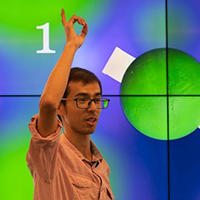
Sheng Ran
Sheng Ran is currently a postdoctoral researcher at NIST and the University of Maryland. He obtained his Ph.D. in physics at Iowa State University. Besides doing research in quantum materials, he is also a meditation instructor.


Rodney Petersen
Rodney Petersen is the director of the National Initiative for Cybersecurity Education (NICE) at the National Institute of Standards and Technology (NIST) in the U.S. Department of Commerce. He previously served as the Managing Director of the EDUCAUSE Washington Office and a Senior Government Relations Officer. He founded and directed the EDUCAUSE Cybersecurity Initiative and was the lead staff liaison for the Higher Education Information Security Council. Prior to joining EDUCAUSE, he worked at two different times for the University of Maryland - first as Campus Compliance Officer in the Office of the President and later as the Director of IT Policy and Planning in the Office of the Vice President and Chief Information Officer. He also completed one year of federal service as an Instructor in the Academy for Community Service for AmeriCorps' National Civilian Community Corps. He is the co-editor of a book entitled "Computer and Network Security in Higher Education". He received his law degree from Wake Forest University and bachelors degrees in political science and business administration from Alma College. He was awarded a certificate as an Advanced Graduate Specialist in Education Policy, Planning, and Administration from the University of Maryland.

Nenad Ivezic
Nenad Ivezic is the leader of the Process Engineering Group in the Systems Integration Division of the NIST Engineering Laboratory. He received his undergraduate degree in civil engineering from the University of Belgrade and MS and Ph.D. degrees in computer-aided engineering from Carnegie Mellon University. He and his wife, Ljiljana, a librarian at the Library of Congress, live in Bethesda, Maryland, where they raised their two daughters, Vera and Jovana.




Dustin Poppendieck
Dustin Poppendieck got his Ph.D. in environmental engineering in 2002 from the University of Texas at Austin. His current efforts are focused on quantifying emissions into indoor air from household products and building materials. In his free time, he likes to play ultimate frisbee, run, canoe and do home improvement projects with his family.


Kenneth G.W. Inn
Kenneth G.W. Inn has directed programs in low‑level radionuclide environmental‑matrix Standard Reference Materials, radionuclide speciation in soils and sediments, and emergency response (nuclear terrorism or unintentional release) and low‑level radiochemistry traceability evaluations. He served at NBS/NIST as a research chemist, a scientific assistant with the U.S. Department of Commerce Undersecretary of Technology and Center for Radiation Research, a group leader in the Office of Radiation Measurements, and Radioactivity Group project leader in low-level radiochemistry. To stay grounded throughout his career, he earned a 6th-degree black belt in Kukkiwon Tae Kwon Do with his son, Jarrett, and support from his wife Estelle and daughter Rachel.






Michael Fagan
Mike Fagan is a computer scientist working with the Cybersecurity for IoT Program, which aims to develop guidance toward improving the cybersecurity of IoT devices and systems. Mike holds a Ph.D. in computer science and engineering from the University of Connecticut and a bachelor’s degree in history and computer science from Vanderbilt University. Born and raised in Brooklyn, New York, Mike now lives in West Virginia with his wife, sons, dog, cats, fish and voice assistant.
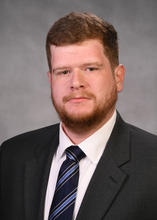
Rickie Grigsby
Rickie Grigsby was an intern in NIST’s Information Technology Laboratory Applied Cybersecurity Division during the summer of 2019. She is currently a graduate student at California State University, San Bernardino pursuing a degree in National Cyber Security Studies. As a member of the Information Security Club and Women in Cybersecurity chapter on her campus, Rickie volunteers at local events to help spread awareness in cybersecurity education and safe practices to K-12 students. She is most interested in cyber threat intelligence, computer networking, and computer forensics.