U.S. flag

An official website of the United States government

Official websites use .gov
A .gov website belongs to an official government organization in the United States.

Secure .gov websites use HTTPS
A lock ( ) or https:// means you’ve safely connected to the .gov website. Share sensitive information only on official, secure websites.

Patents

Searches Patent Title, Abstract, Body, Technology Type, and NIST Inventors
Displaying 1 - 5 of 5
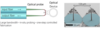
TPOP optical probe.

A Probe for Rapid and Flexible Evaluation of Photonic Integrated Circuits (PICs)

NIST Inventors
Kartik Srinivasan
The Tapered Polymer Optical Probe (TPOP) is a state-of-the-art light probe that collects light from very small, localized areas. It is a small loop of a thin plastic "string" that collects light from a localized area near the loop into a fiber optic for signal testing. The probe is made of a durable
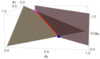
An electro-optic frequency comb is spectrally translated via nanophotonics.

Nanophotonic Spectral Translation of Electro-Optic Frequency Combs

NIST Inventors
Jordan Stone and Kartik Srinivasan
The technology consists of an apparatus and process using an electro-optic frequency comb as the pump laser, used with a nonlinear microresonator to output one or more spectrally translated frequency combs in spectroscopy.
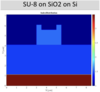
Chart illustrating the fiber channel structure.

A Better Way to Connect Fiber Optics to Computer Chips

NIST Inventors
Saeed Khan and Jeff Shainline
This invention provides a way to efficiently connect optical fibers to semiconductor chips. It improves the transfer of light signals between the fiber and the chip, reducing loss and increasing performance. The design allows for better alignment and integration, making it easier to manufacture and

Optical Phantom for Producing a Time-Resolved Diffuse Reflectance Spectrum

NIST Inventors
Jeeseong C. Hwang
An optical phantom produces a time-resolved diffuse reflectance spectrum and includes: a light source; a spatial light modulator; and an optical delay line including optical fibers of different length that produce different time-of-flight distributions, such that different time-of-flight
Was this page helpful?