Official websites use .gov
A .gov website belongs to an official government organization in the United States.

Secure .gov websites use HTTPS
A lock (
) or https:// means you’ve safely connected to the .gov website. Share sensitive information only on official, secure websites.


NIST26: Updates to the NIST Electron Ionization and Tandem Mass Spectral Libraries
Summary
The latest release of the NIST Mass Spectral Library, which includes the NIST/EPA/NIH Mass Spectral Library, the NIST Tandem Mass Spectral Library, and the NIST GC Retention Index Database greatly increases the number of compounds and spectra since the 2023 version.
The new versions, collectively know as NIST26, are available from distributors worldwide.
Description
NIST/EPA/NIH EI-MS Library, 2026 release
431,277 electron ionization (EI) spectra
- 382,180 compounds, 49,097 replicate spectra
- 35,080 more compounds than the 2023 release
527,993 retention index (RI) values
- 216,093 compounds measured under a variety of conditions
- 188,198 compounds with both RI & MS
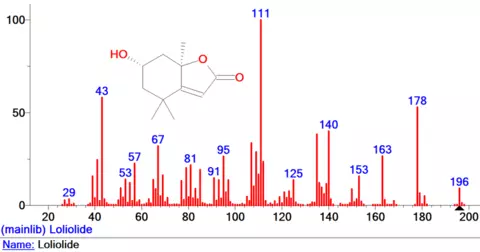
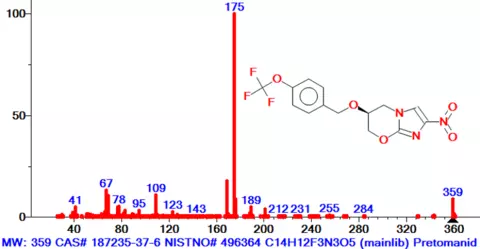
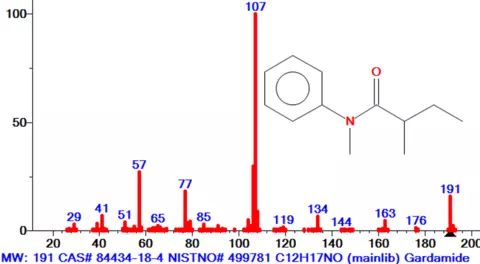
Thousands of new compounds of current analytical interest
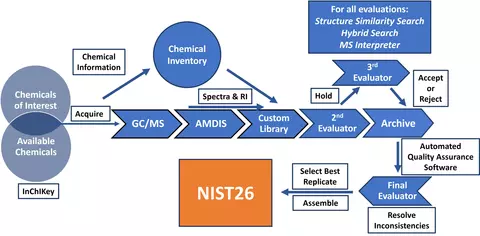
Measured and thoroughly evaluated by NIST Mass Spectrometry Data Center experts assisted by custom software tools
|
|
|
|
|
NIST Tandem Mass Spectral Library, 2026 release
- 68,635 compounds
- a 33% increase over the 2023 release
- 567,114 precursor Ions (MS2, MS3, MS4)
- 3.2 million spectra
Fragmentation methods
- 66,782 HRAM (high res accurate mass) compounds
- 67,146 QTOF, HCD, IT-HRAM, QqQ compounds
- 66,430 ion trap compounds (low res., up to MS4)
- 623 APCI HRAM “extractables and leachables”
Precursor ion types (MS2)
- 60,178 protonated
- 26,100 deprotonated
- 18,556 water/ammonia loss
- 60,962 other in-source generated
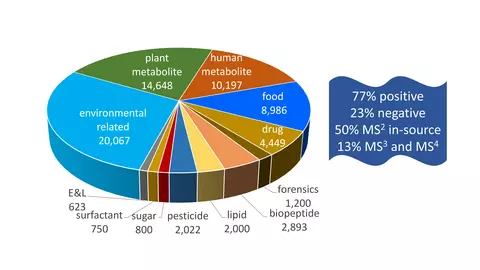
A wide variety of compounds
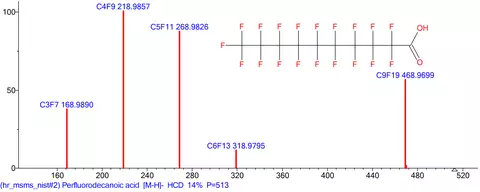


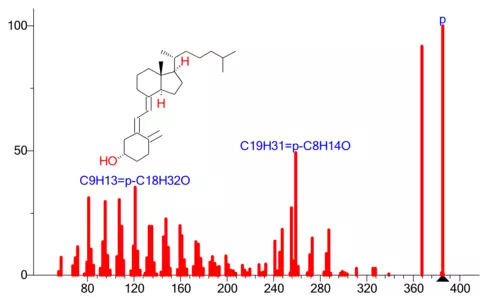
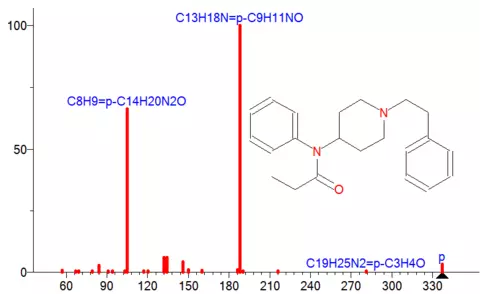
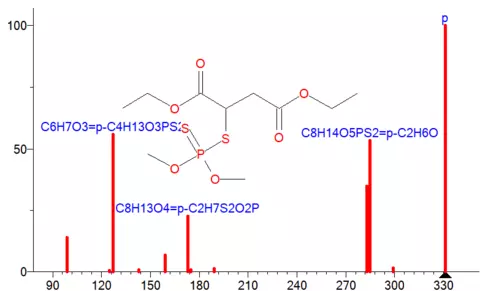
Classes of compounds represented in the NIST26 tandem mass spectral library
NIST MS Interpreter
Connect peaks to structures using thermochemcial fragmentation principles
NIST MS Interpreter Download Page

Hybrid Search Feature in NIST MS Search 4.0
Identify compounds not in the library
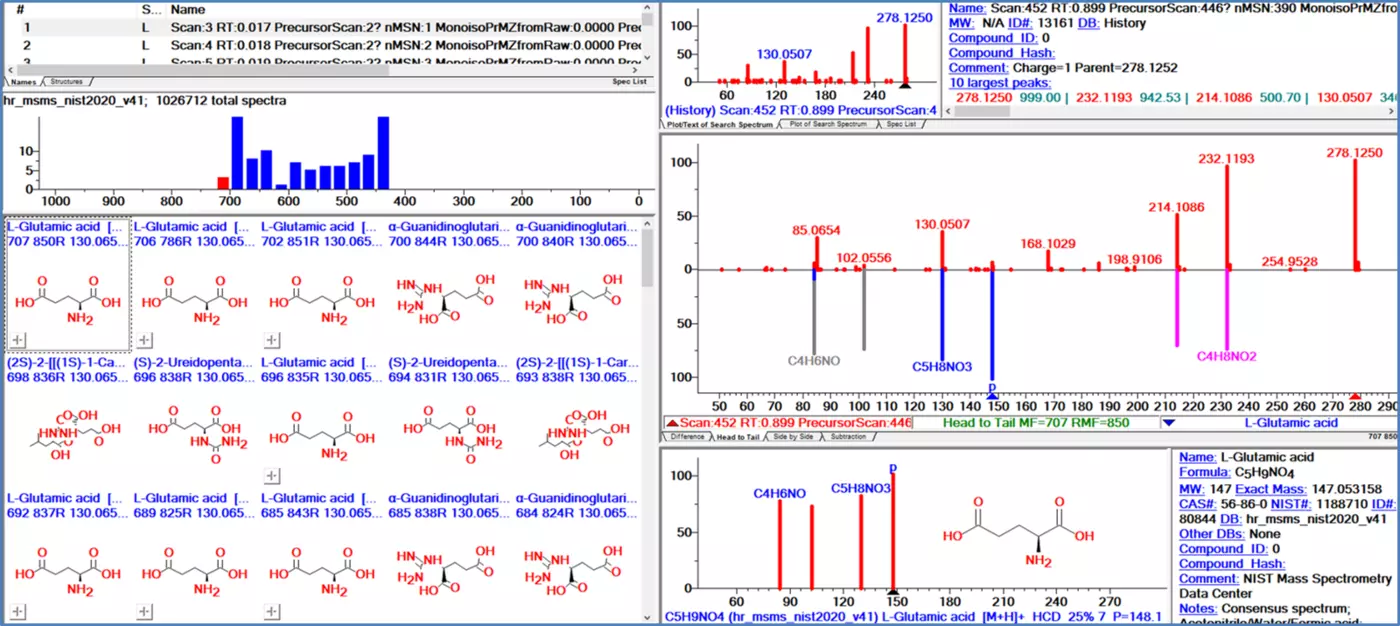
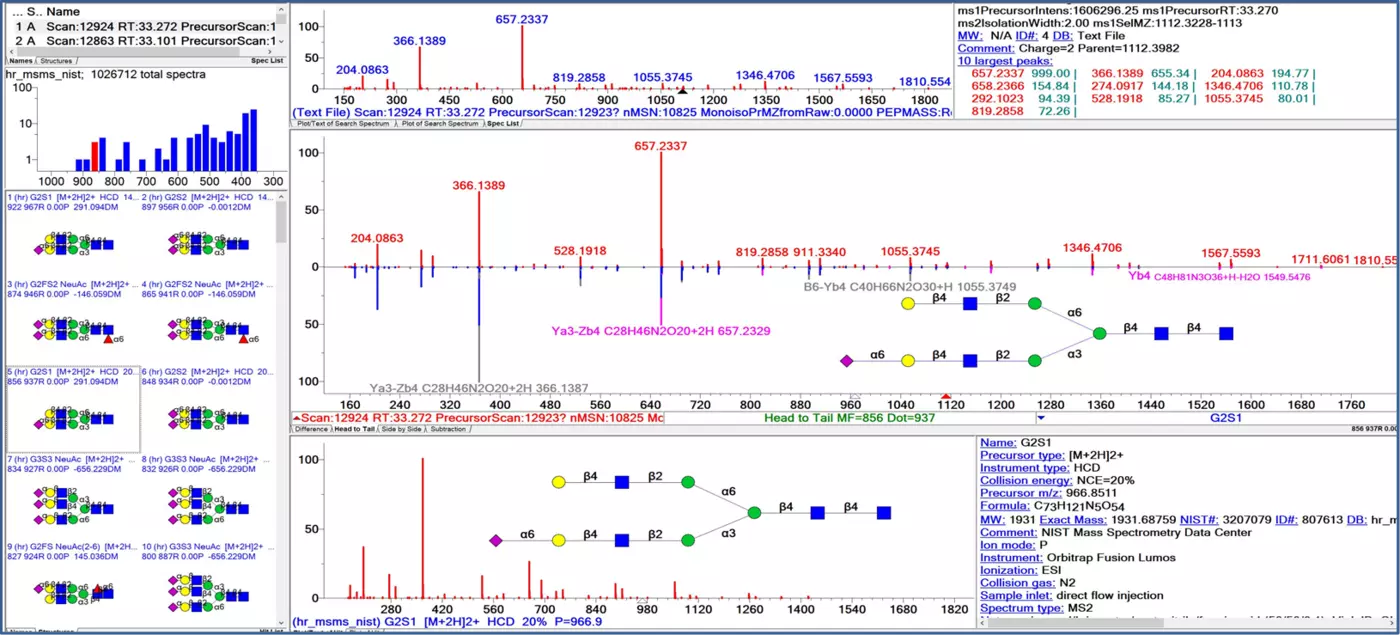
NIST MS Search 4.0
New chromatographic analysis feature
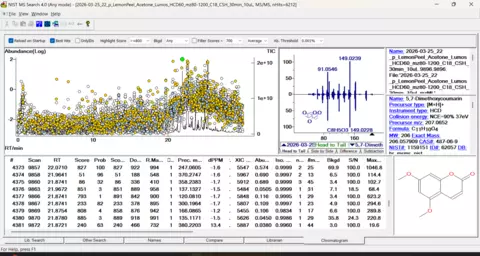
User interface of the NIST MS Search version 4.0 software showing chromatographic tab Credit: NIST
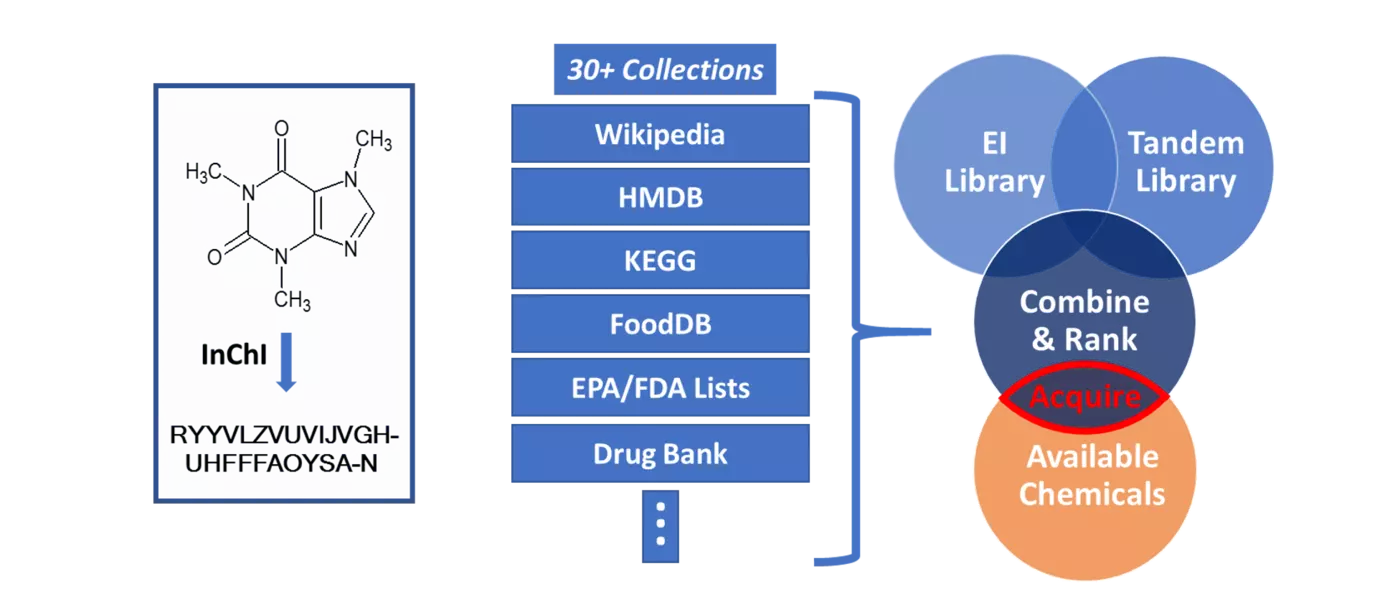
Systematic compound selection process
Thorough quality assurance process