

Official websites use .gov
A .gov website belongs to an official government organization in the United States.

Secure .gov websites use HTTPS
A lock (
) or https:// means you’ve safely connected to the .gov website. Share sensitive information only on official, secure websites.


Taking Measure
Just a Standard Blog
We Sent (Carefully Measured) House Dust to Space to Learn About Human Health
If you get your cholesterol checked and your doctor sends the sample to two different labs, you should get very similar results.
But what if you had to get your cholesterol checked while visiting — or living in — space? How would living in microgravity affect your body’s key indicators, such as cholesterol?
It sounds like science fiction, but it’s something scientists are interested in learning about. It’s important to understand, both for a possible future in which people spend more time in space and to see what it can teach us about life here on Earth.
So, we sent some of our very precisely measured health-related samples into space to learn more.
Packing a Space ‘Suitcase’
Our reference materials are used to ensure the accuracy of food nutrition labels, medical tests and other critical measurements.
When the National Oceanic and Atmospheric Administration (NOAA) Office of Space Commerce asked us to partner with Rhodium Scientific to send materials to space, our first thought was to send some of our clinical reference materials for human serum, plasma and urine. We have to store these materials at minus 80 degrees Celsius (or minus 112 degrees Fahrenheit).
However, for this mission, Rhodium only had room for materials at room temperature. So, we had to pivot to other samples instead.
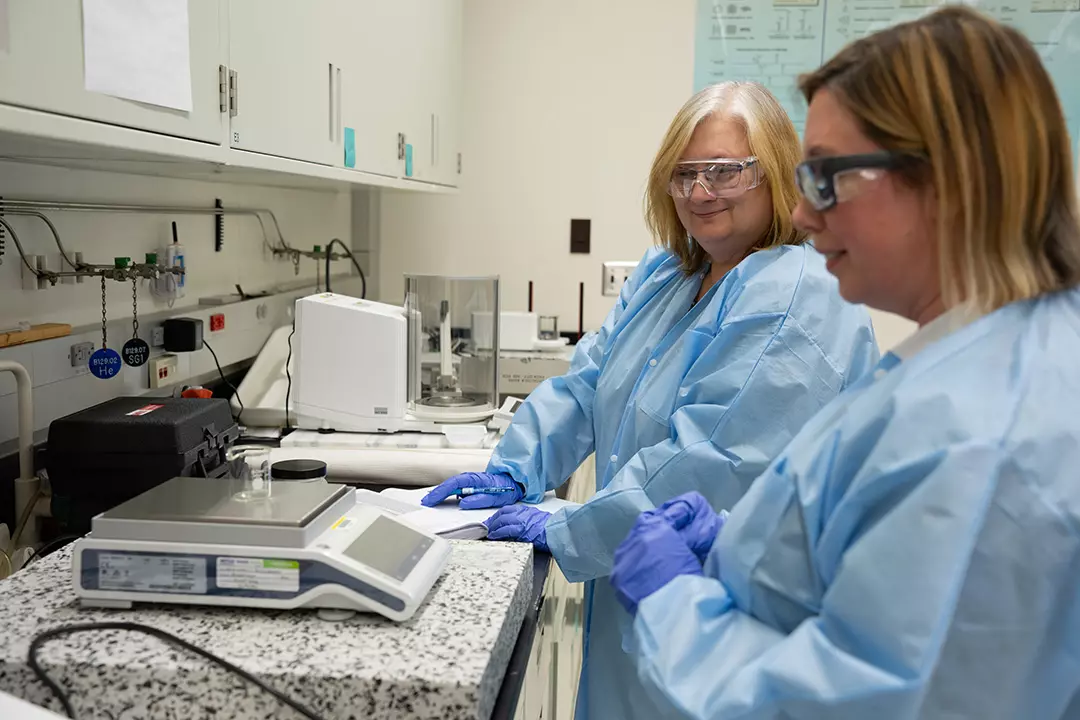
After extensive discussion and safety reviews, we chose materials that are essential for measuring human health indicators. The materials include:
- Cholesterol
- Uric acid (waste product in the body found in urine and blood)
- Creatinine (an indicator of kidney health)
- Urea (an indicator of kidney health)
- Tripalmitin (a material that helps measure fatty acids)
- Freeze-dried human liver
- Organic contaminants in house dust
House dust may seem like an odd addition to this list. We chose it because it’s one of the most complex and best chemically understood materials we have. It’s an opportunity for us to compare the material before and after space flight conditions and storage in space.
Then, we had to package our reference materials for space. It’s a lot more complex than packing your suitcase for a trip.
These reference materials are typically sold in 20-gram bottles. But for the mission, NASA needed us to pack everything into much smaller, lighter packages due to space constraints.
So, we had to repackage the materials into flat containers with about half a gram of mass. If we were working with salt, this would mean going from one 3.5-teaspoon bottle to 40 restaurant salt packets.
This approach made it easier to fit lots of small, flat-packaged materials with minimal extra volume into the allotted space. Flattening the cargo also reduced the risk of container breakage.
The materials that went to space have been relabeled with new numbers and identities. That’s because the journey to space has changed the material.
We also made identical packages of those materials and kept them here on our campus in Gaithersburg, Maryland. This will allow us to compare the ones kept here with the ones that went to space as closely as possible to see how the materials changed over time.
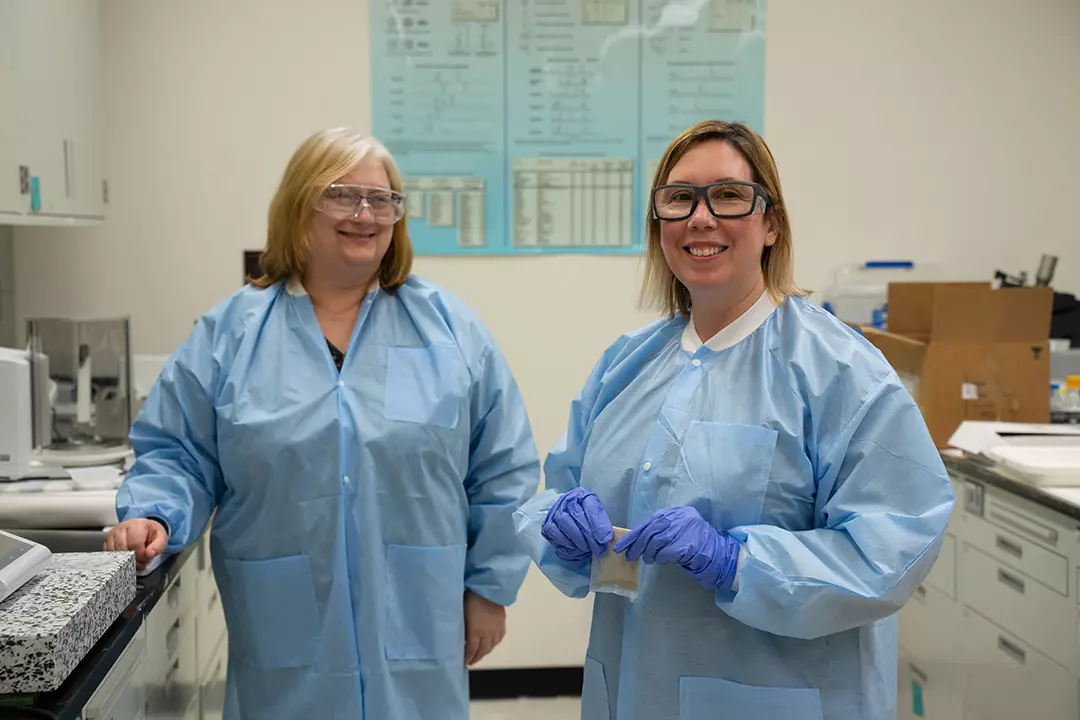
The Journey to Space — Kate’s Perspective
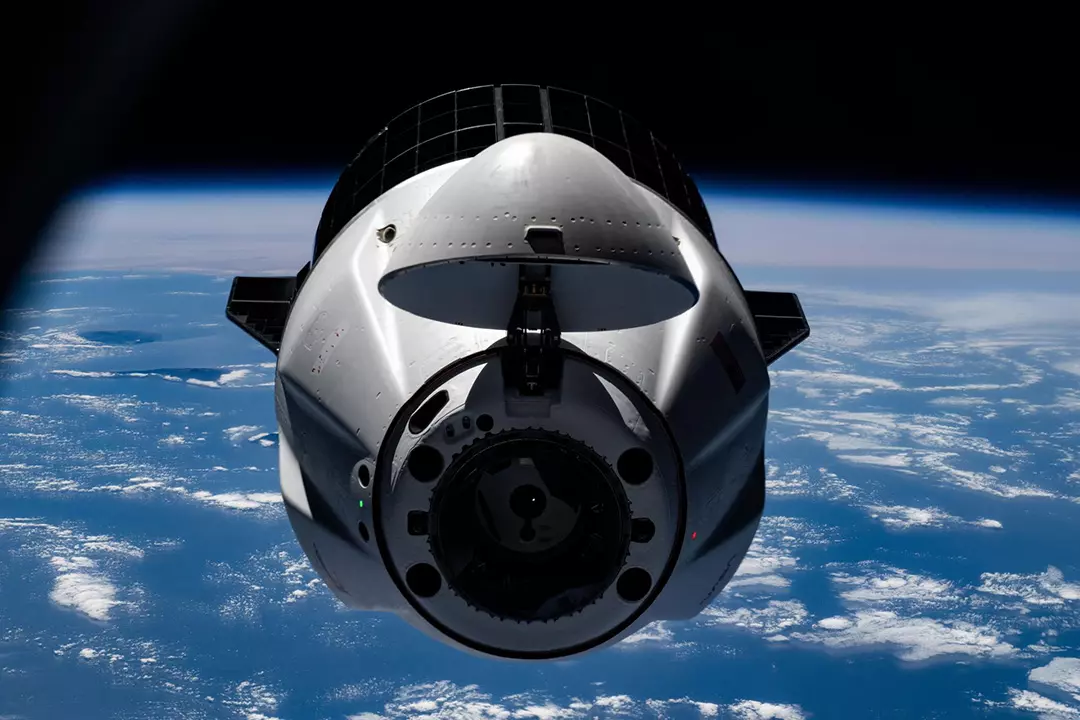
After all the hard work of selecting and packaging our samples, they headed to space on the Falcon 9 rocket, which launched from the Kennedy Space Center early on Sunday morning, August 24, 2025. Shortly after, our samples arrived at the International Space Station (ISS), where they remained for months.
While we weren’t able to be there for the launch, it was fun to look for the ISS in the sky. In fact, on Thanksgiving, I pointed out the ISS to family members and told them about our samples.
The Journey to Space — Johanna’s Thoughts
It is amazing to step back and realize our current reference materials are based solely on how we use materials on Earth, since that is all we have known.
To send samples to space more often, we’ll need to rethink the preparation and use of even the simplest materials. We’ve never previously accounted for the challenges of storing materials in space and getting them there and back!
I talked about this project with friends and family, and everyone thinks it is very cool that NIST sent samples to the ISS. I am excited about the opportunity in space science and about how quickly we were able to make it happen.
Future of Reference Materials in Space
The materials returned to Earth in February 2026.
We’re now analyzing the reference materials carefully to learn how they’ve changed over the last few months. For example, we use a specialized technique called nuclear magnetic resonance to compare the materials’ purity before and after.
We’ve always loved working in chemistry and making a positive impact on people’s health and American industry. But being able to send our team’s work to space was just incredibly motivating.
For the initial foray into space, we were limited in what we could send. However, we’re starting small and hope that for future missions, we can send our more delicate reference materials into space and learn from them.
It’s exciting to think about what we may learn about space … and ourselves.



Thank you for these articles, well written and presented.