

Official websites use .gov
A .gov website belongs to an official government organization in the United States.

Secure .gov websites use HTTPS
A lock (
) or https:// means you’ve safely connected to the .gov website. Share sensitive information only on official, secure websites.


Premise Plumbing Systems for High-Performance Buildings
Summary
Premise plumbing systems provide an essential building service, but their design and operation need modernization as existing plumbing technology has lagged current performance requirements. Current design approaches are primarily based on technical data that were developed in the 1940s (or earlier) that assumed higher water flow rates than those currently existing in most buildings and the use of pipe materials and design concepts that have been largely replaced by newer alternatives. Furthermore, reducing water and water-related energy use in modern buildings have presented some challenges to maintaining good chemical and microbial water quality. For example, lower flow rates increase residence times in plumbing systems, reducing the effectiveness of disinfectant chemicals and, thus, enhancing the potential for growth of opportunistic premise plumbing pathogens (OPPPs), such as Legionella.
For modern premise plumbing systems to meet the performance goals of protecting occupant health and managing consumption, a new technical knowledge base must be developed.
This project aims to provide a better understanding of the connection between water use, building energy consumption (specifically for heating water), and water quality in support of safe water heating and plumbing systems in buildings. FY26 efforts will focus on improving methods to quantify and predict OPPP growth in water heating systems, assessing risk for pathogen exposure to building occupants, and further developing the measurement science for characterizing pressure drops across a variety of modern plumbing fittings and materials
Description
Objective
To develop new measurement methods, modeling approaches, and data to support improvements in building plumbing design, utility consumption, and water quality.
Technical Idea
The technical idea is to advance understanding of the impacts water use and water-related energy use on its delivery and maintaining good water quality within premise plumbing systems. This project is focused on (1) quantifying chemical and microbial water quality in building hot water systems, and correlating energy- and water-savings measures to indoor water quality; (2) developing measurement science needed to establish standardized and precise means of characterizing pressure in modern plumbing fittings; and (3) engaging with industry and other partners to better understand research needs and transfer research results.
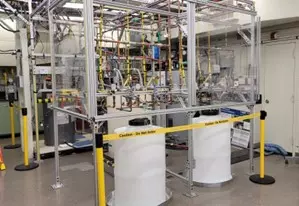
To pursue these technical goals, the team is conducting experiments to quantify the presence, proliferation, and potential removal of OPPPs within plumbing systems. While OPPPs are naturally occurring in the environment outside buildings, conditions within buildings and pipes are such that they can proliferate and cause serious risk of pneumonia-like conditions, particularly to immunocompromised or elderly building occupants. In 2018, health departments reported nearly 10,000 cases of Legionnaires’ disease in the U.S., though cases are largely underreported. In previous FYs, the team collected water samples from the NIST Residential Test Facility (RTF) and measured the response of OPPPs (Legionella pneumophila, Pseudomonas aeruginosa, Mycobacterium avium, and Naegleria fowleri) to water heater operational conditions.2 While detections of OPPPs were limited (L. pneumophila was found in 8.1 % of water samples, followed by P. aeruginosa (3.5 %), and M. avium (1.9 %)), daily water use volume and water heater setpoint temperature were independently associated with the detection and concentration of L. pneumophila. Kitchen and bathroom faucets posed a higher risk of exposure to L. pneumophila compared to the tub and shower. The Hot Water Systems (HWS) laboratory was built to assess OPPPs and water quality parameters within water heaters in a controlled manner, under various temperature setpoints and demand conditions. A common industry-recommended energy savings practice is to lower water heater setpoints to 120 F (49 C), which is in the growth temperature range for several opportunistic pathogens. Low water usage can also negatively impact tank water quality because of high water age, decay of disinfectant residual, and lower levels of incoming residual. Thus, these factors need to be studied for their impact on water quality parameters. In FY25, the team expanded and validated the test rig to complete a full simulation of a residential plumbing system, from point of entry to faucet, and began its efforts to evaluated point-of-use (POU) intervention devices for chemical and microbial water quality. These commercially available devices treat drinking water to reduce microbial hazards at the tap and include methods such as filtration, ultraviolet (UV) light disinfection, or reverse osmosis (RO). Understanding the efficacy of intervention devices will provide much-needed data and science-based recommendations for the advancement of current NSF/ANSI standards.
As plumbing codes are updated and pipe diameters decrease to provide the required flow in a building water system, pressure losses across plumbing components become more significant in design. In past years, the team designed, constructed, and validated a laboratory facility (the NIST Plumbing Hydraulics Lab (PHL)) to acquire data on pressure-flow relationships for a range of plumbing fittings and components. In the apparatus, static pressure downstream and upstream of modern fittings are measured as a function of various parameters (e.g., flow velocities from 1.0 ft/s to 10.0 ft/s, temperature, and geometry) using an automated pressure distribution measurement system across the test section. During FY25, the researchers collected data on three commonly used ¾-inch elbow fittings (one each made of CPVC, copper, and PEX) and, from this data, calculated pressure losses, friction factors, and surface roughness of the elbows for each material. These results (published in NIST TN 2342) contribute to a more accurate understanding of how different materials affect performance in plumbing systems. By improving pressure loss modeling at the fitting level, this research supports more efficient system designs, potentially reducing construction costs, improving fixture performance, and conserving water in new homes.
Research Plan
In FY25, the team’s efforts were focused on expanding the Hot Water Systems (HWS) test bed to include two electric storage water heaters, pipe runs, and fixtures to simulate residential system design. A modular test section now allows for the installation of various point-of-use (POU) intervention devices (such as physical filters, and UV and RO devices) that aim to improve physical, chemical, and microbial water quality parameters. FY26 activities will continue this effort by evaluating the performance of a commercially available POU UV treatment device. Current test methods evaluate devices for general microbial disinfection, but not specifically for OPPPs control. The team will work on validating the UV doses delivered by this type of device, correlating that to Log removal values (LRVs) of surrogate organisms, and determining their relationship to removal of OPPPs such as L. pneumophila. Finally, the team will disseminate its work developing a Quantitative Microbial Risk Assessment (QMRA) model to estimate the risk of infection from OPPPs using data of OPPPs concentrations in water samples collected from the NIST Residential Test Facility.
The NIST PHL will undergo further improvements to allow for high-accuracy pressure measurements across a range of plumbing components in FY26. An expanded test rig will be constructed that can obtain the same static pressure data upstream and downstream of plumbing fittings of various materials, but up to 1” in diameter. A mechanism for gravity-driven water flow will minimize pressure disturbances through the rig’s test section allowing for higher-accuracy measurements. Construction, validation and automation of the new test rig will occur by Q2. The team will evaluate ¾-in elbows and data will be published later in the year. In tandem with laboratory efforts, the team will continue to participate in the International Code Council (ICC 815) on Sizing Water Distribution, Drainage and Venting Standard Consensus Committee. Activities will eventually inform the draft of a standard test method to measure pressure drops across plumbing fittings and components that will be submitted to an appropriate standards development organization (SDO).