An official website of the United States government
Here’s how you know
Official websites use .gov
A .gov website belongs to an official government organization in the United States.
Secure .gov websites use HTTPS
A lock (
) or https:// means you’ve safely connected to the .gov website. Share sensitive information only on official, secure websites.

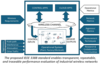
For several years, NIST’s Industrial Wireless Systems Project Leader Rick Candell and his team have led the working group developing the draft IEEE 3388...
On 5-7 November 2024, NIST’s Transformational Networks and Services Group hosted a team of researchers from South Korea in a hybrid meeting, held at the NIST...
NIST researcher leaders Edward Griffor, Tao Zhang, and Abdella Battou addressed the 21 st International ACS/IEEE International Conference on Computer Systems...
The main tasks of this program are: Task 1: 6G Core Network Architecture: I nvestigating AI-native architectures that not just execute AI/ML-based network functions but also support the creation, management, cooperation, measurement, and evolution of these functions. Task 2: Key Technologies Task 2...
Background In recent years the threat of DDoS) attacks on the Internet seems to be significantly increasing. The rapidly growing threat can be characterized by the orders of magnitude increases in the bandwidth of such attacks (from 100s of millions bits per second, to 100s of billions bits per...
Millimeter wave Communication Systems and Protocols 5G and beyond wireless communication systems make use of the Millimeter-Wave (mmWave) band. While this band offers unprecedented throughput thanks to the large bandwidth available, it also suffers from larger propagation loss compared to the sub...
NIST's Trustworthy Networks Program seeks to reduce systemic technical vulnerabilities in the foundation of the Internet and other critical network infrastructures. The objectives of NIST’s High Assurance Domains (HAD) project are to design, standardize and foster wide scale adoption of technologies...
Samantha Gamboa Quintiliani, Thomas Henderson, Wesley Garey, Chunmei Liu, Richard Rouil
This paper describes how fifth-generation (5G) New Radio (NR) sidelink (SL) multi-hop UE-to-UE (U2U) relays can extend communication range in off-network...
This report summarizes the findings of the workforce preparation assessment initiative at the National Institute of Standards and Technology (NIST) using the...
Jack Chuang, Raied Caromi, Jelena Senic, Samuel Berweger, Neeraj Varshney, Jian Wang, Anuraag Bodi, Camillo Gentile, Nada Golmie
We describe a quasi-determinstic channel propagation model for human gesture recognition reduced from real-time measurements with our context aware channel...
Anuraag Bodi, Jihoon Bang, Neeraj Varshney, Samuel Berweger, Chiehping Lai, Jelena Senic, Jack Chuang, Camillo Gentile
Clustering radio-frequency (RF) multipath components (MPCs) fosters compact channel models by capturing the geometry of the scattering environment, yet "blind"...
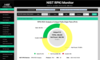
The NIST RPKI Monitor is a test and measurement tool designed to monitor the dynamics of the global Resource Public Key Infrastructure (RPKI) and the impact of
5G New Radio Sidelink Link-Level Simulator is developed to accelerate the study of 5G New Radio (NR) sidelink (SL). It closely follows the Third Generation
This 5G New Radio/LTE Sidelink Capacity Estimator computes the expected link capacity in data rate (Mbit/s) for sidelink considering 5G New Radio (NR) and Long