An official website of the United States government
Here’s how you know
Official websites use .gov
A .gov website belongs to an official government organization in the United States.
Secure .gov websites use HTTPS
A lock (
) or https:// means you’ve safely connected to the .gov website. Share sensitive information only on official, secure websites.

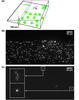
In a recent report in the journal ACS Nano,* researchers in the CNST Nanofabrication Research Group and Electron Physics Group reported their success at precise...
Dr. Daniel Pierce of the CNST has been cited as an Outstanding Referee by the American Physical Society (APS). This lifetime APS award was initiated in 2008 "to...
BOULDER, Colo.—Physicists have measured and controlled seemingly forbidden collisions between neutral strontium atoms—a class of antisocial atoms known as...
Researchers at the National Institute of Standards and Technology (NIST) and Cornell University have capitalized on a process for manufacturing integrated...
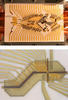
Physicists at the National Institute of Standards and Technology (NIST) have demonstrated a new ion trap that enables ions to go through an intersection while...
Optical frequency combs have been vigorously developed over the past seven years at NIST and elsewhere. They provide a uniquely broadband and coherent optical...
GAITHERSBURG, Md.—Researchers at the Commerce Department's National Institute of Standards and Technology (NIST) and Cornell University have capitalized on a...
If physicists lived in Flatland—the fictional two-dimensional world invented by Edwin Abbott in his 1884 novel—some of their quantum physics experiments would...
Forget dancing angels, a research team from the National Institute of Standards and Technology (NIST) and the University of Colorado (CU) has shown how to...
In a new demonstration of physicists' growing ability to control the "spooky" quantum dynamics phenomenon called entanglement, researchers from the National...
On Feb. 17, Governor Bill Ritter of Colorado presented the 2009 CO-LABS Governor's Awards for Research Impact to scientists from five federal research...
The NanoFab (nanoscale fabrication facility) at the National Institute of Standards and Technology (NIST) is expanding its capabilities to serve researchers...
Neutral atoms—having no net electric charge—usually don't act very dramatically around a magnetic field. But by "dressing them up" with light, researchers at...
GAITHERSBURG, Md.—Pushing the envelope of Albert Einstein's "spooky action at a distance," known as entanglement, researchers at the Joint Quantum Institute...
Representatives from business and government agencies concerned with intellectual property rights, particularly those concerning electronic devices, will gather...
Physicist Deborah S. Jin, a Fellow of the National Institute of Standards and Technology (NIST) and JILA, a joint institute of NIST and the University of...
Physicists at the Joint Quantum Institute (JQI) of the National Institute of Standards and Technology (NIST) and the University of Maryland have proposed a...
The ability of biomolecules to flex and bend is important for the performance of many functions within living cells. However, researchers interested in how...
One of the biggest scientific challenges in the world is the development of new ways to produce, transport, and sustain energy in the 21st Century, and...
In the comics, the Phantom is a masked crimefighter who protected the innocent from pirates, hijackers and other evildoers. While not as dashing or exciting as...
The creation of the first high-density gas of ultracold molecules by scientists at JILA, a joint institute of the National Institute of Standards and Technology...
Researchers at the National Institute of Standards and Technology (NIST) have developed a method to measure the toughness—the resistance to fracture—of the thin...
Two physicists at the National Institute of Standards and Technology (NIST) have won Presidential Early Career Awards for Scientists and Engineers (PECASE), the...
The spin of the Earth is slowing down. Not by much; only about 0.002 seconds a day (it varies), relative to our modern definition of the second. The varying...