U.S. flag

An official website of the United States government

Official websites use .gov
A .gov website belongs to an official government organization in the United States.

Secure .gov websites use HTTPS
A lock ( ) or https:// means you’ve safely connected to the .gov website. Share sensitive information only on official, secure websites.

Projects/Programs

Topic Area
Displaying 451 - 475 of 488

Subspace-Informed Deep Learning Solutions for Nanoscale Microscopy

Ongoing
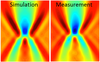
Cutting-edge nanoscale microscopy techniques such as near-field scanning microwave microscopy (NSMM) and atom probe tomography (APT) enable a multi-dimensional virtual representation of an artifact to be constructed from a set of experimental measurements. These imaging techniques, which are...

Super-Continuum Laser Solar Simulator

Completed
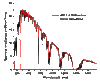
The design of the super-continuum solar simulator is shown below. Light is produced from 450 nm to 2400 nm in sub-nanosecond pulses at a repetition rate of 80 MHz. The total irradiance is sufficient to illuminate a 1 cm 2 cell at more than 1-sun. Initial tests have confirmed that solar cells respond...

Super-resolution optical microscopy

Ongoing
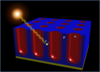
Optical microscopy has been fundamental to science for four centuries, enabling resolution of the microscale. In the last two decades, scientists have made the remarkable discovery that super-resolution methods can extend optical microscopy deep into the nanoscale. It is now possible to detect and...

Surface Texture and Forensic Topography

Ongoing
Surface texture and microform Surface texture affects the functionality of many products, ranging from bearings to semiconductors and optics. Affected properties include aesthetics, friction, wear, lubrication, sealing, light scattering, and conductivity. Improvements in parameters and metrology to...

Temperature Sensitivity of Liquid Flow Meters

Completed
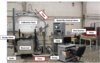
The Fluid Metrology Group is using NIST’s 15 kg/s water flow standard (Fig. 1) to test how coriolis meters are affected by liquid and environment temperatures. The water flow standard is a closed-loop, dynamic liquid flow calibration facility that is fully automated. For this work, calibrations were...

Temporal Computing

Ongoing
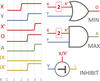
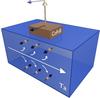
In standard integrated circuits, information that is coded as ones and zeros is implemented by voltages on wires being high or low. The circuits consume energy during transitions between these voltages. Binary numbers have a voltage per bit so there are a lot of transitions each time a number...

Terahertz Imaging and Sources

Ongoing
Over the past several years, we have focused on bolometric detection of THz radiation. Our initial work on cryogenic detectors has been extended to antenna-coupled bolometers operating at room temperature. These detectors provide a rugged, low-cost alternative for homeland security applications; e.g...

Theory: Designing the Nanoworld

Ongoing
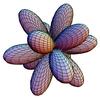
Developing and exploiting nanodevices for quantum and nanotechnologies requires nanoscale and atomic scale modeling of ultrasmall structures, devices, their operation, and their response to probes. Key challenges of understanding physics at the quantum/classical interface and measurement at the...

Theory and Modeling of Materials for Renewable Energy

Completed
Nanostructured materials offer potential benefits for a range of renewable energy applications that rely critically on interfaces for separating charges, including photovoltaics, thermoelectrics, and electrochemical energy storage. The use of nanostructures allows scientists and engineers to...

Theory of the optical properties of materials

Ongoing
Around 1998, first-principles calculation of optical constants and dielectric response began to include excitonic effects. Beginning with simple, wide-gap insulators and semiconductors, the field has progressed to studying more complex materials, clusters, and so forth. In the area of core...

Theory of Spin-Orbit Torque

Completed
A ferromagnetic material such as iron acquires its magnetization because the magnetic orientation of its constituent atoms all line up in the same way. Because individual electrons also have an intrinsic magnetic moment – which is often referred to as the electron “spin” - they can interact with...

Thermometry

Ongoing
The NIST Temperature and Humidity Group supports industry and advances measurement science through an extensive suite of thermometry calibration services as well as research projects aimed at improving the utility for the International Temperature Scale. We also develop guidelines, and contribute to...

Thin Film Electronics (Archived)

Completed
Today's electronics have reached a point where sheer computation power has yielded to combined form and function as the key driver of large consumer markets. The demand for portable and pervasive electronics with greater functionality promises significant changes over the next decades in how society...

Three-Dimensional Nanometer Metrology

Ongoing
Important physical and chemical properties of nanometer scale devices and structures depend on their shape and size. The benefits of nano are already increasing many applications, and are expected to grow significantly. For these applications, measurement accuracy is a fundamental measurement...

Time Measurement and Analysis Service (TMAS)

Ongoing
The TMAS meets the requirements of any facility or organization that needs to maintain a high accuracy time standard. TMAS customers include calibration and metrology laboratories, telecommunication providers, instrumentation manufacturers, military installations, defense contractors, government...

TMAS Data Service

Ongoing
A commercial time measurement system can also be used to achieve similar results by building-in a comparable GPS receiver to generate the file format compatible with TMAS service. Commercial manufacturers can sell the equipment with this option, which would be activated when customers subscribe to...

Topological Insulators

Ongoing
Dichalcogenide-Based Topological Insulators A family of TI materials can by synthesized by combining binary compounds of Bismuth (Bi) or Antimony (Sb) with Selenium (Se) and Tellurium (Te) to form Bi 2Se 3, Bi 2Te 3, and Sb 2Te 3 compounds. In these material compounds, the spin of the electron has a...

Training and optimization of hardware neural networks

Ongoing
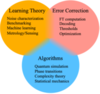
The goal of this project is to develop a general method that can train many different types of neural networks, and to demonstrate and evaluate their performance on new emerging hardware. We aim to develop and demonstrate training on diverse hardware platforms, and in the presence of realistic noise...

Transfer radiometers and reference detectors

Ongoing
Use of these radiometers depends on a primary standard detector and a secondary transfer detector. We generally employ an absolute cryogenic radiometer (ACR) as the primary standard detector to calibrate the transfer detector, a Si:As blocked-impurity-band (BIB) detector. The transfer detector is...

Transfer and working standard radiometers and photometers

Ongoing
Reflectance-type silicon trap-detectors – Silicon trap-detectors have been developed for use as transfer standards for the IR-SIRCUS and IR-Laser Scatter and Detector Characterization facilities. They are built using either Hamamatsu S6337 or S1337 photodiodes. UV silicon trap-detectors have also...
Was this page helpful?