U.S. flag

An official website of the United States government

Official websites use .gov
A .gov website belongs to an official government organization in the United States.

Secure .gov websites use HTTPS
A lock ( ) or https:// means you’ve safely connected to the .gov website. Share sensitive information only on official, secure websites.

Projects/Programs

Topic Area
Displaying 1326 - 1350 of 1667

Repair Materials Project

Completed
Objective - Develop the measurement science tools (metrologies, standards, and guidance documents) for quantitatively evaluating the critical material properties and ensuring the desired field performance of repair materials for our nation's concrete infrastructure. What is the new technical idea...

Reproducibility of Imaging Analyses Applied to Nucleus Image Quantification

Ongoing
The goal of our effort is to improve reproducibility of image-based measurements and quantify the measurement uncertainty while leveraging all cutting-edge AI/ML approaches to image-based drug discoveries. In our work, we selected measurements derived from fluorescently-labeled nucleus images over...

Research Data Framework (RDaF)

Ongoing
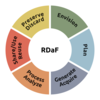
What is the Research Data Framework? A map of the research data space: who, what, where, why, when? A dynamic guide for the various stakeholders in research data to understand best practices for research data management and dissemination A resource for understanding costs, benefits, and risks...

Research on Statistical Methods Project

Ongoing
The division typically produces one to a few publications on new statistical methods each year. A list of publications on some research from the past few years is shown below below. Following the publication list, an example of current work on the development of novel statistical methods, useful...

Resilience Infrastructure and Future Hazard Impacts: Tropical Cyclones

Ongoing
Objective By 2028, develop a methodology for quantifying hurricane-induced hazards, including wind speed, storm surge, waves, and associated hydrodynamic effects, with consideration of the near- and long-term effects of natural hazard evolution. Technical Idea This project will investigate and...

Resonant Soft X-ray Scattering (RSoXS)

Ongoing
This project focuses on developing and demonstrating resonant soft X-ray data collection approaches that incorporate solids, fluids, and gases. We establish data analysis workflows for RSoXS data analysis, and a central focus is advancing the interpretation of RSoXS patterns. Our Resonant Soft X-ray...

Resonating Platforms for Microbial, Environmental, and Materials Sensing

Ongoing
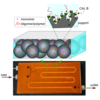
The high sensitivity of resonating piezoelectric crystals to surface perturbations has led to quartz crystal microbalances (QCMs) being widely used to measure changes in mass of thin films and adhered nanoparticles or cells. This project proceeds beyond this traditional sensing approach with quartz...

Risk Evaluation and Mitigation

Ongoing
Objective This project aims to improve techniques currently used for risk evaluation (including uncertainty quantification) and mitigation (including FRP retrofit) of structural systems and integrate them within the PBEE framework. The first phase of the project is focused on the development and...

RMAT Laboratory Programs

Ongoing
Examples of Current Activities: Cell Counting and viability are key measurements critical for decision making from R&D to manufacturing. We recently developed an approach for evaluating the quality of cell counting measurements through experimental design and statistical analysis that does not...

RNA Computation and Metrology for Engineering Biology

Ongoing
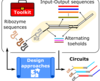
RNA computation RNA computation, i.e., programmed interactions between RNA molecules that process information, is an increasingly useful synthetic biology tool with applications spanning in vitro biosensing, synthetic cells, and cellular control. We have developed cotranscriptionally encoded RNA...

Roadmapping R&D

Ongoing
PSCR is developing multiple technology roadmaps that present the highest-priority technological trends, capabilities, gaps, and R&D opportunities facing public safety over the next 20 years. Each PSCR roadmap focuses on a specific emerging technology sector that has the potential to greatly increase...

Robocrane

Ongoing
The Intelligent Systems Division of the National Institute of Standards and Technology (NIST) experimented with a variety of applications for the NIST RoboCrane. The RoboCrane design utilizes the basic idea of the Stewart Platform parallel link manipulator. The unique feature of the NIST approach is...

Robotic Systems Interoperability and Integration

Completed
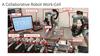
Objective: Enable manufacturers to quickly and easily put together robotic assembly systems with human-like capabilities using interoperable components, by delivering an analysis, information model, protocol, reference implementation, test methods, and tools. Technical Idea: Making it easier for...

Robotic Systems for Smart Manufacturing Program

Completed
Due to their inherent flexibility and reusability, robotic systems are an essential tool in strengthening U. S. manufacturing competitiveness by enabling dramatically greater responsiveness and innovation. To attain these gains, robotic systems need to be highly-capable, perceptive, dexterous, and...

Robust Inter-Domain Routing

Ongoing
Today’s global Internet is comprised of roughly 1,000,000 distinct destination routes interconnected by 60,000 enterprise and Internet Service Provider (ISP) networks. The Border Gateway Protocol (BGP) is the “glue” that enables the modern Internet, by exchanging reachability information about each...

Rydberg Atom-based Quantum RF Field Probes

Ongoing
Calibrated radio frequency (RF) electric field probes and antennas are currently limited by a complex, indirect traceability path and require a complex calibration – which presents a chicken-and-egg dilemma. Probes must be calibrated by placing them in a known electric field, while a precisely known...

Safety of Building Occupants Project

Completed
By 2016, this project aims to develop a framework for a model predicting evacuation decision-making during building fires, improving the accuracy of egress modeling tools used in performance-based design (PBD) of buildings.

Safety and Security Technologies

Ongoing
The safety and security of citizens is enhanced when law enforcement and criminal justice agencies and the military use the appropriate and properly performing equipment and technologies. To ensure these entities have the necessary equipment, the STG conducts and performs research to advance these...

Safety-Related Usability Framework

Ongoing
NIST, the Office of the National Coordinator for Health Information Technology (ONC) and the Agency for Healthcare Research and Quality (AHRQ) are collaborating on a multi-year research program aimed at building a principled framework for measuring the usability of health IT systems. The ultimate...

Sample Tracking and Analytical Reporting (STAR)

Ongoing
STAR (formerly known as Marine STAR) will develop a web-based interface to provide easy access to sample information from the NIST Biorepository. Information will include, but is not limited to, sample availability, chemical analysis status and results, and links to publications. Metadata associated...
Was this page helpful?