

Official websites use .gov
A .gov website belongs to an official government organization in the United States.

Secure .gov websites use HTTPS
A lock (
) or https:// means you’ve safely connected to the .gov website. Share sensitive information only on official, secure websites.


How Do Glucose Monitors Measure Sugar Levels in the Blood?
Managing blood glucose, also called blood sugar, is a daily challenge for millions of people with diabetes. Small wearable devices called continuous glucose monitors (CGMs) make it easier by helping people track their blood sugar levels throughout the day.
To understand how CGMs work, it helps to first start with what happens in your body after you eat. When you eat food, your digestive system breaks it down into nutrients your body can absorb. Carbohydrates, one type of nutrient, are broken down into glucose. When glucose enters your bloodstream, your blood sugar levels rise.
In response to these rising levels, the pancreas releases insulin, a hormone that helps move glucose from the bloodstream and into your cells, where it can be used as energy. This process keeps blood sugar levels within a healthy range.
For those with diabetes, this system doesn’t work as it should. The body may not produce enough insulin or can’t use it effectively. As a result, blood sugar levels can become too high or too low, which can cause symptoms such as fatigue, increased thirst or organ damage if not carefully managed.
That is where CGMs come in. The devices can provide continuous, real-time insight into blood sugar levels and help people manage them. But how do they get these numbers?
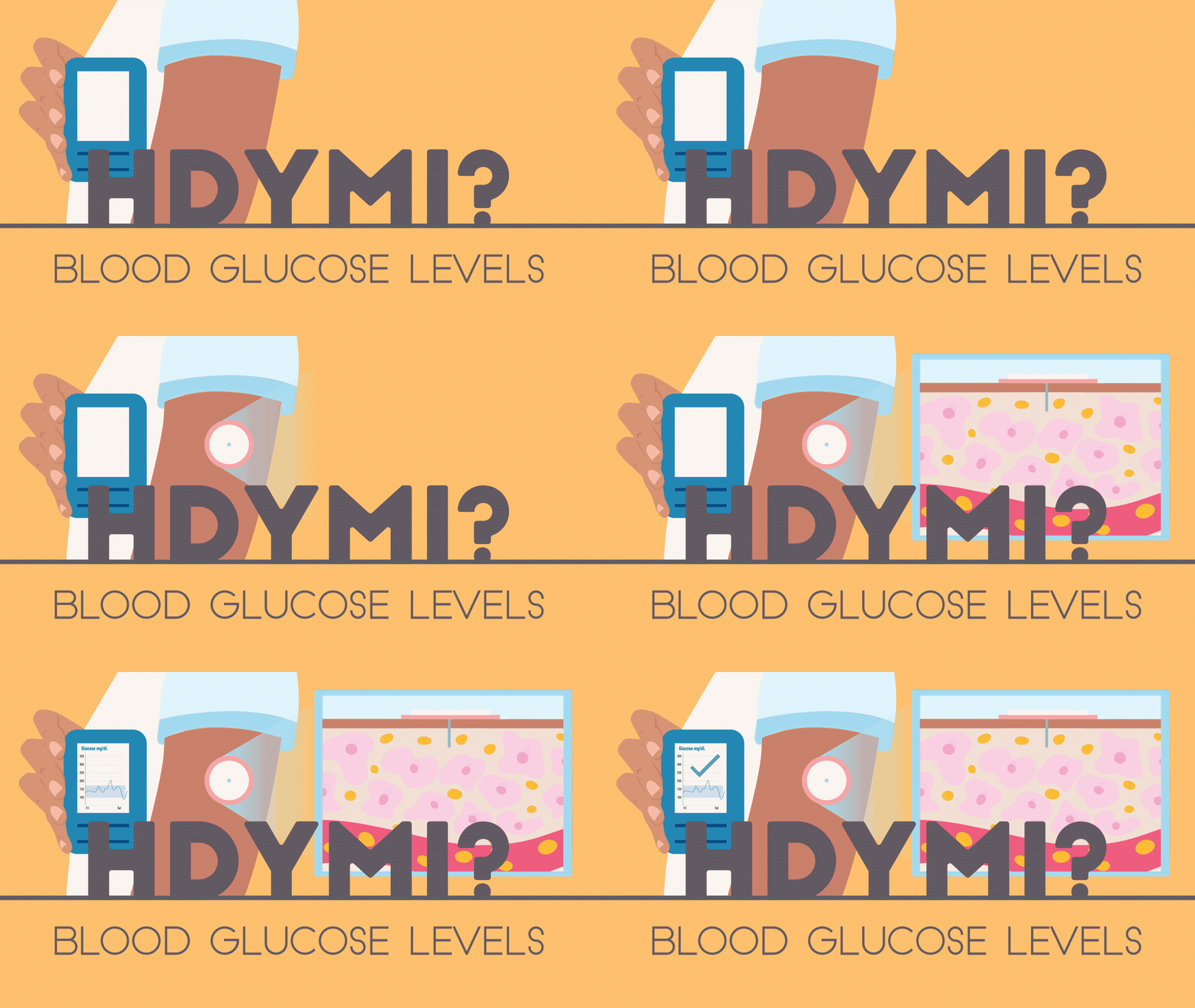
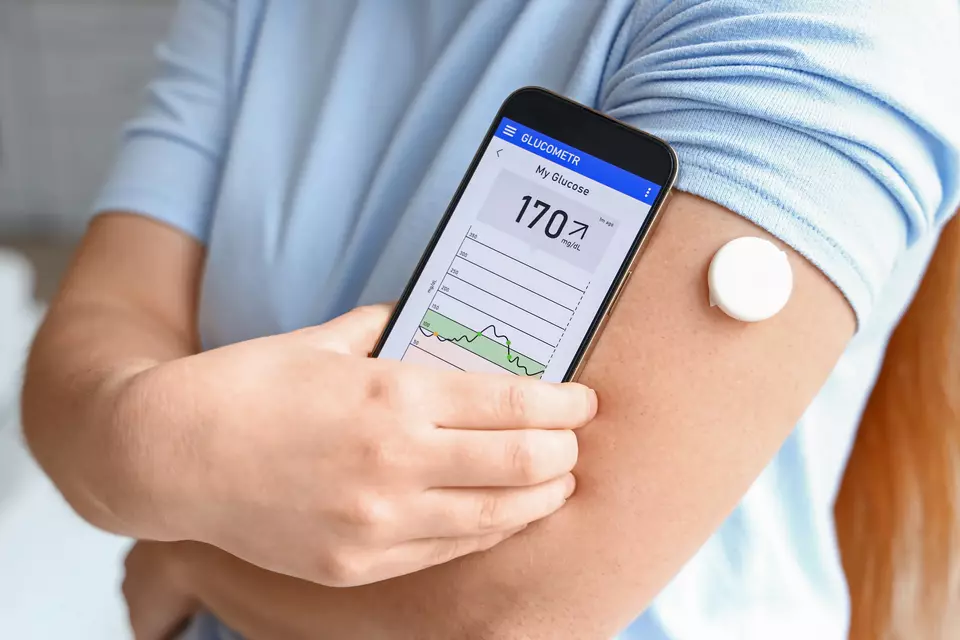
To measure blood sugar levels, the CGM has a tiny sensor that is inserted just beneath the skin, usually on the arm or stomach, and held in place by an adhesive patch. Rather than measuring glucose directly from the blood, the sensor measures glucose in the interstitial fluid, the clear, watery liquid that acts as a sort of middle ground between your bloodstream and cells.
After you eat, glucose first moves from the bloodstream into this fluid before entering the cells. Because of this, the CGM can get an accurate picture of what’s happening in the bloodstream without directly measuring the blood.
The CGM’s sensor is coated with a special enzyme that reacts with glucose. This reaction produces a small electrical signal, and the strength of that signal depends on how much glucose is present. The device then converts that signal into a glucose reading, so higher glucose levels create a stronger signal and a higher number.
The reading is sent to a transmitter, which wirelessly sends the number to an app on a smartphone, a separate receiver or an insulin pump (a small device that automatically delivers insulin to the body). For most people, a reading above 180 mg/dL (the standard unit for measuring blood sugar) is considered high and may require insulin, while a reading below 70 mg/dL is considered low.
Since these numbers guide real health decisions, they need to be precise. To ensure accuracy and consistency across CGMs, the National Institute of Standards and Technology (NIST) developed a standard reference material called SRM 965c: Glucose in Frozen Human Serum. This is the fourth iteration of the SRM, first introduced in 1996.
Another SRM developed by NIST, called SRM 917d: D-Glucose (Dextrose), is a highly pure glucose standard used to calibrate laboratory instruments. Together with SRM 965c, it allows clinical labs and CGM manufacturers to properly calibrate and validate their testing methods, helping ensure that their blood glucose readings are reliable.
Before CGMs, blood sugar was typically checked using a standard glucose meter. This required pricking your finger, placing a drop of blood on a test strip, and waiting for the device to display your result. What you would get is a snapshot of your blood sugar levels at a single moment. CGMs simplify and improve this process by continuously tracking levels throughout the day. Instead of having to prick your finger each time you want to check your blood sugar, the device automatically measures your glucose and sends alerts when levels are too high or too low.
Another benefit of CGMs is the ability to share readings. Alerts can be sent to caregivers or family members in case of an emergency. For example, a parent can be notified if a child’s blood sugar levels become too high or too low, even while they’re at school. Blood sugar data can also be shared with healthcare providers to support ongoing care.
The technology doesn’t eliminate finger sticks, though. Since CGMs measure glucose in the interstitial fluid instead of directly in your blood, there can be a slight delay between what’s happening in your blood and what shows up on the screen. For this or other reasons, you may still need to occasionally check your levels with a traditional glucose meter.
So, next time you notice that small patch on someone’s arm, know that it’s turning blood sugar changes inside the body into real-time data that people can see, track and use to stay healthy.
—By Shannon Horning