

Official websites use .gov
A .gov website belongs to an official government organization in the United States.

Secure .gov websites use HTTPS
A lock (
) or https:// means you’ve safely connected to the .gov website. Share sensitive information only on official, secure websites.


VCAT Member Biographies

Dr. Joseph Broz
(Term expires December 20, 2027)
Dr. Broz has responsibility for leading IBM Quantum’s quantum-centric supercomputing programs and adoption of advanced quantum computing capabilities. Joe joined IBM Quantum in March 2021 after serving as the founding Executive Director of the federally chartered quantum economic development consortium (QED-C) under the National Quantum Initiative Act. He has supported DOE, DOD, Air Force, Army, Navy, DHS, NIH, NIAID, DOJ, and other departments through agency research, consulting contracts, and advisory boards. Prior to the QED-C, he served as Vice President of Applied Sciences at SRI, where he led laboratories in applied science, government business development, technical and business strategy. He also served as VP of Business Development and Research at Titanium Metals, and Laboratory Director of Tenneco, Inc., where he was responsible for product development, manufacturing operations, quality, technology, and environmental management across corporate divisions worldwide. He served as a White House Fellow for the Office of Science and Technology Policy in the administration of George H.W. Bush. He was a British American Fellow at Johns Hopkins SAIS, and a Senior Fellow for National Security and Energy at NORC at the University of Chicago. Broz has a B.S. in physics from the Massachusetts Institute of Technology and a Ph.D. in physics from the Swiss Federal Institute (ETH) in Zurich.
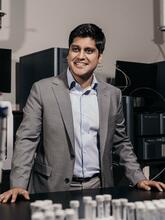
Dr. Gaurab Chakrabarti
(Term expires December 1, 2027)
Gaurab is the co-founder and CEO of Solugen. As a physician-scientist, Gaurab took an oath to first do no harm—and for him, that goes beyond patients or medicine. So in 2016, he started Solugen to decarbonize the chemicals industry, one of the most damaging for people and the Earth. Gaurab believes in using biology in unconventional ways to solve incredibly complex problems and is building a world-class team to join him on the journey.
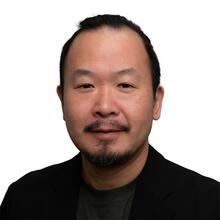
Dr. Stanley Cheung
(Term expires: September 4, 2028)
Dr. Stanley Cheung is currently an Associate Professor with North Carolina State University, Raleigh, NC, USA. His research interests are multi-disciplinary and aims to advance integrated photonics in computational and communication systems research – this entails exploring novel heterogeneous semiconductors, architectures/algorithms, and developing a deeper understanding of neuromorphic/quantum-inspired computation that lie close to physics. He has accumulated > 105 journal and conference publications along with 32 U.S patents (50 + pending) and delivered multiple invited talks at international conferences around the world. He has made major key technical contributions to current and past U.S. government customer contracts within DOD, DARPA, DOE, ARPA-E, NSA, NRO, and others. Prior to NC State, he served as a Principal Research Scientist at Hewlett Packard Laboratories where he played a key role in foundational photonic R&D for next-generation high-performance computing systems for various government agencies.
Dr. Cheung received his B.S., M.S., and Ph.D. degrees in electrical engineering from the University of Southern California, Columbia University, and the University of California, Davis respectively.
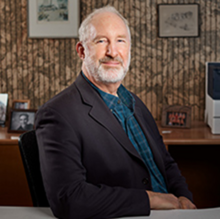
Dr. Glenn A. Fox
(Term expires: April 29, 2027)
Dr. Glenn A. Fox is the Principal Associate Director (PAD) for the Physical and Life Sciences Directorate (PLS) at Lawrence Livermore National Laboratory (LLNL). Glenn joined the research staff at LLNL in 1992, working on and leading numerous synthesis chemistry projects. He has since held a variety of key positions at the Laboratory, including Deputy Division Leader for science and technology (S&T) for the Chemistry and Materials Science Directorate from 1999 to 2002; Director of the Forensic Science Center (FSC) from 2002 to 2006; Deputy Associate Director of S&T for the Chemistry, Materials, Earth, and Life Sciences Directorate from 2006 to 2007; and Chemical Sciences Division Leader from 2008 to 2013. As director of the FSC, he positioned the center as a “hub laboratory” for LLNL programs and federal agencies such as the Federal Bureau of Investigation and a recognized leader in the forensic science of weapons of mass destruction.
Glenn assumed his current role in 2013. In this position, he leads a talented team of roughly 1400 technical and support staff that works together to solve complex national security challenges and advance the scientific foundations of the Laboratory in a wide range of areas, including atmospheric, earth, and energy; biology and biotechnology; materials science; nuclear and chemical science; and physics. Since then, he has overseen expansion into newer mission spaces, such as materials for energy and quantum computing, and the formation of new LLNL centers to focus innovation and external engagement, such as the High Energy Density Science Center, Laboratory for Energy Applications for the Future, Space Science Institute, and Livermore Center for Quantum Science.
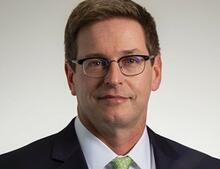
Dr. Michael J. Holland
(Term expires October 24, 2027)
As Vice Chancellor for Science Policy and Research Strategies, Mike Holland supports faculty as they develop cross-disciplinary research collaborations. He manages the Pitt Momentum Funds, runs Big Proposal Bootcamp, and coaches faculty as they develop large, team-based proposals. Holland helps coordinate the University’s response to research policy opportunities in support of its strengths and long-term goals.
Prior to coming to Pitt, Holland served as Executive Director of New York University’s Center for Urban Science and Progress, a graduate-level informatics program established in 2012 focused on understanding and improving the quality of life in cities. Previously, he spent 13 years in Washington, DC, overseeing federal research and development programs as the Senior Advisor and Staff Director in the Office of the Under Secretary for Science at the U.S. Department of Energy and as the program examiner in the White House Office of Management and Budget with responsibility for the Department of Energy's Office of Science, Advanced Research Projects Agency-Energy (ARPA-E), and Cerro Grande Fire Activities. Holland has also served as a senior policy advisor in the White House Office of Science and Technology Policy and on the staff of the US House of Representative’s Committee on Science.
Mike is board chair of The Coleridge Initiative, a non-profit data science company spun out of NYU; chair of the steering committee for the AAAS Societal Impacts of Science and Engineering section (X); board member of the University of Michigan’s Institute for Research on Innovation & Science; and current member and past chair of the UNC Chemistry Advisory Board. He previously served as a member of NSF’s Business & Operations Advisory Committee, NIST’s Smart Grid Advisory Committee, and the National Research Council’s Chemical Sciences Roundtable. Holland earned his Ph.D. in analytical chemistry from the University of North Carolina at Chapel Hill.

Ms. Suzanne L. Huelster
(Term expires October 22, 2029)
Suzanne Huelster is the Vice President of Corporate Research & Technology at Lockheed Martin, where she also serves as Deputy Chief Technology Officer and leads the Technology Capability Development organization. In this capacity she directs a engineers, scientists, and technologists, shaping the enterprise-wide technology roadmap, overseeing horizon-next capability maturation, and translating emerging concepts into field-ready, mission-critical systems for U.S. and allied defense customers. Her stewardship blends strategic foresight with disciplined execution, ensuring that innovative ideas are rapidly transitioned from the laboratory to operational impact.
Over a 30-year career at Lockheed Martin, Suzanne has held a series of senior technical and executive roles that span the full spectrum of systems engineering, digital transformation, and program delivery. As Chief Engineer for Enterprise Technologies she restructured a multi-billion-dollar business area, fostering cross-functional collaboration and delivering breakthrough capabilities such as a next-generation Unit Cell Processor for analog-to-digital conversion and an AI-driven counter-UAS situational-awareness suite.
Throughout her career she has championed talent development and a high-performance culture. She has designed and led training programs that up-skill geographically dispersed teams, instituted model-based engineering and agile product-development practices and cultivated inclusive leadership pipelines that align with Lockheed Martin’s people-first security ethos.
Suzanne holds a Bachelor of Science in Electrical Engineering from Pennsylvania State University and a Master of Science in Networking and Telecommunications from the University of Pennsylvania. She further augments her technical foundation with a Wharton Business Analytics certificate, a Cornell Financial Management certificate, and the Lockheed Martin Engineering Leadership Development (LEAD) certificate.
Her extensive background in technical leadership, strategic planning, and standards-based engineering makes her a valuable partner for industry, government, and academic collaborations seeking to advance emerging technologies, accelerate capability delivery, and shape the future of defense and security innovation.
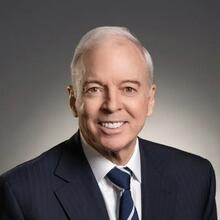
Dr. Donald W. Landry
(Term expires February 28, 2029)
Donald W. Landry, M.D., Ph.D. completed his Ph.D. in Organic Chemistry with Nobel laureate R.B. Woodward at Harvard University in 1979 and then obtained the M.D. degree from Columbia University in 1983. After completing his Residency in Internal Medicine at the Massachusetts General Hospital/Harvard Medical School, he returned to Columbia for training as an NIH Physician-Scientist, 1985-90, and remained as a member of the Columbia faculty until his appointment as interim president of the University of Florida on September 1, 2025.
He is founding director of the Burch-Lodge Center for Human Longevity at Columbia as well as Chair Emeritus of the Department of Medicine at Columbia University and past Physician-in-Chief at New York-Presbyterian Hospital/Columbia University Medical Center, leading the Department and the Medical Service from 2007-2023. He is also past founding director of the Division of Experimental Therapeutics.
He is a founder of Tonix Pharmaceuticals (NASDAQ: TNXP), a member of the Board of Directors of Sensient Technologies, and past chair of the scientific advisory board of Applied Therapeutics, Inc., which was founded based on his patents and now trades on NASDAQ. He is co-founder of Tegrigen Therapeutics, a biotech start-up focused on integrin targets.
He is the president of the American Academy of Sciences and Letters, and an elected member of the National Academy of Inventors. Landry received the Presidential Citizens Medal, the nation's second-highest civilian honor, from President George W. Bush at the Oval Office in 2008 "for diverse and pioneering research and his efforts to improve the well-being of his fellow man.”

Dr. Stefan Leichenauer
(Term expires April 5, 2029)
Dr. Stefan Leichenauer, a trailblazer in AI and Quantum technologies, serves as the Vice President of Engineering and lead scientist at SandboxAQ. As the inaugural member of the Sandbox team at Alphabet, Stefan played a pivotal role in transforming theoretical concepts into tangible real-world applications. His visionary approach and technical acumen led to the initiation of groundbreaking projects, shaping the foundation of SandboxAQ solutions.
Stefan took on the responsibility of recruiting and nurturing teams of talented engineers and scientists dedicated to advancing SandboxAQ's technological solutions, providing strategic oversight to all projects, and ensuring their alignment with cutting-edge innovation. His dynamic leadership extends beyond the technical domain as his team collaborates with the partnerships team, contributing to impactful external engagements. Driven by a passion for pushing the boundaries, Stefan Leichenauer remains a driving force in the evolution of SandboxAQ's breakthrough solutions.
Stefan received his Ph.D. in Physics from UC Berkeley and has held positions in Physics at UC Berkeley and Caltech as a leading researcher. He maintains a close connection with academia through the SandboxAQ Ph.D. Residency and Postdoc programs.
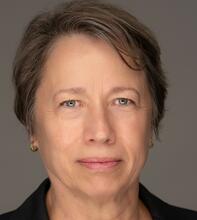
Dr. Jacqueline (Jack) Meszaros
(Term expires December 20, 2027)
Jacqueline (“Jack”) Meszaros currently serves as a Scientist Emerita for the U.S. Geological Survey. Jack was formerly the Science and Technology Advisor for Natural Hazards, Disasters, and Resilience at the National Science Foundation (NSF), where she coordinated disaster-relevant research activities. She also represented NSF on the Federal interagency bodies that support disaster-relevant research, including the National Earthquake Hazards Reduction Program, the National Windstorm Impacts Reduction Program, and the Interagency Coordinating Committee on Landslide Hazards.
From 2015-2019, Jack served in the White House Office of Science and Technology Policy as the Senior Policy Advisor and Assistant Director for Natural Hazards Resilience. In this capacity she acted as authoritative consultant to the President’s Science Advisor and others in the Executive Office of the President, including National Security Council and Office of Management and Budget. She also led multiple National Science and Technology Council subcommittees responsible for science policies to advance national resilience, including those relevant to natural hazards, space weather, earth observations, and critical infrastructure.
Before her Federal service, Jack was a professor at the University of Washington, Bothell, and Temple University, with research focused on decisions about ambiguous and low-probability risks, including earthquakes, accidents, and vaccines. Her work has appeared in the Journal of Risk and Uncertainty, Journal of Economic Behavior and Organization, and Medical Decision Making, among others.
Jack earned her Ph.D. and M.S. at the Wharton School, University of Pennsylvania. Her bachelor’s degree is also from Penn.

Dr. Cherry A. Murray
(Term expires: April 29, 2027)
Cherry Murray, Benjamin Peirce Professor of Technology and Public Policy and Professor of Physics, Emerita, John A Paulson School of Engineering and Applied Sciences, Harvard University.
She obtained B.S. and Ph.D. degrees in physics from the Massachusetts Institute of Technology. Her research interests evolved from experimental condensed matter and surface physics to nanotechnology, innovation, R&D of telecommunications networks, to science, technology, national security and energy policy, science diplomacy and global sustainable development.
From 1978 to 2004, Murray held research and executive positions at Bell Laboratories, eventually becoming Senior Vice President for Physical Sciences and Wireless Research. She then served at Lawrence Livermore National Laboratory as Principal Associate Director for Science and Technology from 2004 to 2009. She was dean of Harvard University’s School of Engineering and Applied Sciences from 2009 until 2014.
Murray served as the Director of the US Department of Energy Office of Science, from 2015 until 2017, overseeing $6 billion in competitive scientific research as well as the management of 10 national laboratories. She was a professor at Harvard until her retirement in 2019, when she moved to University of Arizona as Professor of Physics and Deputy Director of Research at Biosphere2 until July 2025.
A member of the National Academy of Sciences, the National Academy of Engineering, and the American Academy of Arts and Sciences, past co-chair of the InterAcademy Partnership, past Chair of the Board of Governors of Okinawa Institute of Science and Technology Graduate University, and past co-chair of the United Nations 10-Member Group, Murray has received the US National Medal of Technology and Innovation as well as the American Physical Society Maria Goeppert-Mayer Award and George E. Pake Prize. She is co-chair of the National Academy of Sciences Report Review Committee and a member of the National Academy of Engineering Council.