An official website of the United States government
Here’s how you know
Official websites use .gov
A .gov website belongs to an official government organization in the United States.
Secure .gov websites use HTTPS
A lock (
) or https:// means you’ve safely connected to the .gov website. Share sensitive information only on official, secure websites.

America’s Time Capsule has been sealed. Built to commemorate the 250th anniversary of the Declaration of Independence, this precision-engineered vessel will be buried at Independence National Historical Park in Philadelphia on July 4, 2026. Its contents, representing all 56 states and territories and the three branches of government, will not be seen again until future Americans open the time capsule in the year 2276.
The time capsule was designed and built at the National Institute of Standards and Technology (NIST) in Gaithersburg, Maryland. Below, you will find video and still images documenting the fabrication process, along with interview clips with Mike Berilla, director of NIST’s Fabrication Technology Office, who headed the NIST team that worked on the capsule.
Led by America250, this project is a collaboration between NIST, the Library of Congress and the National Park Service. For more details, including a complete list of the objects sealed inside, please visit the America250 website.
This b-roll reel showcases various fabrication and packaging processes related to the development of the America250 time capsule. Individuals and processes depicted in the video are identified on slates.
B-Roll Reel: A250 Time Capsule, pt. 02
This b-roll reel showcases the processes of packing and sealing the America250 time capsule. Individuals and processes depicted in the video are identified on slates.
Interviews
A250 Time Capsule: Interview Selects for Media
This video features Mike Berilla, director of NIST's Fabrication Technology Office. Berilla recaps how this historic time capsule came to be, how the capsule is designed to keep its contents safe and dry during 250 years underground, and some of the items that will be preserved inside of it. These interview clips have been edited for clarity and divided into chapters by theme.
Photos
Click on an image to download.
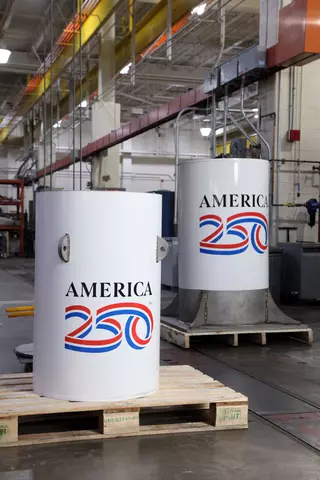
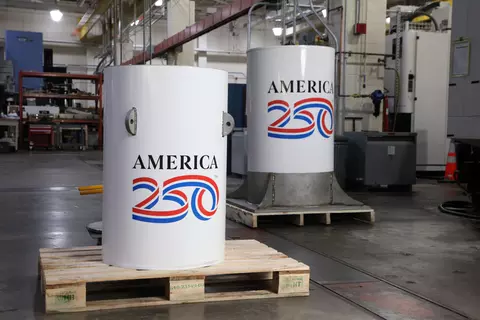
The America250 time capsule, left, and the bell jar that will fit on top of it, shown here in the machine shop where they were created at the National Institute of Standards and Technology (NIST) in Gaithersburg, Maryland.
Credit:
NIST
The America250 time capsule, left, and the bell jar that will fit on top of it, shown here in the machine shop where they were created at the National Institute of Standards and Technology (NIST) in Gaithersburg, Maryland.
Credit:
NIST
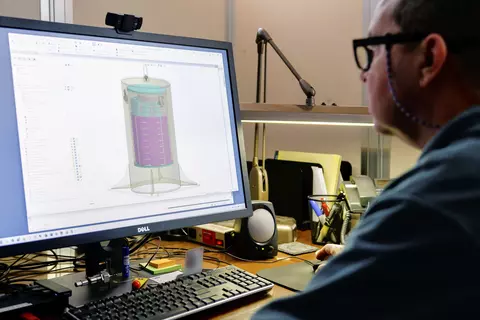
NIST mechanical engineer Jay Nanninga, who designed the America250 time capsule, reviews a 3D model of the time capsule at the National Institute of Standards and Technology (NIST).
Credit:
NIST
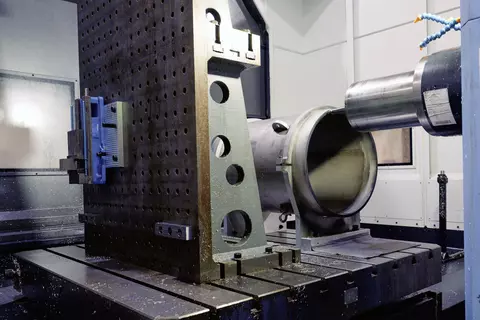
The America250 time capsule in the bay of a 4-axis mill at the National Institute of Standards and Technology (NIST).
Credit:
NIST
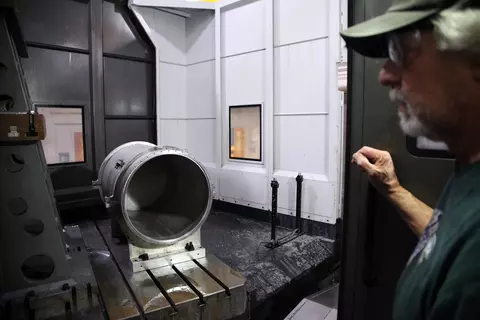
NIST engineering technician Mark Hutton observes the America250 time capsule in the bay of a 4-axis mill at the National Institute of Standards and Technology (NIST).
Credit:
Rich Press/NIST
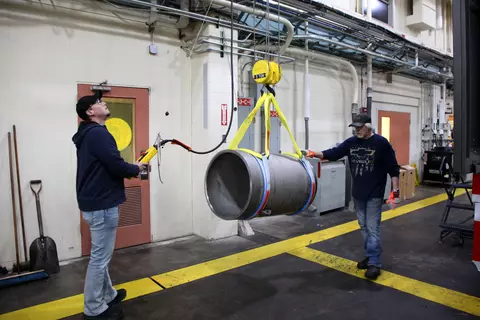
NIST engineering technicians Casey Shatzley (left) and Mark Hutton maneuver the America250 time capsule in the machine shop at the National Institute of Standards and Technology (NIST).
Credit:
Rich Press/NIST
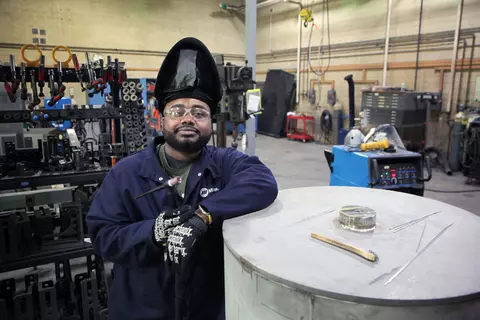
NIST engineering technician Quonte Little takes a break from welding the bell jar, at the National Institute of Standards and Technology (NIST).
Credit:
Rich Press/NIST
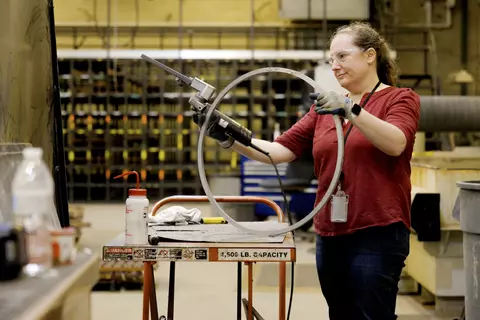
NIST engineering technician Kristin Lee deburs the ring that will hold the indium wire seal in the America250 time capsule, at the National Institute of Standards and Technology (NIST).
Credit:
NIST
NIST exhibit specialist Sarah Reeves catalogs and documents items submitted for inclusion in the America250 time capsule, at the NIST Research Library and Museum, National Institute of Standards and Technology (NIST).
Credit:
NIST
Handcrafted beadwork submitted by the State of Montana for inclusion in the America250 time capsule.
Credit:
NIST
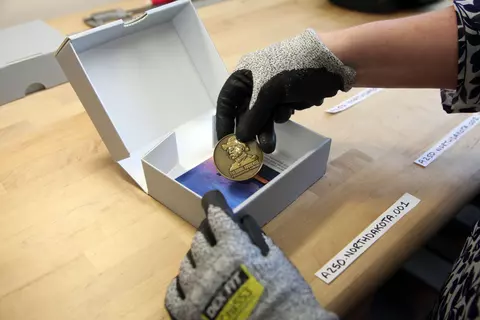
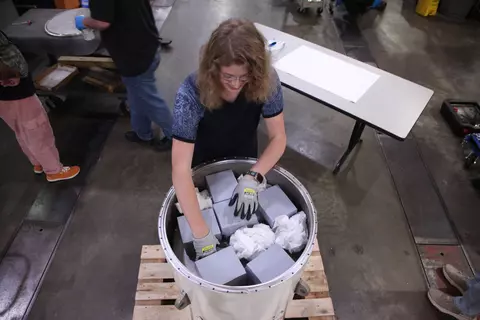
Items are placed in archival boxes before being placed in the America250 time capsule.
Credit:
Rich Press/NIST
NIST exhibit specialist Sarah Reeves places items in the America250 time capsule at the National Institute of Standards and Technology (NIST).
Credit:
Rich Press/NIST
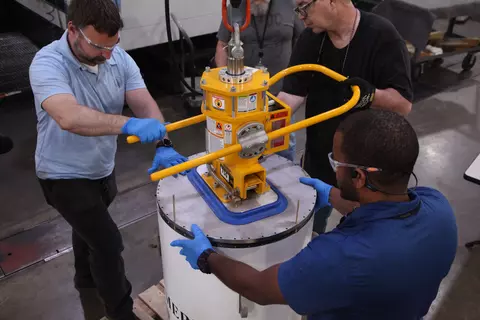
Director of the NIST Fabrication Technology Office Mike Berilla (left), NIST mechanical engineer Jay Nanninga (middle) and engineering technician Asia Robertson lower the lid onto the America250 time capsule at the National Institute of Standards and Technology (NIST).
Credit:
Rich Press/NIST
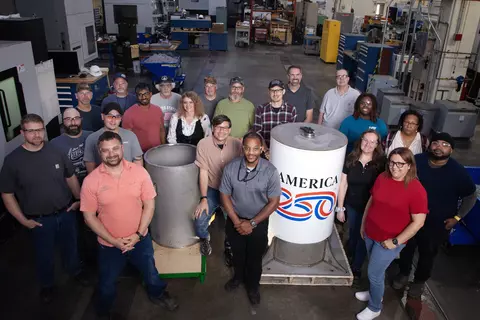
The men and women of the NIST Fabrication Technology Office, designers and builders of the America250 time capsule, in the machine shop at the National Institute of Standards and Technology (NIST).