

Official websites use .gov
A .gov website belongs to an official government organization in the United States.

Secure .gov websites use HTTPS
A lock (
) or https:// means you’ve safely connected to the .gov website. Share sensitive information only on official, secure websites.


Taking Measure
Just a Standard Blog
How a Forensic Anthropologist Thinks About Human Remains Research — and What It Means for Our Humanity
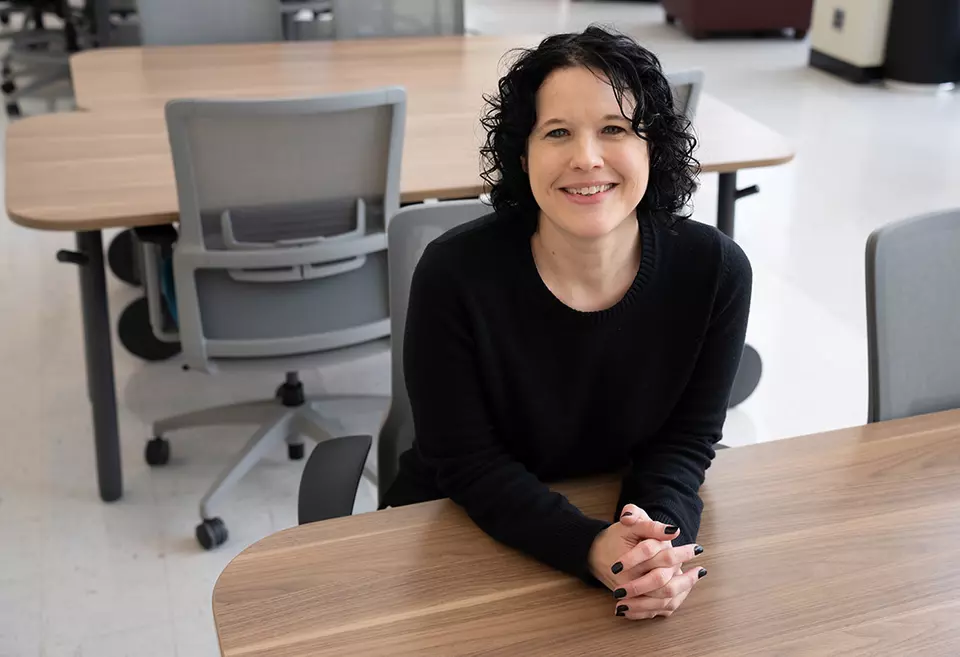
Kelly Sauerwein is a physical scientist with the Special Programs Office at NIST.
As a person who studies how bodies decompose, I think a lot about something most people probably prefer not to think about — death.
I’m a forensic anthropologist by training, a type of scientist who offers expertise in the decomposition of human bodies to legal investigations. Forensic anthropologists help law enforcement and medical examiners learn as much as they can about human remains, such as age, sex and time of death. And our research helps practitioners solve crimes and give families closure in mysterious death cases.
Forensic anthropologists couldn’t do what they do without the donated human remains used in our research. When I was conducting research in this area, I treated those remains with the utmost respect and care — as most in our forensic anthropology community do.
Human remains research is not governed by the same regulations and ethical principles as research involving living people. While many organizations may have their own procedures for the respectful treatment of human remains in research and teaching, including gaining family consent, there remain inconsistencies in approaches. Recently discovered lapses in these practices show the need for standard guidance that organizations can adopt. This is something I’ve worked on here at NIST.
Creating Best Practices for Respectful Research
In 2021, the public learned that children’s remains from the 1980s were used for research without their families’ consent. The families were rightfully furious that this research happened without their permission, and our field needs to work together to ensure that this never happens again.
So, a group of professional anthropologists — including myself — and other experts used our collective experience handling human remains to write a document that was later published as a research paper.
Currently, these best practices are voluntary. Various professional organizations that govern forensic science research may decide to adopt them as guidance for their members.
For example, one of our best practices is that if a researcher or teacher receives case materials or has unclaimed remains in a collection, they need to do due diligence to get consent. In some cases, if there’s no known family to provide that consent, it may come from the police department that investigated the person’s death.
The consent should be fully informed and specific. The person should be told:
- If the remains are being placed outdoors or buried
- If remains are being handled in a classroom
- If anonymous data from those remains may be used in research and publications
The consent can also be revoked at any time. The organization should have a plan in place to quickly return the remains to the family or law enforcement agency if that happens.
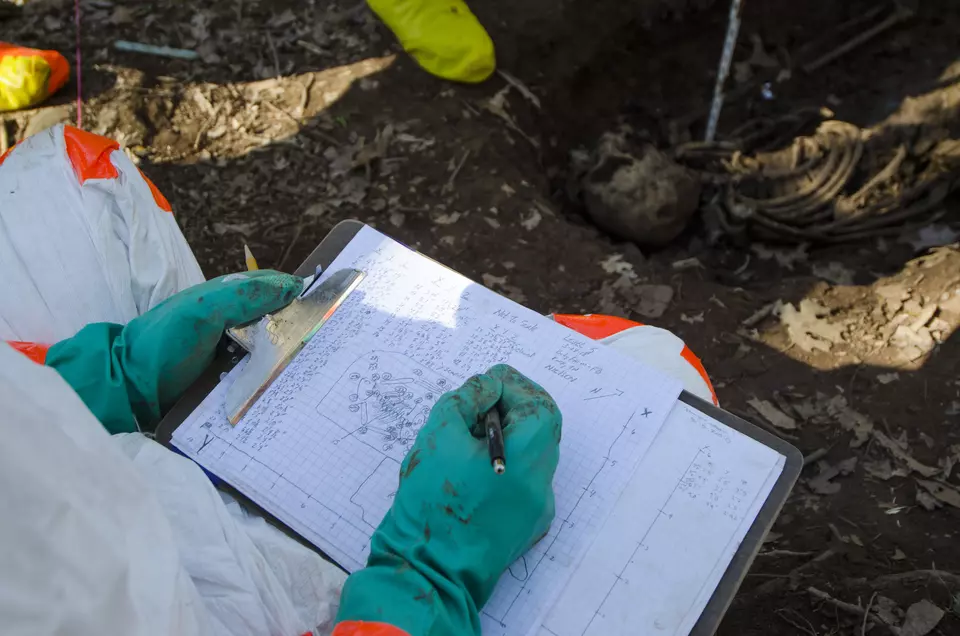
Additionally, our recommendations cover how to plan for the storage, maintenance and preservation (also known as curation) of those remains once the immediate research or educational use is complete. We call this “final disposition.”
The remains can then be placed in a long-term skeletal collection and used for multiple projects and classroom instruction. In this way, the donors continue to be a critical resource for future research and education.
Our field is in debt to our donors for their generosity. Without their gift, much of the research and education into identifying unknown individuals wouldn’t be possible. I hope this work might lead to the creation of more specific guidelines to standardize the treatment of human remains in research and education.
How I Think About Death as an Anthropologist
Forensic anthropologists use the term “death care” to describe this whole process of treating remains with care, dignity and respect and ensuring consent at every step of the process. It’s vital that we work to ensure that every donor gets the dignified experience they deserve — not just for the dead, but also for the living.
I firmly believe that when we fail to treat the skeletal remains of others with humanity, we fail to respect our own. We don’t want to imply that humanity is something that’s easily lost or discarded.
When I die, I intend to donate my own body. Personally, I don’t feel like I need a funeral and a permanent spot to be buried. I’d rather do some good after my death. This might help to identify the missing and bring closure to families. Or I might help a graduate student better understand how age is estimated from the skeleton or provide data for their dissertation.
I remember many of the donors I was fortunate enough to work with during my time working at decomposition facilities, and I'm grateful to them all.
Whatever your preferences are for how your death should be handled, it’s important to discuss them with your family and document them in your will.
Sometimes, I’m asked about the process of donating your body to science. If it’s something you’re interested in, you can make the arrangements in advance.
If you’re considering donating to a specific facility, such as the University of Tennessee, Knoxville, or Texas State University, you can contact them directly and complete the necessary paperwork in advance. The donation coordinators can answer your questions, including practical ones such as transportation costs.
What Happens When You Donate Your Body to Scientific Research
If you choose to donate your body to science, you can request that it be sent to an outdoor decomposition facility known as a “body farm.” Here, remains may be placed outdoors on the ground or buried. Used for forensic anthropological research and training, these facilities allow us to study the natural decomposition process under different environmental conditions.
After skeletonization, the remains are cleaned and used for research, training and classroom teaching. Data or images may also be used for presentations or publications.
Labs should disclose all of this to families and get consent for all activities. We want anyone who chooses to do this to be confident that they or their loved ones will be treated with care and dignity throughout the entire process.
Future Plans for Forensic Anthropology Research
While this project has been meaningful and rewarding to me, I’ve now moved on to other areas of research. I am participating in a session at the American Academy of Forensic Sciences on the future of interdisciplinary approaches to research on decomposition and time-since-death estimation. This session also covers what happens to remains between death and the time they are recovered by law enforcement, known as taphonomy.
One thing I know from my work is that death is not something to be afraid of thinking about. It’s something that happens to us all, and we should approach it with care and dignity. It’s a duty we have to each other and to those who’ve left us.


Thank you for the article. This is very interesting stuff.
I am located in Georgia. Are there forensic facilities near me that I can consider donating my body?