Official websites use .gov
A .gov website belongs to an official government organization in the United States.

Secure .gov websites use HTTPS
A lock (
) or https:// means you’ve safely connected to the .gov website. Share sensitive information only on official, secure websites.


Blog Search

Nick Butch
Nick Butch received his Ph.D. in physics from the University of California – San Diego in 2008. He held postdoctoral appointments at the University of Maryland and Lawrence Livermore National Laboratory before joining the NIST Center for Neutron Research in 2013. He is also an adjunct assistant professor at the University of Maryland. In his spare time, he enjoys finishing video game levels for his kids and working outdoors.
Austin Thomas
Austin Thomas is going into his third year studying mechanical engineering at the University of New Haven. He is particularly interested in the manipulation of materials through manufacturing and is intrigued by how engineers can make use of interesting material properties to serve the greater good. His hobbies include woodworking and designing and prototyping using his trusty 3-D printer. He also enjoys playing guitar in a blues-rock band with his brother and father.

Keith Martin
Keith Martin is the supervisory librarian for the NIST museum and archives. He has previously written about pigeons, pirates, pipelines and other miscellany of NIST history.

Jack Glover
Jack Glover researches security imaging technologies at a variety of wavelengths. He received his PhD in Physics in 2014 from the University of Melbourne. He is an independent scientist with Theiss Research and has been a guest researcher at NIST since 2009. In his spare time, Jack enjoys hitting home runs on the softball field, playing golf and tending to his vegetable garden.

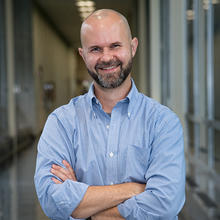
Jason Stoughton
In addition to being an unabashed science fanboy, Jason Stoughton is a writer, photographer, video producer and former director of NIST internal communications (now working at the National Science Foundation). Before coming to NIST he worked in broadcast television and video production in a variety of roles from creative director to night shift dub room technician, somehow winning 11 Emmy awards in the process. He lives in Silver Spring, Maryland, with his wife and daughter.
Bonita Saunders
Bonita V. Saunders received her PhD in computational and applied mathematics from Old Dominion University in 1985 and joined the NIST Applied and Computational Mathematics Division in 1989. She is the visualization editor for the Digital Library of Mathematical Functions (DLMF) and project leader for the DLMF Standard Reference Tables on Demand Project, a collaborative effort with the University of Antwerp to develop an online service for computing high precision tables of function values for mathematical software testing. She loves the outdoors, whether it’s gardening, hiking, or playing tennis, and she has been the captain of a NIST Intramural Tennis League team for more than 10 years.
Andrew Gayle
Andrew Gayle will receive his bachelor's degree in mechanical engineering and materials science from Duke University in May 2017 and plans to pursue a PhD. He hopes to make a career researching renewable energy technologies, such as batteries or solar energy. When not studying or in the lab, Andrew enjoys doing physical activities such as lifting weights and bouldering, until he injures too many of his joints to continue, which happens around every five minutes.
Jun Ye
Ye was born in Shanghai, China, and earned a bachelor's degree in physics at Shanghai Jiao Tong University. In 1989 he moved to the United States and later received his Ph.D. in physics from the University of Colorado, Boulder. He is a Fellow of both NIST and JILA, a joint institute of NIST and the University of Colorado, Boulder.
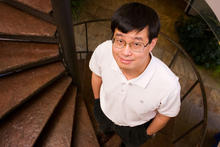
Lily Chen
Lily Lidong Chen is a mathematician and leader of NIST's Cryptographic Technology Group. Her research areas include cryptographic protocols, zero-knowledge proof, special featured digital signatures, security protocol design, network security, and security for wireless and mobility applications. Besides authoring research papers, Lily has edited and actively contributed to various standards in cryptography and security.
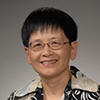

Fran Webber
Now at the National Oceanic and Atmospheric Administration (NOAA), Fran Webber was, among other things, a writer at NIST. A (more) youthful Fran dreamed of becoming a marine biologist. She’s not really sure what went wrong, but at least now she works with marine biologists, which is close, right?
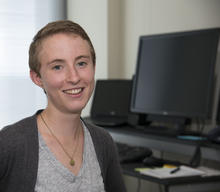
Ms. Ampere
Ms. Ampere represents and defends the SI unit of electric current for the Measurement League. When she's not making sure the right amount of electricity is getting where it needs to go or spreading the word about the power of measurement, she likes to watch thunderstorms and volunteer at her local animal shelter.



Pat Toth
Pat Toth is the Cybersecurity Program Manager at the NIST Hollings Manufacturing Extension Partnership (MEP). During her 26 years at NIST, Pat has worked on numerous documents and projects including SP 800-53, SP 800-53A, SP 800-171, SP 800-16 rev 1, and NISTIR 7621. Before she came to NIST, she served as a Cryptologic Officer in the U.S. Navy.

Donna Dodson
Donna Dodson was a NIST Fellow. She was the Chief Cybersecurity Advisor for the NIST Information Technology Laboratory and was director of the National Cybersecurity Center of Excellence (NCCoE) from 2012 to 2020. She retired from NIST on May 8, 2020. Since joining NIST in 1987, Donna has been selected as a Fed 100 winner for innovations in cybersecurity, as one of the top 10 influential people in government IT in 2011, and as one of Fed Scoop’s Top 50 D.C. Women in Tech. In 2019, Donna was a recipient of the Presidential Rank Award.
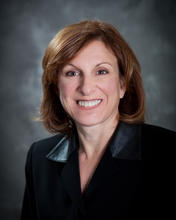
Laura Wood
A 30-year veteran of the federal government, Laura Wood is one of the Program Coordinators for the food and the dietary supplements SRM programs and for the Dietary Supplement Laboratory Quality Assurance Program (DSQAP) at NIST. In her spare time, Laura enjoys being with her husband and their three children, as well as her dogs, cat, and bearded dragons. She also volunteers with her church and with the Delaplaine Arts Center in Frederick, Maryland.
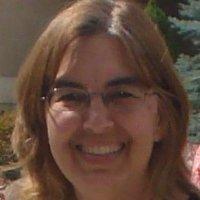
Carl Miller
Carl A. Miller is a mathematician in the NIST Computer Security Division and a Fellow of the Joint Center for Quantum Information and Computer Science at the University of Maryland. Carl has lived in Maryland, North Carolina, California, and Michigan, and is now happy to back within three miles from where he went to high school. He lives in Silver Spring, Maryland, with his partner Andrea and their cats Autumn and Pepe, and he really misses Leonard Cohen.
Jill Nelson
Jill Nelson is an associate professor of electrical and computer engineering at George Mason University in Fairfax, Virginia. Her research focuses on statistical signal processing with applications in target tracking, wireless communications, and now, solar eclipses. Jill lives in Annandale, Virginia, with her husband and two children. In her spare time, she likes to overthink household purchases — all feedback on cordless vacuum cleaners is welcome.