Official websites use .gov
A .gov website belongs to an official government organization in the United States.

Secure .gov websites use HTTPS
A lock (
) or https:// means you’ve safely connected to the .gov website. Share sensitive information only on official, secure websites.


Blog Search


Teodor Vernica
Teodor Vernica is a research associate at the National Institute of Standards and Technology (NIST). He received his M.Sc. in computer science from Aarhus University in Denmark, where he focused on augmented reality (AR) applications. At NIST, Teodor is studying how standards can facilitate the development and adoption of Industrial AR solutions for smart manufacturing.

Bill Bernstein
Bill Bernstein leads the Product Lifecycle Data Exploration and Visualization project as part of the Model-Based Enterprise Program. Recently, Bill deployed the Digital Information Visualization and Exploration (DIVE) Lab at NIST to explore the use of visualization modalities in manufacturing environments. In 2019, Bill received the Young Engineer Award from the ASME Computers in Engineering Division for his research related to computer-supported tools easing the integration of manufacturing and product design knowledge.

Ram Sriram
Ram D. Sriram is currently the chief of the Software and Systems Division, Information Technology Laboratory, at the National Institute of Standards and Technology. Before joining the Software and Systems Division, Sriram was the leader of the Design and Process group in the Manufacturing Systems Integration Division, Manufacturing Engineering Laboratory, where he conducted research on standards for interoperability of computer-aided design systems. He was also the manager of the Sustainable Manufacturing Program. Prior to joining NIST, he was on the engineering faculty (1986-1994) at the Massachusetts Institute of Technology (MIT) and was instrumental in setting up the Intelligent Engineering Systems Laboratory. At MIT, Sriram initiated the MIT-DICE project, which was one of the pioneering projects in collaborative engineering and documented in the book entitled Distributed and Integrative Collaborative Engineering Design, Sarven Publishers, 2002.
Sriram has extensive experience in developing knowledge-based expert systems, natural language interfaces, machine learning, object-oriented software development, life-cycle product and process models, geometrical modelers, object-oriented databases for industrial applications, health care informatics, bioinformatics, and bioimaging. He has consulted for several leading corporations all over the world. His client list (during his tenure at MIT) included Boeing, GE, NTT Data (Japan), NASA, Xerox Corporation, United Technologies, IIC (Spain).
Sriram has co-authored or authored nearly 275 publications, including several books on Artificial Intelligence. He has published in a wide range of journals in engineering, computer science, and health care fields. The papers he and his group wrote have won many recognitions and awards, including many best paper awards and most cited paper awards. Sriram received several awards including: an NSF's Presidential Young Investigator Award (1989); ASME Design Automation Award (2011); ASME CIE Distinguished Service Award (2014); the Washington Academy of Sciences' Distinguished Career in Engineering Sciences Award (2015); ASME CIE Lifetime Achievement Award (2016), CMU CEE Lt. Col. Christopher Raible Distinguished Public Service Award (2018).
Sriram was a founding co-editor of the International Journal for AI in Engineering (1986). He also served on the Executive Committee of the ASME's Computers in Engineering Division for six years, including as its chair. Sriram's other professional activities include the following: an associate editor of ACM Computing Surveys, co-chair of NITRD's Software Design and Productivity group, VP membership of the Washington Academy of Sciences, and federal representative to ONC's Health IT Advisory Committee.
Sriram is a Fellow of the American Society of Mechanical Engineers (ASME), the American Association for the Advancement of Science (AAAS), the Institute of Electrical and Electronics Engineers (IEEE), the Solid Modeling Association (SMA), and the Washington Academy of Sciences. He is also a Distinguished Member (life) of the Association for Computing Machinery (ACM) and a Senior Member (life) of the Association for the Advancement of Artificial Intelligence (AAAI).

Ron Cowen
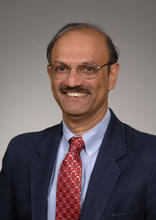
Ron Cowen has been a science writer and editor at NIST since 2016. When not working at NIST, he’s a freelance writer specializing in physics and astronomy. In 2019, he authored his first book, a popular-level account of the 100-year struggle to understand the general theory of relativity, Gravity’s Century: From Einstein’s Eclipse to Images of Black Holes. Cowen has written for Scientific American, The New York Times, U.S. News & World Report, The Washington Post, National Geographic and the news sections of Science and Nature. He was also a staff reporter for 21 years at Science News magazine. Cowen has twice won several awards: the American Institute of Physics' excellence in science writing award, the American Astronomical Society's science writing award in solar physics and the Society's David Schramm science writing award for feature articles on high-energy astrophysics. He has a master's in physics from the University of Maryland.




Douglas S. Thomas
Douglas S. Thomas is an economist in the Applied Economics Office at the National Institute of Standards and Technology. His work focuses on manufacturing industry costs, risks and economic decision making. Thomas has a number of publications, has been cited by the Economist, received the Jack Bono award for engineering communications, and is the author/contact for NIST’s Applied Economics in Manufacturing website.







Matthew E. Staymates
Matthew Staymates is a mechanical engineer and fluid dynamicist at NIST. His research interests focus on improving trace drug and explosives detection systems, along with developing next-generation detection technologies. Computational fluid dynamics, schlieren imaging, high-speed videography, laser light-sheet flow visualization, and other advanced flow diagnostic and visualization methods are used to optimize sampling strategies related to the collection and detection of chemical and biological threats. Matt specializes in aerodynamic / non-contact sampling of people and objects.

Heather Evans
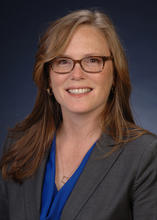
Heather Evans is the senior program analyst in the NIST Program Coordination Office, where she leads a variety of planning, program and policy efforts. After earning a Ph.D. in materials science from the University of California Santa Barbara, Heather spent several years in Germany as a postdoctoral researcher. In 2008, Heather came to Washington, D.C., as an AAAS Science and Technology Policy Fellow to learn about science policy and never turned back. She’s spending the summer of 2020 staying in virtual touch with friends, trying out a variety of workout apps, and focusing on her tomato and basil plants.

Tytus Mak
Tytus Mak is a statistician in the Mass Spectrometry Data Center at the National Institute of Standards and Technology (NIST). His research focuses on developing machine learning approaches for analyzing big datasets generated by high-throughput biomolecular analysis platforms including metabolomics, glycomics and proteomics. He received his B.S. in electrical and computer engineering at Cornell University and his Ph.D. in bioinformatics and tumor biology at Georgetown University. He is also an avid martial artist and spends his free time practicing karate and kenjutsu.