Official websites use .gov
A .gov website belongs to an official government organization in the United States.

Secure .gov websites use HTTPS
A lock (
) or https:// means you’ve safely connected to the .gov website. Share sensitive information only on official, secure websites.


Blog Search

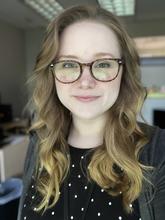
Sierra Miller
Sierra Miller is a bioinformaticist in the NIST Genome Editing Program, where she leads work validating computational methods for genome editing off-target assays. Sierra also leads a working group in the NIST Genome Editing Consortium for data and metadata, where she is working to establish best practices and norms, reproducible workflows and metadata capture for genome editing research.
Andrew Iams
Andrew D. Iams is a materials research engineer at NIST, where he investigates microstructural characteristics of a range of materials (metals, ceramics, glasses and polymers). Before working at NIST, Andy was a senior engineer at Westinghouse Electric Company – Material Center of Excellence. Andy is from the steel city of Pittsburgh, Pennsylvania, and holds a Ph.D. in materials science and engineering from the Pennsylvania State University.
Amber McCreary
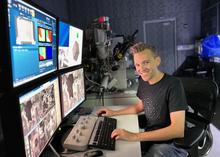
Amber McCreary is a physicist who received her bachelor’s degree at the University of Pittsburgh in 2011 and her Ph.D. at Pennsylvania State University in 2017. She did a postdoctoral fellowship at NIST from 2017 through 2020, where she used optical spectroscopy to study magnetism in low-dimensional materials in the Nanoscale Device Characterization Division. Afterward, she joined Northrop Grumman as an experimental physicist testing novel superconducting circuits. She enjoys STEM outreach, traveling, hiking, attempting to cook, visiting museums and playing in the dirt in her garden.

Bronwyn Patrick
MITRE Senior Cybersecurity Engineer and AI/ML security researcher. She is passionate about protecting complex systems and advancing secure innovation and has worked at the intersection of cutting-edge technology and national cybersecurity guidance—contributing to NIST Frameworks, securing healthcare ecosystems, and tackling emerging risks in AI.
Julie Nethery Snyder
As a principal at MITRE, Julie provides privacy and cybersecurity risk management advice in the U.S. and abroad to defense, IC, and civilian federal agencies as well as critical infrastructure industries.

Kamran Sayrafian
Kamran Sayrafian is a senior scientist at the Information Technology Laboratory of the National Institute of Standards and Technology, where he leads a strategic program related to the application of the Internet of Things (IoT) in health care, including topics such as body area networks, micro energy harvesting and automatic exposure notification. Kamran obtained a Ph.D. in electrical and computer engineering from the University of Maryland in 1999. Prior to joining NIST, he was the cofounder of Zagros Networks Inc., a fabless semiconductor company based in Rockville, Maryland, where he served as the president and senior member of the architecture team. He was a major contributor to the development of the IEEE 802.15.6 international standard on Body Area Networks. Kamran is a Fellow of the Washington Academy of Sciences.


Michael Prebil
Michael Prebil is a Cybersecurity Workforce Analyst for NICE at NIST, supporting the development, improvement, and implementation of the NICE Workforce Framework for Cybersecurity (NICE Framework).
Previously, he was a senior policy analyst at New America’s Center on Education & Labor, where he focused on issues related to apprenticeship, community colleges, and job quality. In that role, Michael studied credentialing and work-based learning programs and policies, and provided technical assistance for states and cities implementing career pathways across a variety of fields, including cybersecurity and IT.
Michael received his undergraduate degree in history from McGill University, and a graduate certificate from the Johns Hopkins University School of Advanced International Studies. He has also studied at the Community College of Baltimore County and is currently pursuing a graduate degree in statistics at the City University of New York’s Hunter College.

Sam Schaffter
Sam Schaffter has been a chemical engineer at NIST since 2020. His research focuses on developing an RNA-based computer for programming cellular behavior, with applications spanning biomanufacturing to precision medicine. Prior to joining NIST, Sam received his Ph.D. in chemical engineering from Johns Hopkins, exploring how to program nucleic acid-based nanomaterials. Originally from Indiana, Sam obtained B.S. degrees in biological engineering and biochemistry at Purdue University.

Lisa Ng
Lisa Ng is the acting division chief of the Building Energy and Environment Division at NIST and has over 13 years of experience in research in airflow and indoor air quality performance in buildings. She obtained her Ph.D. at Drexel University in civil engineering. Her work is focused on airflow and indoor air quality performance in buildings, with a focus on low-energy buildings, as well as energy efficiency design and operation strategies in general. She enjoys reading, crocheting and hanging out with her teenagers when they let her.
Stephen Russek
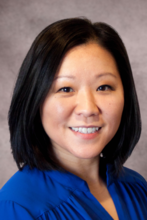
Stephen E. Russek obtained an A.B. in physics from Harvard University in 1980, spent several years working at AT&T Bell Laboratories researching advanced silicon devices, and then obtained a Ph.D. in physics from Cornell University in 1990 in superconducting devices. He currently leads the Imaging Physics Project in the Magnetic Imaging Group at NIST and co-directs the MRI Biomarker Measurement Service. He is author/co-author of over 250 peer-reviewed publications with over 11,000 citations, has written several book chapters, has three patents and is a fellow of the American Physical Society (APS) and the Institute of Electrical and Electronics Engineers (IEEE). He is a recipient of the Department of Commerce bronze, silver and gold medals, and of the Ron Brown award for his work on neuromorphic technology, spintronics and spin oscillators, MRI phantoms and quantitative medical imaging.