

Official websites use .gov
A .gov website belongs to an official government organization in the United States.

Secure .gov websites use HTTPS
A lock (
) or https:// means you’ve safely connected to the .gov website. Share sensitive information only on official, secure websites.


Blog Search

Doug White
Doug White is the project leader for the NIST National Software Reference Library project. Doug has worked at NIST since 1987. His experience has covered distributed systems, distributed databases and telecommunication protocols. He has written programs in many areas, including real time biomonitoring, real time video processing, website/database integration, system administration scripts and network monitoring scripts. He holds both a B.A and M.S. in computer science from Hood College.


Cassondra Blasioli
Cassondra Blasioli is a digital communications specialist in the NIST Office of Advanced Manufacturing. After graduating from Massachusetts College of Liberal Arts, she began her career in state-level government and both the nonprofit and private sectors. Prior to coming to NIST, Cassondra was a contractor at the Department of Homeland Security Science and Technology Directorate as their social media manager. Outside of work, Cassondra can be found on the sidelines of Little League games, bringing her boys to concerts, baking sourdough bread, and enjoying life in Maryland with her husband, three kids, and two dogs.

Miral Dizdaroglu
Miral Dizdaroglu studies DNA damage and repair. He joined NIST in 1986 as a senior scientist and became a group leader in 2000. In 2006, Dizdaroglu was promoted to a NIST Fellow. He received a diploma in chemical engineering from the University of Ankara (Turkey) and a doctorate from the University of Karlsruhe (now the Karlsruhe Institute of Technology, in Germany). Miral Dizdaroglu died in 2024.

Sierra Miller
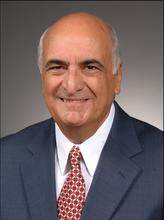
Sierra Miller is a bioinformaticist in the NIST Genome Editing Program, where she leads work validating computational methods for genome editing off-target assays. Sierra also leads a working group in the NIST Genome Editing Consortium for data and metadata, where she is working to establish best practices and norms, reproducible workflows and metadata capture for genome editing research.
Andrew Iams
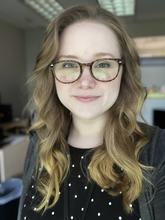
Andrew D. Iams is a materials research engineer at NIST, where he investigates microstructural characteristics of a range of materials (metals, ceramics, glasses and polymers). Before working at NIST, Andy was a senior engineer at Westinghouse Electric Company – Material Center of Excellence. Andy is from the steel city of Pittsburgh, Pennsylvania, and holds a Ph.D. in materials science and engineering from the Pennsylvania State University.
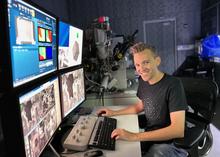
Amber McCreary
Amber McCreary is a physicist who received her bachelor’s degree at the University of Pittsburgh in 2011 and her Ph.D. at Pennsylvania State University in 2017. She did a postdoctoral fellowship at NIST from 2017 through 2020, where she used optical spectroscopy to study magnetism in low-dimensional materials in the Nanoscale Device Characterization Division. Afterward, she joined Northrop Grumman as an experimental physicist testing novel superconducting circuits. She enjoys STEM outreach, traveling, hiking, attempting to cook, visiting museums and playing in the dirt in her garden.


Bronwyn Patrick
MITRE Senior Cybersecurity Engineer and AI/ML security researcher. She is passionate about protecting complex systems and advancing secure innovation and has worked at the intersection of cutting-edge technology and national cybersecurity guidance—contributing to NIST Frameworks, securing healthcare ecosystems, and tackling emerging risks in AI.
Julie Nethery Snyder
As a principal at MITRE, Julie provides privacy and cybersecurity risk management advice in the U.S. and abroad to defense, IC, and civilian federal agencies as well as critical infrastructure industries.

Kamran Sayrafian
Kamran Sayrafian is a senior scientist at the Information Technology Laboratory of the National Institute of Standards and Technology, where he leads a strategic program related to the application of the Internet of Things (IoT) in health care, including topics such as body area networks, micro energy harvesting and automatic exposure notification. Kamran obtained a Ph.D. in electrical and computer engineering from the University of Maryland in 1999. Prior to joining NIST, he was the cofounder of Zagros Networks Inc., a fabless semiconductor company based in Rockville, Maryland, where he served as the president and senior member of the architecture team. He was a major contributor to the development of the IEEE 802.15.6 international standard on Body Area Networks. Kamran is a Fellow of the Washington Academy of Sciences.

